
A Bold Art Installation Stirs Controversy in Yellowstone National Park
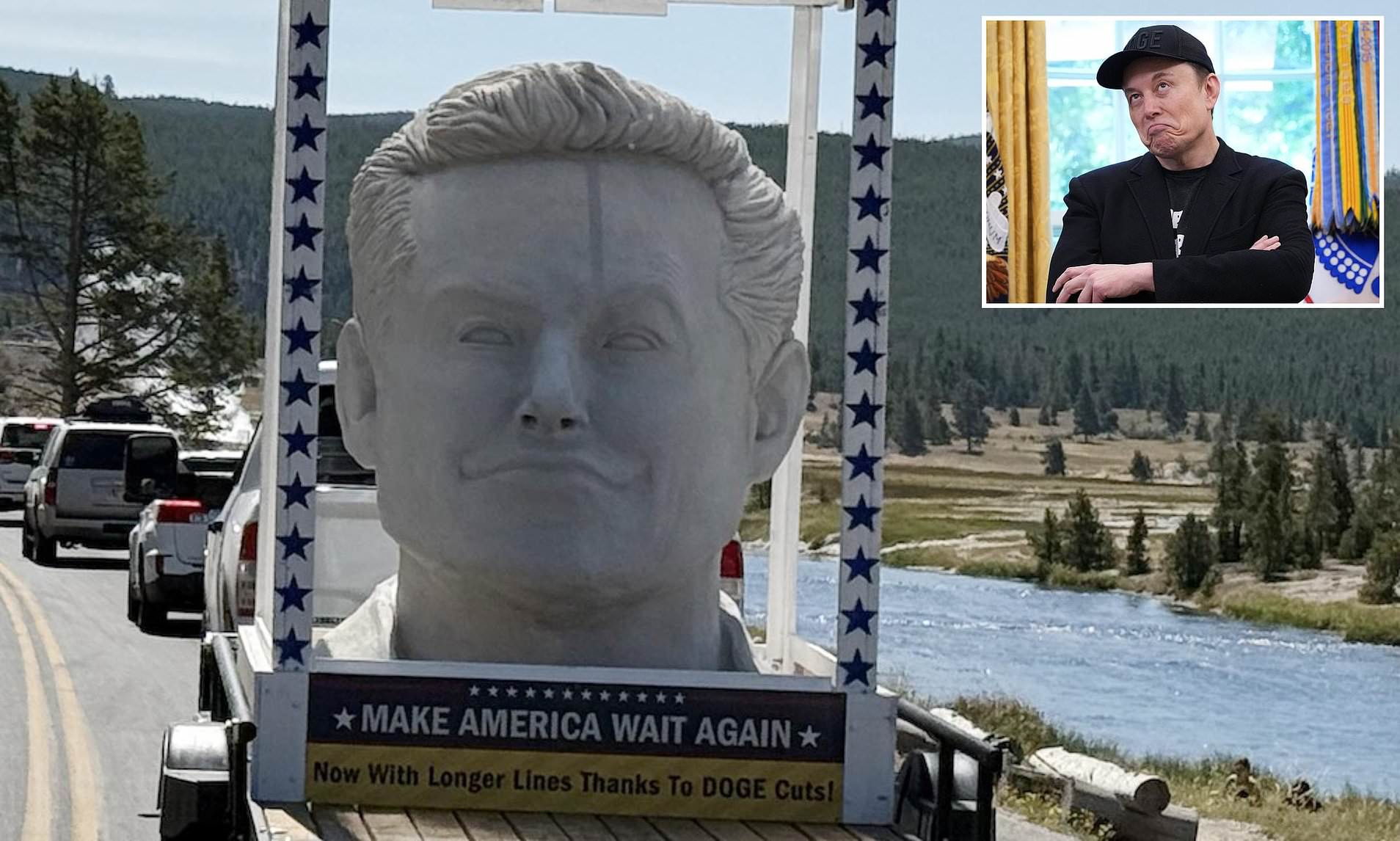
A massive white sculpture depicting the smirking face of Elon Musk has sparked a heated debate after it appeared in Yellowstone National Park over the weekend. The installation, which was transported through the park on a trailer, had previously made appearances at other national parks such as Arches, Yosemite, and Mount Rainier.
The statue, crafted from 3D-printed foam, wire rebar, wood, and epoxy, is not intended as a tribute to Musk. Instead, it serves as a pointed commentary on his role in the Department of Government Efficiency (DOGE), an initiative established under former President Donald Trump. Beneath the large bust, a sign reads "Make America Wait Again," a humorous twist on Trump's campaign slogan "Make America Great Again." The message continues with "Now With Longer Lines Thanks To DOGE Cuts!" highlighting the perceived negative impact of Musk's leadership on government operations.
The organizers behind the art installation claim that the statue was designed to draw attention to what they describe as the "insanity" of Musk's actions. They argue that Musk's decision to fire tens of thousands of federal employees has led to significant disruptions, particularly in national parks during peak seasons. According to their statement, the statue was placed in Yellowstone to "lord over the long lines and congested trails while bragging about cutting staffing and resources."
In an email sent to Cowboy State Daily, the organizers, who have chosen to remain anonymous, emphasized that the goal of the installation is to raise awareness about the chaos caused by Musk’s policies. They added that the statue itself should speak for its message, allowing the public to interpret its meaning without the need for further explanation.
Public Reaction to the Sculpture
Visitors to Yellowstone had varied reactions to the appearance of the Musk sculpture. Some found it amusing, while others were critical of the artwork and its message. Nancy Charmichael, a visitor, shared her perspective with Deseret News, saying, "I think everyone thought it was kind of cool. I don't think anyone was upset." She described the piece as something unusual and entertaining, even if it wasn’t meant to be taken seriously.
However, not all visitors were impressed. Some criticized the artwork as poorly executed and questioned whether the park was actually experiencing staffing shortages. One user on X wrote, "I am at Yellowstone right now and came into the park this morning. I can tell you there was ZERO line and we were helped by a friendly, polite young lady." Another comment on the same platform said, "Bad artwork by TDS artist makes the rounds at the National parks! Coward artist won't use his name - I wouldn't either with that travesty - who is that supposed to be as it sure doesn't look like Elon Musk?"
Musk's Role in the Department of Government Efficiency
Following Trump's inauguration in January 2021, Musk was appointed to lead the Department of Government Efficiency (DOGE). The agency's mission was to streamline federal operations and improve efficiency. Under Musk's leadership, DOGE reportedly cut nearly 280,000 jobs across 27 government agencies, according to a report by Challenger, Gray & Christmas. Additional cuts of over 90,000 were expected in April.
Many of these job reductions affected U.S. natural preserves, including national parks. The National Park Service has lost 13 percent of its workforce since Trump took office, according to the National Parks Conservation Association. Much of this decline is attributed to staff being offered buyouts or leaving due to budget cuts.
According to Reuters, the strain on park staff has been severe. During the spring and summer, many employees, including scientists, have been required to take shifts cleaning bathrooms that remain open, as DOGE shut down numerous public restrooms.
Musk's tenure with DOGE was limited by federal regulations, allowing him to serve only 130 consecutive days as a special government employee. On May 30, his final day with the agency, Musk claimed that his team had saved $160 billion for taxpayers.