
In South Africa, the availability of weight loss medications such as Ozempic and Mounjaro is restricted to individuals who can afford several thousand Rand per month. In the second piece of a Spotlight special series, we examine the medical necessity of these drugs in the country and the steps required for the government to make them available within the public healthcare system.
The World Health Organization (WHO) has urged nations to tackle disparities in access for individuals with obesity who could gain from a new type of medication known as glucagon-like peptide-1 (GLP-1) receptor agonists. According to the WHO, these drugs can significantly help in lowering weight-related health issues and fatalities, and they should be fairly distributed through national healthcare systems. The WHO emphasizes that access to these medications should be based on medical necessity, not on one's capacity to afford expensive costs.
"Although medication alone cannot address this global health crisis, GLP-1 treatments can assist millions in managing obesity and lessen its related consequences," stated Dr. Tedros Adhanom Ghebreyesus, the head of the WHO. Having obesity raises the likelihood of encountering various severe health issues—commonly known as weight-related diseases—such as type 2 diabetes, hypertension, kidney disease, and certain forms of cancer.
As discussed in part 1 of this series, the availability of GLP-1 medications for individuals with obesity in South Africa is primarily determined by one's ability to afford the monthly cost, which ranges between R3 000 and R6 000. Members of medical aid schemes who have obesity typically do not get assistance with the cost of GLP-1s, as South African legislation does not mandate that these schemes cover expenses related to obesity treatment.
Although medical schemes offer limited coverage for GLP-1s in the management of type 2 diabetes, the requirements for access are stringent. The amounts prescribed for diabetes treatment are usually lower than those utilized for weight control. These lower-dose GLP-1 medications tend to be less expensive compared to higher-dose versions used for weight loss, with prices beginning at R1 400 (not including dispensing charges).
In the public sector, GLP-1s are not accessible.
Consequently, certain individuals who do not have a medical requirement for GLP-1s are utilizing them, whereas others who might gain from these potentially life-saving treatments are left without access.
Why GLP-1s are crucial in fighting weight-related diseases and mortality
The public sector in South Africa focuses on promoting lifestyle messages and education to motivate individuals to adopt healthier eating habits and increase physical activity, while acknowledging the importance of government in establishing a supportive environment for these changes. However, there is strong evidence that these measures alone frequently fail to consistently address obesity and its related health issues.
The government has also set goals to encourage proper nutrition by supplying nutritious meals to schools via the national school nutrition program and by implementing laws to deter poor dietary habits.
The emphasis on promoting healthy lifestyle adjustments for individuals accessing public health services neglects the fact that numerous people in the country reside in areas where adhering to dietary and physical activity advice is extremely challenging. "I'm not sure what neighborhood you're from, but do you feel as a woman that you can jog or run freely?" questioned Dr. Nomathemba Chandiwana regarding the obstacles people encounter when trying to follow exercise guidelines. She holds the position of chief scientific officer at the Desmond Tutu Health Foundation.
Dr. Thokozani Simelane from the Human Sciences Research Council noted that 69% of overweight adults [in South Africa] reside in households facing food insecurity, where families have limited options for their diet and are compelled to consume low-nutrient foods.
Interest in drugs with brand names such as Ozempic, Wegovy, and Mounjaro has increased significantly in recent years. When will generic versions become available in South Africa?
Check out our Q&A section and participate in the conversation: us13.campaign-archive.com?u=8b66ef0bbe...
[image or embed]
-- Spotlight (@spotlightnsp.bsky.social) February 18, 2026 at 3:03 PM
The lack of available medical treatments for obesity within the public healthcare system ultimately results in many individuals being left without support, as it is now widely recognized that for numerous people with obesity, diet and physical activity alone are insufficient for long-term weight loss. This occurs because an individual's weight is not solely determined by their decisions and behaviors, but also by their living environment and genetic factors.
For individuals dealing with obesity who cannot maintain long-term weight loss through healthy lifestyle adjustments alone, GLP-1s can be a true lifesaver. GLP-1s not only aid in weight reduction, but they also lower the chances of developing other health issues linked to obesity, including type 2 diabetes, and problems affecting the heart, liver, and kidneys. New research suggests that GLP-1s might also decrease the occurrence of obesity-related cancers.
A regional movement for transformation
Certain obesity experts in South Africa are advocating for reform. In November 2025, the South African Metabolic Medicine and Surgery Society (SAMMSS) introduced the first nationwide clinical guidelines for addressing obesity within the nation.
The recommendations suggest the use of medications, such as GLP-1s, surgical procedures, and psychological support, in combination with assistance for making positive lifestyle adjustments, when addressing obesity.
"The discussion is just beginning now that we have a clear document," said Dr. Marli Conradie-Smit, director at SAMMSS and endocrinologist at the University of Stellenbosch and Tygerberg Hospital.
"For the first time, there is a clinical practice guideline that outlines the best care for individuals with obesity," she stated.
Conradie-Smit mentioned that SAMMSS is working with both private and public sector stakeholders to encourage the adoption of its guidelines for managing obesity in medical settings.
What is the scale of the demand?
"South Africa has some of the highest obesity rates," stated Chandiwana. According to her, health issues linked to weight have surpassed HIV and TB as the main causes of "illness and reduced life expectancy" in the nation. "Our healthcare system is completely unprepared for this," she believes.
Calculations regarding the population affected by obesity are based on national surveys that rely on Body Mass Index (BMI) to determine obesity levels. Well-known survey data from 2017 indicated that 28% of individuals in South Africa suffer from obesity. For women, this percentage reached 43%, significantly surpassing the approximately 12% observed in men.
Unlike HIV, where the number of individuals requiring HIV treatment corresponds directly to the number of people living with the virus, determining how many people would need or qualify for GLP-1 medications, if they were available through the public sector, is more complex.
This occurs because there are no widely recognized standards for determining who qualifies for these medications within public health systems. Meanwhile, the guidelines for diagnosing clinical obesity are evolving, with specialists now advising to go beyond just body size and instead evaluate the location of body fat and its effect on overall health.
Nations across the globe are thus facing the challenge of balancing their citizens' demand for GLP-1 treatments against significant financial limitations. The WHO suggests that individuals vulnerable to obesity-related health issues and mortality should be given priority.
A recent study published in the Lancet medical journal calculated the global demand for GLP-1 medications, assuming eligibility required an obesity diagnosis along with either hypertension or diabetes, or both. With these criteria, the researchers estimated that 799 million people worldwide would qualify for GLP-1 treatments. In South Africa, they projected that 12 million individuals would be eligible.
Although increasing access to GLP-1s will impose a major financial burden on the government and health insurance programs, not offering these medications also incurs considerable expenses.
In 2022, health economists at the SAMRC/Wits Centre for Health Economics and Decision Science determined the portion of the nation's health budget allocated to addressing obesity and its related conditions. To achieve this, they assessed what percentage of treatment costs for diseases frequently linked to obesity, such as heart disease and diabetes, could be traced back to obesity. They estimated that "approximately 12 million individuals experience weight-related illnesses treated within the public sector, including diabetes, high blood pressure, cardiovascular disease, arthritis, and certain types of cancer," with 15.38% of South Africa's health spending, equivalent to R33 million, already being used for treating these conditions.
At what cost can the public sector offer GLP-1s?
When deciding if South Africa can supply GLP-1s within the public sector, the government must consider the expenses of offering the medications against the consequences of not providing them. Additionally, the government will need to perform a budget impact assessment to see if it can allocate resources from the currently limited public health budget to purchase these medicines.
It remains uncertain at what rates these medications could be made available to the public sector. The existing costs in the private market are probably excessively high for public procurement.
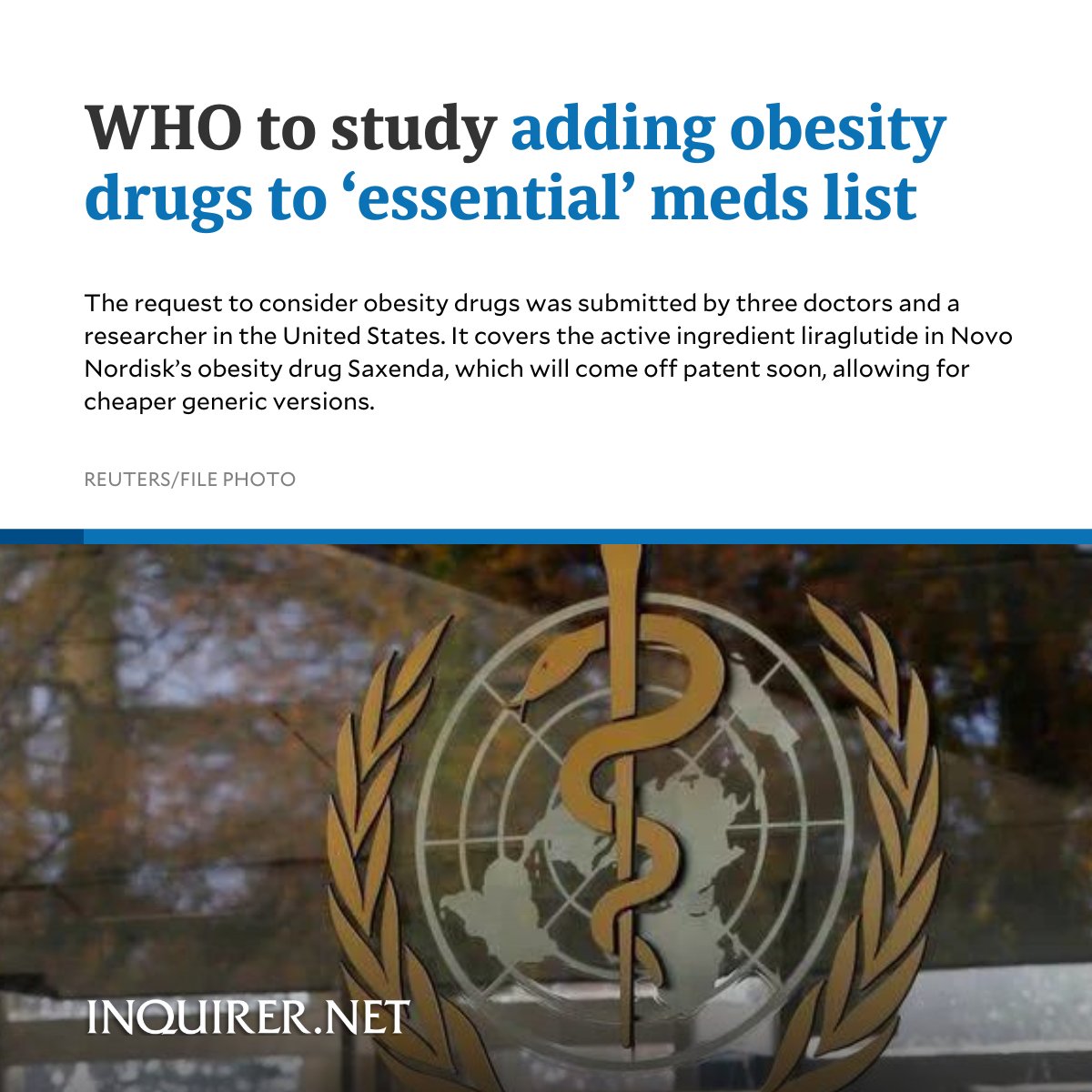
Jeanette Hunter, the deputy director general for primary healthcare at the National Department of Health, mentioned during an interview with Radio 702 in December 2025 that the National Essential Medicines List Committee is focusing on evaluating GLP-1s for potential addition to South Africa's National Essential Medicines List. The health department has not yet provided answers to inquiries from Spotlight regarding whether this assessment is currently taking place and when public input might be accessible.
An essential move, nevertheless, that the health department could make, with the assistance of local health economists, would be to openly establish a price limit at which GLP-1s would become cost-effective for public sector distribution. This information could energize local and international advocacy efforts to urge the industry to reduce medication costs.
The good news
Many individuals in South Africa find GLP-1 medications too expensive at their present costs, yet there is positive outlook as prices are anticipated to decrease in the near future with the introduction of generic alternatives. In the long run, oral versions are also being developed. These oral options will be easier to distribute within the public healthcare system compared to injections, which are currently the only form available for GLP-1s in South Africa.
Semaglutide, marketed by Novo Nordisk under the names Ozempic and Wegovy, is expected to face reduced prices this year due to the introduction of generic versions in key markets such as Canada, China, India, and Brazil.
There is some ambiguity regarding the potential launch of generic semaglutide products in South Africa. This is due to the fact, as discussed further in part 1 of this series, that several secondary patents on semaglutide have been issued in South Africa, and it remains unclear how much these could hinder generic competition.
It is probable, nevertheless, that generic manufacturers will aim to launch generic semaglutide in South Africa in 2027, once the primary patent for semaglutide expires.
Although the pricing of generic GLP-1s by generic companies is yet to be determined, a study backed by Doctors Without Borders has demonstrated that low-dose injectable semaglutide can be produced and sold at a profit for less than R80 (US$5) per month. This is significantly cheaper than the current price of branded semaglutide products available in South Africa's private market, which begin at R1 400.
Note: Only Novo Nordisk's branded semaglutide products have been assessed for safety and effectiveness and authorized by the South African Health Products Regulatory Authority (SAHPRA). At present, there are no approved generic versions of semaglutide in South Africa. Consequently, items labeled as generic or compounded "semaglutide" have not been subjected to required safety assessments by SAHPRA and could present significant health dangers. The distribution of such products within South Africa is against the law.
Republish
Copyright 2026 spotlight. All rights reserved. Distributed by AllAfrica Global Media (zaianews).
Tagged: South Africa, Health and Medicine, Southern Africa
Provided by SyndiGate Media Inc.Syndigate.info).