
We depend on established regulatory bodies such as the FDA in the United States, but an applicant cannot just present an FDA certification and automatically receive a license. We adhere to the standard review procedure, although we complete it significantly more quickly.
Ultimately, the government belongs to me and you; it is the duty of every Kenyan citizen to ensure their healthcare providers are properly monitored.
If you're curious about how medications arrive at Kenyan pharmacies safely, or why certain drugs take longer to reach the market than others, this interview is tailored for you.
The Star interviewed Dr Ahmed Mohamed, the chief executive officer of the Pharmacy and Poisons Board, to explore the factors influencing the safety, quality, and availability of medicines you use daily.
He outlined international regulatory collaborations, such as the US-Kenya health cooperation framework, procedures for drug approval, monitoring after market entry, and efforts to combat unauthorized pharmaceutical activities.
The Star:You have recently become the CEO of the Pharmacy and Poisons Board. Which path are you steering the organization towards?
Dr Ahmed Mohamed:First, I believe it is crucial to clearly outline the responsibilities of the Pharmacy and Poisons Board. We essentially act as the guardian of public health concerning health products and technologies. Our role is based on three key areas: guaranteeing the safety, quality, and effectiveness of each product.
In recent times, we have implemented various strategic changes designed to enhance our regulatory effectiveness, openness, and safeguarding of public health. This includes substantial upgrades to our digital regulatory systems.
Our present approach is entirely centered on the patient, rather than the business goals of the pharmaceutical sector, as this is the core purpose of our organization.
During this process, we have increased our human resources and are putting our regional offices into operation. We are decentralizing our services to be nearer to the people, enabling citizens to conveniently visit our offices, communicate with our staff, and report illegal activities, such as unauthorized locations or inferior quality products.
It can be surprising to realize that a doctor's prescription is not the final step. If a patient takes a medication such as paracetamol and it fails to relieve their headache as anticipated, they should understand the next steps. The patient is expected to inform our office using our online system or by contacting their doctor or pharmacist. You don't have to be sure a drug is harmful; you just need to have a suspicion, and that is when we begin our investigation.
Additionally, we are enhancing our laboratories particularly for post-market monitoring. This implies that after a product is registered and becomes available in the market, we keep tracking its quality. We pinpoint essential products, like antibiotics or medications for high blood pressure, and collect samples across the country for examination in our laboratory.
We usually carry out these reviews three or four times per year and make the reports available to the public. Our laboratory now functions around the clock to maintain ongoing assessment of product quality. Honestly, the problem of poor-quality products in the market has decreased considerably recently.
We are also backing local manufacturers from a regulatory perspective. The government aims for Kenya to become a net exporter of health products instead of a net importer. To accomplish this, we have put in place regulatory systems to foster our domestic industry.
Healthcare products and technology are crucial to national security. We recall what occurred during the Covid-19 pandemic, when nations imposed lockdowns and trade came to a halt. The best way to avoid such a situation in the future is to build local capabilities. We educate manufacturers on proper production standards and quality control, and expedite the approval process for their products.
How many pharmaceutical companies are currently functioning within the nation?
At present, we are working with 31 manufacturers. Nevertheless, due to the regulatory system we have put in place, approximately 10 cutting-edge facilities are expected to be developed.
Approximately Sh100 billion is being invested in the pharmaceutical industry. These are new companies, distinct from the original 31, indicating increasing trust in our regulatory systems and the support we provide to the sector.
There is widespread concern whenever PPB issues a recall of medications. How should Kenyans interpret these recalls?
It is crucial to recognize that each industry has a recall procedure; it is not exclusive to the pharmaceutical field. You can observe companies such as Toyota recalling cars globally due to brake problems. A recall is an essential process to guarantee the safety of products already available in the market.
There are two categories: Class One recalls are critical and involve items that could result in death or significant injury. We take these out right away when there's a suspicion, and in some cases, just by looking at them, and we inform the media instantly.
There are also standard recalls, which deal with minor problems, such as a slight difference in the active component. For instance, if a medication is supposed to contain 100% of an active ingredient but is discovered to have only 92%, it may not pose a serious safety threat, but it can impact its effectiveness. For us, the key concern is always whether the medication works properly. Recalls are a common and positive procedure. The public should not be alarmed when the Pharmacy and Poisons Board issues a recall; it indicates that there is an active and proactive regulatory body performing its duties.
How long does it usually take for a drug to be registered and made available in the Kenyan market, and what steps are involved in this process?
Globally, it typically takes between two and five years to register a product. In Kenya, our service charter specifies this period as 24 months (two years).
The process of registering a drug includes numerous intricate steps. For instance, we need "bioequivalence" information for generic medications to confirm they are therapeutically similar to the original brand. If a company wishes to produce a generic form of a drug such as Augmentin, they must submit data demonstrating that their version will yield the same therapeutic outcome.
We must also examine stability data to confirm that a product remains safe throughout its stated shelf life, and we are required to conduct audits of the manufacturing process. This involves verifying the equipment utilized and validating the entire production process to ensure it adheres to good manufacturing practices. It is not just about reviewing and approving a document; it requires significant time. Our two-year schedule actually positions us as one of the top and most efficient regulators globally.
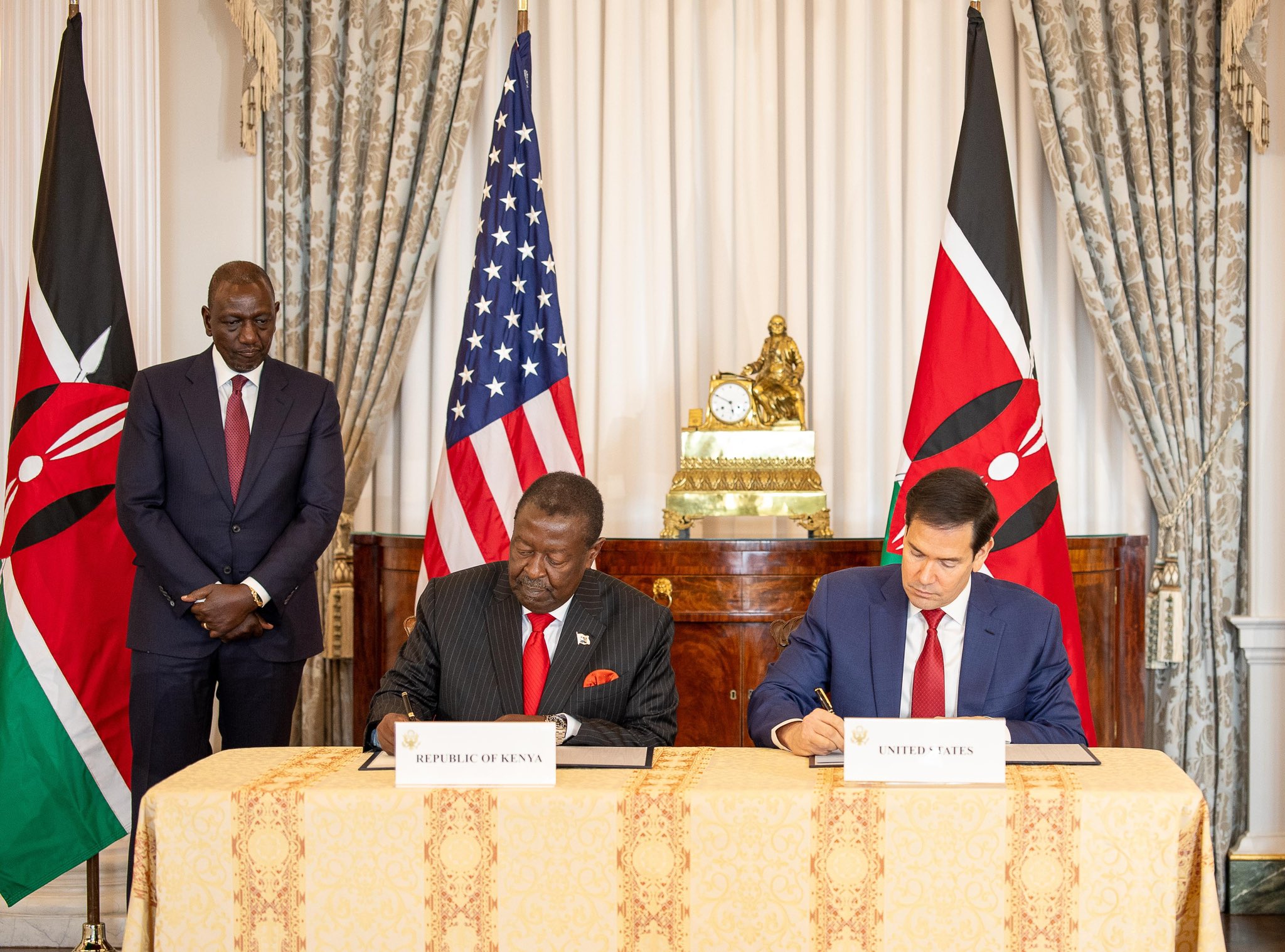
The health agreement Kenya signed with the United States last year states that a drug approval from the Food and Drug Administration is sufficient for that product to be sold in the Kenyan market. Are we replacing the role of PPB here and making it just a formality?
We employ a system known as 'reliance,' where we depend on mature regulatory bodies such as the US FDA, the WHO prequalification process, or the UK's MHRA (Medicines and Healthcare products Regulatory Agency). This approach is mainly taken to benefit the public health system, enabling new compounds to reach Kenyan patients more swiftly.
However, depending on the situation does not imply that we do not examine the scientific evidence. It is solely a streamlined process. A candidate cannot merely present an FDA certificate and receive a license; they have to provide the complete file and all documents they submitted to the FDA for our evaluation. We adhere to the standard procedure, but we carry it out significantly quicker.
What is the current maturity level of the PPB according to the WHO, and what challenges have hindered its progression?
We are currently at Maturity Level 2 and are progressing towards Level 3. The main obstacle that slowed our advancement to Level 3 was a lack of human resources. We require nearly 350 staff, but we have been functioning with approximately 160, which is almost a 50 per cent deficit. Fortunately, the Ministry of Health has provided strong support. With a World Bank grant and Treasury approvals, we are now hiring around 80 new individuals to reduce this gap.
The greater the maturity level, the higher the public's trust in the system. Level 4 refers to "World-Listed Authorities," which are the most prestigious trusted systems worldwide.
There have been reports about the five-year renewal of marketing authorizations. Is this procedure leading to medicine shortages or preventing products from being available?
Legally, according to the Pharmacy and Poisons Act (Cap 244), products must undergo renewal every five years. Failure to renew results in the product losing its license and being removed from the market.
We have been working with stakeholders on this issue since 2022, but I believe some viewed it as less urgent. We met with stakeholders and set deadlines, which were postponed on four occasions. By the final deadline of December 2025, 80 percent of players had adhered to the requirements.
For the remaining 20 percent who did not submit, it is typically a business-related matter rather than a regulatory one. For instance, a company might have an outdated compound that is no longer profitable, or there could be an excess of products in the market, such as over 200 different brand names for the same paracetamol molecule. Companies may choose not to renew these.
However, there is no shortage in availability. As a government, we focus on ensuring access, and we have procedures in place to handle emergencies, such as granting special permits for certain products upon a doctor's recommendation.
What deficiencies in the system enable unlicensed chemists and unauthorized practitioners to thrive, and how is the board enhancing its regulatory measures?
The main issue is that certain pharmacy professionals lease their credentials to unauthorized individuals.
They assert that a business is theirs in order to obtain a license, and then later claim they have "resigned" from their own business. They essentially open the store and then vanish, leaving it in the hands of unqualified individuals.
To address this, we are presenting these individuals to disciplinary and inquiry panels, where they could be subject to removal or suspension.
We are also focusing on the distribution channel, particularly wholesalers. Wholesalers represent a high-risk area since they frequently sell to unregistered locations. We have conducted audits of all wholesalers across the country to ensure they meet safety regulations, including appropriate temperature control for medicines. If a wholesaler is unable to maintain the cold chain or manage a recall process, they should not be in operation. By the end of next month, we anticipate closing down approximately half of the wholesalers that fail to meet these safety criteria.
Is the PPB the appropriate organization to contact if a member of the public has a problem with a practitioner or a pharmacy?
Yes, we are the correct organization. We are among the most technologically advanced institutions in the nation, with 95 percent of our systems being digital. We issue licenses for both pharmacists and practitioners, which include a photo. The public can check these using a QR code or an SMS code to confirm if an institution is properly licensed.
In the end, the government belongs to all of us; it is the duty of every Kenyan citizen to monitor their healthcare providers. Since you can't be everywhere at once, we depend on the public to interact with us directly and assist in enhancing regulations across the nation.