
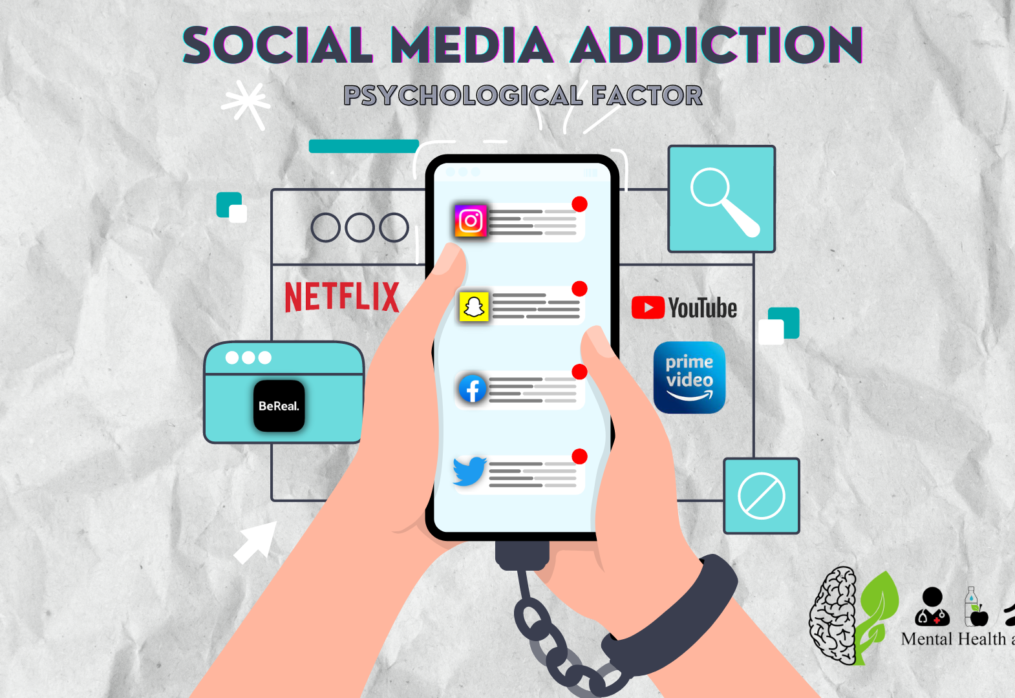
In the current digital environment, social media has emerged as a vital means of communication, reshaping how we connect, exchange, and obtain information.
This indicates that the digital era has transformed how people connect, significantly impacting our lives and psychological health.
With the ongoing development of social media and technology, they have become an essential part of our everyday lives, influencing our mental well-being in substantial ways.
This significant influence highlights the necessity of grasping the connection between technology and psychological well-being, especially considering the associations between overuse of technology and heightened signs of anxiety, depression, and isolation.
Hence, achieving a proper equilibrium between digital and real-world activities is crucial for general wellness.
The alarming statistics
Studies show a concerning link between social media usage and higher anxiety rates among teenagers, with 70% experiencing sadness, fear, and hopelessness when separated from their phones, and 94% indicating they face difficulties.
This highlights the important impact of technology on emotional health.
As a result, working from home frequently causes burnout, which affects job performance and efficiency, as many employees experience mental health issues that interfere with their work.
Additionally, too much time spent in front of screens can heighten feelings of depression among teens, as those who use their devices for more than five hours each day are 71% more prone to show such symptoms. Fundamentally, focusing on digital well-being is essential to reduce these adverse impacts.
The hidden aspect of online connection
Social media sites are created to stimulate the release of dopamine, making it difficult to disconnect and encouraging dependency.
This implies that continuous exposure to carefully presented lives on social platforms contributes to sensations of being insufficient, poor self-worth, and sadness.
In addition, cyberbullying and online abuse can lead to serious effects such as anxiety, depression, and thoughts of suicide, with 59% of teenagers reporting they have faced some form of cyberbullying, as stated by the Pew Research Centre.
As a result, too much time spent on screens interferes with sleep cycles, leading to tiredness, moodiness, and reduced mental performance.
In such situations, people should focus on digital well-being and make efforts to reduce the harmful impacts of social media.
Impact on youths
The influence of social media and technology on young people is a significant issue, as overexposure to online content can result in harmful consequences like higher levels of risky actions, shorter focus periods, and an altered perception of real life.
Social media enables participation in unethical actions such as cyberbullying, online abuse, and access to inappropriate material, while individuals who spend significant time on social media are more prone to experience loneliness.
Additionally, studies show that a 10% increase in negative social media interactions corresponds to a 20% higher risk of depression.
Sorrowfully, social media has also shifted the focus of young people, causing them to spend the majority of their time on online platforms without acquiring valuable experiences or honing useful skills, which eventually impacts their mental health and overall wellness.
This emphasizes the importance of parents, teachers, and decision-makers focusing on digital skills and encouraging positive social media behaviors in young people.
The beed for balance
In reality, achieving a balanced approach between digital and real-world activities is essential for reducing the harmful impacts of social media and technology.
In this scenario, it is necessary to adopt efficient approaches including: establishing limits, undertaking a digital break, participating in non-digital tasks, tracking activity, and obtaining assistance.
These approaches enhance resilience and support general well-being, with people who focus on digital health being more prepared to handle the difficulties of the digital era and safeguard their mental health.
Unique Perspectives
The effect of social media on mental well-being is intricate, shaped by personal experiences and broader societal elements. Nevertheless, cultural and environmental influences determine how people engage with technology, significantly impacting their psychological state.
Hence, grasping these subtleties is crucial for creating successful approaches to encourage digital health, and acknowledging the intricate relationship between technology and psychological well-being allows people to act in advance to enhance their health and reduce the harmful impacts of social media.
Conclusion
In summary, the connection between social media, technology, and mental well-being is intricate and diverse.
Although technology provides many advantages, overuse and information saturation can lead to serious problems.
Hence, focusing on digital well-being, establishing limits, and participating in real-world activities are essential for preserving mental health in today's digital era.
These approaches promote general wellness and reduce the dangers linked to overuse of social media platforms.
In the end, a well-rounded strategy that considers personal, societal, and ecological elements is crucial for dealing with the difficulties of the digital era and safeguarding psychological well-being.
*Clever Marisa (PhD) is a social scientist and public health professional. The opinions shared here are his personal views and may not align with those of his affiliated institution or any other entity.