
Recent statements in Washington indicate a growing agreement among American officials—spanning both Congress and the executive branch—that allies like South Korea need to take a more decisive position in the escalating competition between the U.S. and China. Supporters of the Trump administration have grown more direct in dismissing what they see as an unworkable approach: "security with the United States, economy with China"—a strategy often known in Seoul asanmi-gyeongjung.
On July 24, Congressman Brian Mast, who leads the House Foreign Affairs Committee, issued a sharp criticism. "Certain individuals in South Korea attempt to please both the United States and China," Mast stated. "However, trying to maintain ties with both parties ultimately results in harm to everyone involved." His remarks were made during an online speech at a conference organized by the Gold Institute for International Strategy in Washington, D.C.
Mast, a five-term Republican from Florida and a veteran of the Afghanistan War, cautioned that attempts to please both Washington and Beijing would be seen by the United States as "an insult" and would eventually "harm the alliance as a whole." "You can't have one hand on one boat and the other on another and expect to support both," he stated. "I use this analogy when talking about America's relationships with its allies."
His comments were inspired by a query from a South Korean attendee regarding the future of the U.S.-ROK alliance—suggesting that the statement was not planned in advance but instead represented a viewpoint widely held within Washington's defense community as a fundamental concept.
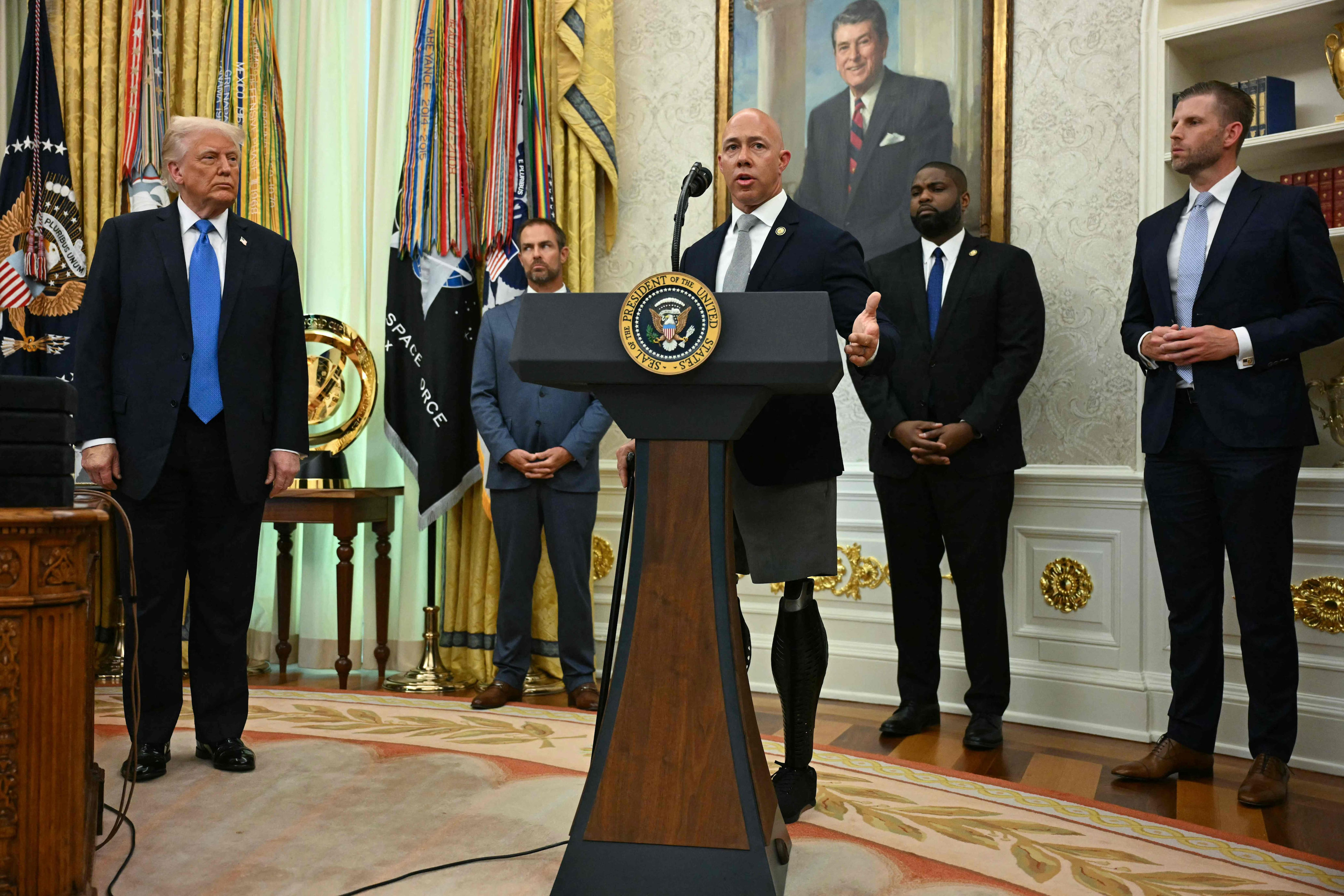
Mast wields considerable power in shaping U.S. foreign policy, largely because of his committee's control over international matters and funding for aid. A well-known member of the Trump-backed "Make America Great Again" (MAGA) movement, Mast has become one of the strongest advocates for a new approach to American alliances—one that calls for clearer support from long-standing allies.
"We must be seen as the sole partner that provides values no other nation can," he stated. "We should never be exploited. If all allies only inform us of what they require from America, then we never achieve a genuine partnership." This statement was broadly interpreted as a push for allies like South Korea to take on more strategic and financial responsibility in dealing with China.
Mast further explained his idea using a metaphor: "When multiple people lift a heavy object together, some may groan, but actually, not everyone is putting in the same effort. This is comparable to the relationships between nations." The message was evident: some partners gain from U.S. defense commitments without contributing equally—something he views as strategic free-riding.
Referencing President Donald Trump's efforts to urge NATO allies to boost their military expenditures, Mast stated, "Trump has aimed to restructure dependent relationships so that the United States is not overlooked and is not exploited."
Mast's comments aligned with those made by other well-known figures associated with the MAGA movement. During a speech in May, Pete Hegseth cautioned that "numerous nations are tempted to engage in economic collaboration with China and military cooperation with the United States." He further stated, "We will not let our allies and partners in this crucial region fall under China's influence"—a statement directed at countries in the Indo-Pacific that Washington perceives as balancing between the two major powers.
Likewise, Steve Bannon, former White House chief strategist and a significant figure on the American right, statedThe Chosun IlboIn June, "It is impossible for South Korea to maintain a balance between the U.S. and China," and called on Seoul to take a more resolute stance to "prevent China from having an impact."