
The Controversy Surrounding a Mid-Decade Census
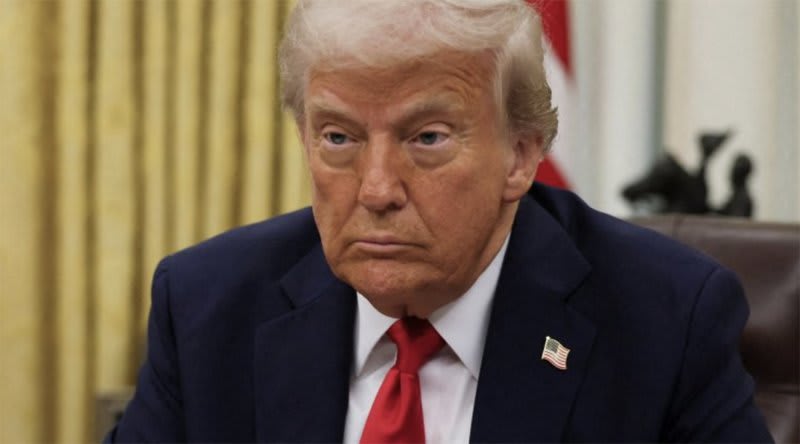
President Donald Trump has made headlines by claiming he is initiating a new, mid-decade census. This move comes amid efforts by multiple Republican-led states to redraw congressional districts in ways that favor their party. Additionally, the FBI has reportedly agreed to assist in locating and returning Democratic legislators who left Texas to prevent the GOP from securing a quorum needed to pass a redistricting plan.
In a post on Truth Social, Trump stated, "I have instructed our Department of Commerce to immediately begin work on a new and highly accurate CENSUS based on modern day facts and figures and, importantly, using the results and information gained from the Presidential Election of 2024." He also emphasized, "People who are in our Country illegally WILL NOT BE COUNTED IN THE CENSUS. Thank you for your attention to this matter!"
However, legal experts have strongly refuted the notion that Trump has the authority to alter the census process. According to election lawyer Marc Elias, founder of Democracy Docket, "The Constitution dictates that the census is a count 'all persons' conducted every 'ten years.'" He added, "Donald Trump has no power to alter either the timing or who is counted."
Journalist Nancy Levine Stearns echoed this sentiment, stating, "Not only does Trump not have the power to call a new census—it’s also worth noting this authoritarian precedent: Comrade Stalin didn’t like the results of the 1937 Soviet census, so he purged the statisticians and ordered a new census, undertaken in 1939, which yielded numbers more to his liking."
Some critics have pointed out that many news outlets are reporting on Trump's claim without highlighting the constitutional implications. Writer Julian Sanchez noted, "Trump wants to dictate new census numbers to pull congressional seats away from Blue states, justify Republican redistricting and the slashing of federal funding to areas and states of his choosing."
Law professor Evan Bernick highlighted another concern, stating, "The thing about this is that even by its own terms it would make the census less accurate and leave us with less information about who is in the country."
Constitutional law professor Anthony Michael Kreis emphasized, "The Constitution's text is plain. The census is an enumeration of the 'whole Number of free Persons.'"
Journalist Bill Grueskin humorously commented on the potential implications of Trump's proposal, referencing the Three-Fifths Compromise. "We will also be announcing a 'Three-Fifths Compromise' that will apply to, um, certain people living the US," he deadpanned.
Political scientist Michael McDonald raised logistical concerns, stating, "Just from a logistical standpoint it is not feasible to conduct a 'new' mid-decade census with accuracy. To give a sense of the scale of what is required, preparations are already underway for the 2030 census. This will add chaos to the Census Bureau and degrade the accuracy of the 2030 census."
Key Concerns and Implications
- Constitutional Authority: Legal experts agree that Trump has no constitutional authority to change the census timeline or who is counted.
- Historical Precedent: References to historical examples, such as Stalin's manipulation of the Soviet census, highlight the authoritarian nature of the proposal.
- Accuracy and Feasibility: Experts argue that conducting a mid-decade census would be logistically challenging and could compromise the accuracy of future censuses.
- Political Motivations: Critics suggest that the proposal may be aimed at influencing redistricting and federal funding allocations in favor of Republican interests.
As the debate continues, the implications of Trump's proposed actions remain a subject of intense scrutiny and concern among legal and political experts.