
A Divided Legacy
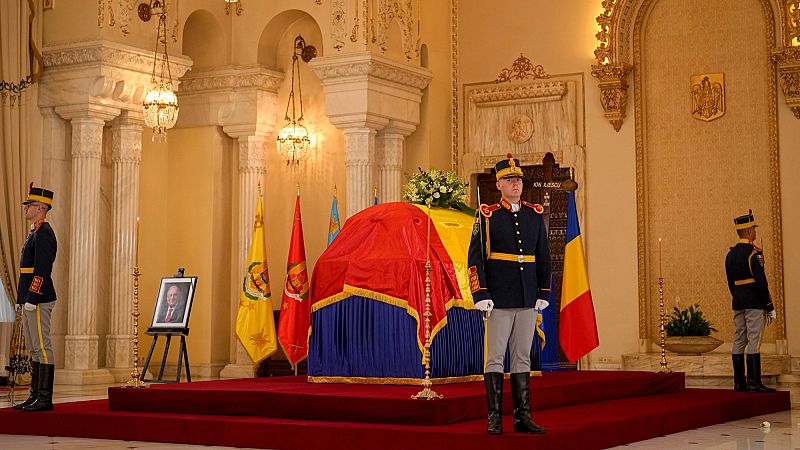
Ion Iliescu, Romania's first elected president after the fall of communism, passed away at the age of 95 following a battle with lung cancer. His death marked the end of an era, as his legacy continues to spark intense debate among Romanians. The funeral, held in a religious ceremony at the presidential Cotroceni Palace, was followed by military honours, symbolizing the complex role he played in shaping the nation's history.
Iliescu's tenure as president spanned over a decade, during which he navigated the tumultuous transition from a communist regime to a democratic state. His leadership was instrumental in guiding Romania through the challenges of post-communist transformation, including the country’s eventual integration into Western institutions like the European Union and NATO.
A Man of the Moment
Educated in the Soviet Union, Iliescu was initially seen as a potential alternative to the repressive regime of Nicolae Ceaușescu. However, he emerged as a pivotal figure during the 1989 revolution, when he took control of the country after Ceaușescu's downfall. One of his first decisive actions was ordering the execution of Ceaușescu and his wife, Elena, marking a dramatic shift in Romania's political landscape.
Despite his role in the revolution, Iliescu's actions remain controversial. He avoided a major war crimes trial, leaving many questions unanswered about the events of the revolution. Over 1,100 people lost their lives during this period, with many more casualties occurring after Iliescu seized power. Critics argue that the so-called "terrorists" organized by Ceaușescu were fighting back against the revolutionaries, leading to tragic outcomes.
A Polarizing Figure
Iliescu's legacy is deeply polarizing. Some view him as a savior who kept Romania stable during a chaotic transition, while others see him as a key player in suppressing the genuine revolutionary spirit. His decision to slow down the pace of change, emphasizing caution over rapid transformation, further divided public opinion.
His personality and policies reflected a blend of socialist ideals and pragmatic governance. While he provided a sense of stability for those fearful of abrupt changes, he also faced criticism for not fully embracing the revolutionary aspirations of the Romanian people. This duality left a lasting impact on the national psyche, with divisions still evident today.
Political Shifts and New Challenges
As Romania continued its journey toward democracy, Iliescu gradually shifted his political stance, advocating for closer ties with the West. His efforts contributed to Romania's successful accession to both the EU and NATO, solidifying his place in the country's modern history.
However, his legacy is not without controversy. Recent political tensions have highlighted the deep-seated divisions within Romanian society. The Save Romania Union (USR) party, a governing coalition partner, opposed the national mourning day for Iliescu, sparking a rift within the government. This decision drew sharp criticism from the Social Democratic Party (PSD), which Iliescu founded and has dominated since the revolution.
Marcel Ciolacu, a former PSD leader, condemned the USR's stance, calling it a display of "sick hatred and lack of decency." Meanwhile, Romania's newly elected President Nicușor Dan, founder of the USR party, did not attend the funeral, instead sending a brief statement that emphasized the need for history to judge Iliescu.
Ongoing Debates
The heated national debate over whether Iliescu deserved a national funeral underscores the unresolved issues surrounding the post-1989 era. Many painful chapters of Romania's recent history remain unaddressed, with calls for truth and reconciliation echoing through the nation.
Ultimately, Ion Iliescu remains a towering figure in Romanian history. His presidency, marked by two distinct political moments, reflects the complexities of a nation in transition. Whether viewed as a visionary or a controversial leader, his influence on the Romanian state is undeniable, ensuring that his legacy will continue to be debated for generations to come.