
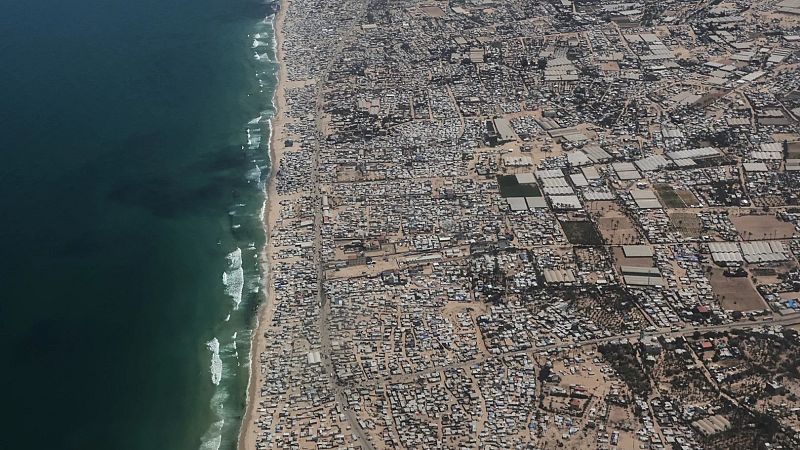
Israel’s Security Cabinet Considers Expansion of Military Operations in Gaza
Israel's security cabinet is currently convening to deliberate on the potential expansion of its military operations in Gaza. This development has sparked considerable debate and opposition within the country, including from the Israeli Defense Forces (IDF). The discussions come after the collapse of ceasefire talks last month, which have left many questioning the future trajectory of the conflict.
Prime Minister Benjamin Netanyahu has been engaging with senior advisers and security officials to explore ways to "further achieve Israel's goals in Gaza." According to an Israeli official, who spoke under the condition of anonymity, the security cabinet is expected to engage in a prolonged debate before approving a plan that could involve conquering all or parts of Gaza not yet under Israeli control.
The official noted that any approved plan would be implemented gradually, with the aim of increasing pressure on Hamas. However, such a move is likely to draw renewed international criticism, especially as Gaza faces severe humanitarian challenges, including widespread famine.
Opposition from Within the IDF
A significant concern comes from within the IDF itself, where Chief of the General Staff Lieutenant General Eyal Zamir has voiced strong opposition to the proposed expansion. Zamir warned that the plan could endanger the lives of hostages and further strain Israel's military resources.
"A culture of disagreement is an inseparable part of the history of the people of Israel; it is a vital component of the IDF’s organisational culture, both internally and externally," Zamir stated in remarks released by the IDF. He emphasized that the IDF will continue to express its positions independently and professionally.
Zamir has clashed with the security cabinet over the proposal to expand operations in Gaza, prompting Netanyahu to suggest that if he opposed the plans, he could resign. Zamir reiterated the importance of the mission, stating that the IDF is "now approaching the final stages" of the war against Hamas.
"We intend to defeat and collapse Hamas. We will continue to act with our hostages in mind, and we will do everything to bring them home," he said.
Concerns from Hostage Families
The potential risks posed to remaining hostages have also raised alarms among their families. On Thursday morning, nearly two dozen relatives of hostages set sail from southern Israel toward the maritime border with Gaza. From boats, they broadcast messages to their loved ones in the Strip, condemning Netanyahu's plan to expand military operations.
Yehuda Cohen, the father of Nimrod Cohen, an Israeli soldier held hostage in Gaza, criticized Netanyahu for prolonging the war to satisfy extremists within his government. "Netanyahu is working only for himself," he said, urging the international community to pressure Netanyahu to halt the war and save his son.
International Aid Organizations Condemn Israeli Policies
Meanwhile, two major international aid organizations have issued reports denouncing Israeli policies in Gaza. Human Rights Watch (HRW) called on governments worldwide to suspend arms transfers to Israel following deadly airstrikes on two Palestinian schools in 2024. HRW found no evidence of military targets at either school, which resulted in the deaths of at least 49 people.
Doctors without Borders (MSF) accused the Gaza Humanitarian Foundation (GHF) of causing "orchestrated killing" rather than providing aid. According to the United Nations, more than 850 people have died near GHF sites in the past two months. MSF reported treating nearly 1,400 wounded individuals near these sites, including 28 who were dead upon arrival.
The GHF did not immediately respond to requests for comment but has previously claimed that its security contractors have not shot anyone at its sites. These allegations highlight the growing concerns about the humanitarian impact of ongoing military actions in Gaza.