
A Dire Warning About the Future of Society
A terrifying societal collapse, reminiscent of a Hollywood movie, may not be as far-fetched as it seems. According to Mo Gawdat, a former Google executive and author, this scenario could occur much sooner than many anticipate. With over 11 years of experience at Google, Gawdat has offered a bleak outlook on the near future of society.
In an interview with The Diary of a CEO podcast, Gawdat warned that we might soon be living in a dystopian world. Describing this future as akin to George Orwell's '1984,' he stated that this period of turmoil could last up to 15 years. However, the cause of this dystopia will not be artificial intelligence itself, but rather the failing morality of humanity in the age of AI.
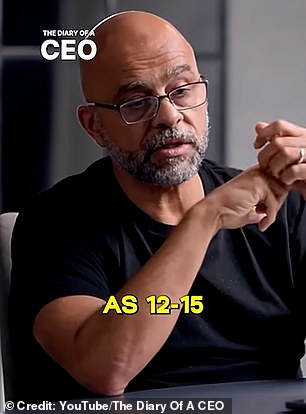
Gawdat emphasized that the dystopia will begin in 2027 and continue for 12-15 years, until the late 2030s. He also noted that signs of this shift will become more evident in the coming year. This period, he believes, will drastically alter various aspects of life, including freedom, accountability, human connection, inequality, economics, reality, innovation, and power.
The key distinction here is that the dystopia will not stem from AI's capabilities, but rather from how humans use AI. "Bad actors" – individuals rather than machines – will exploit AI for harmful purposes such as deceiving citizens, invading their privacy, and stealing their money. The result will be a society marked by great injustice and a concentration of power among a few corrupt figures.
Despite the grim forecast, Gawdat also mentioned a potential long-term 'utopia' after the 15-year period, where everything could be perfect. However, he stressed that society must first overcome the impending challenges.
Who Is Mo Gawdat?
Mo Gawdat is a 58-year-old Egyptian engineer, author, and entrepreneur. He studied at Ain Shams University and Maastricht School of Management. Throughout his career, he has worked at major tech companies such as Google, IBM, Microsoft, and NCR Corporation.
From 2007 to 2013, he served as vice president for Google in Central and Eastern Europe, the Middle East, and North Africa. In this role, he was responsible for Google's multi-billion dollar business and overall success. From 2013 to 2018, he was the chief business officer for Google X, the company’s secretive research and development lab for emerging technologies.
Since leaving Google seven years ago, Gawdat has hosted his own podcasts and authored books covering topics like AI, stress, and happiness. He is also the founder of One Billion Happy, an organization dedicated to promoting happiness following the tragic death of his son, Ali.
The Impact of AI on Employment
In addition to his warnings about the future, Gawdat made some bold statements about the impact of AI on employment. He dismissed the idea that AI will create new jobs, calling it "100 per cent crap." According to him, AI will eventually replace roles across all levels, from top executives to entry-level workers.
Gawdat claimed that AI will be better than humans at everything, including being a CEO. He suggested that there will be a time when most incompetent CEOs are replaced by AI. He also pointed out that anything humans can produce can be created by AI, even highly skilled jobs such as architects designing custom houses for clients.
He posed a rhetorical question to the podcast host: "How many more years do you think I will be able to create a book that's smarter than AI? Not many." This highlights his belief that AI is advancing rapidly and could soon surpass human capabilities in various fields.
Looking Ahead
Gawdat's insights into the future of technology and society have sparked significant discussion. His two-hour, 34-minute interview has been published on The Diary of a CEO's YouTube channel, offering a detailed look at his views on AI and its implications.
As AI continues to evolve, the questions Gawdat raises are becoming increasingly relevant. Whether his predictions come true or not, they serve as a reminder of the need for careful consideration of the ethical and societal impacts of technological advancement.