
A Lifesaving Delivery in Rural Ghana
When six-year-old Kumey Kweku was brought to the Tsoxor CHPS compound with a high fever and persistent vomiting, the staff at the small rural health facility faced an urgent crisis. The situation was dire, as the facility had run out of promethazine, a critical medication used to manage severe nausea and vomiting in children. Without this drug, no other medication could be safely administered to stabilize the young boy.
Sandra Dede Ayayi, a Community Health Nurse at the facility, recalls the moment of panic. “Every second was precious,” she says. The nearest referral facility is nearly two hours away by motorbike, and Kumey’s condition was rapidly deteriorating. With no time to waste, Sandra ran to the only spot in the community with mobile phone reception, only to find someone already on a call. She had to interrupt, begging to take the spot just for a minute so she could place an emergency request to Zipline.
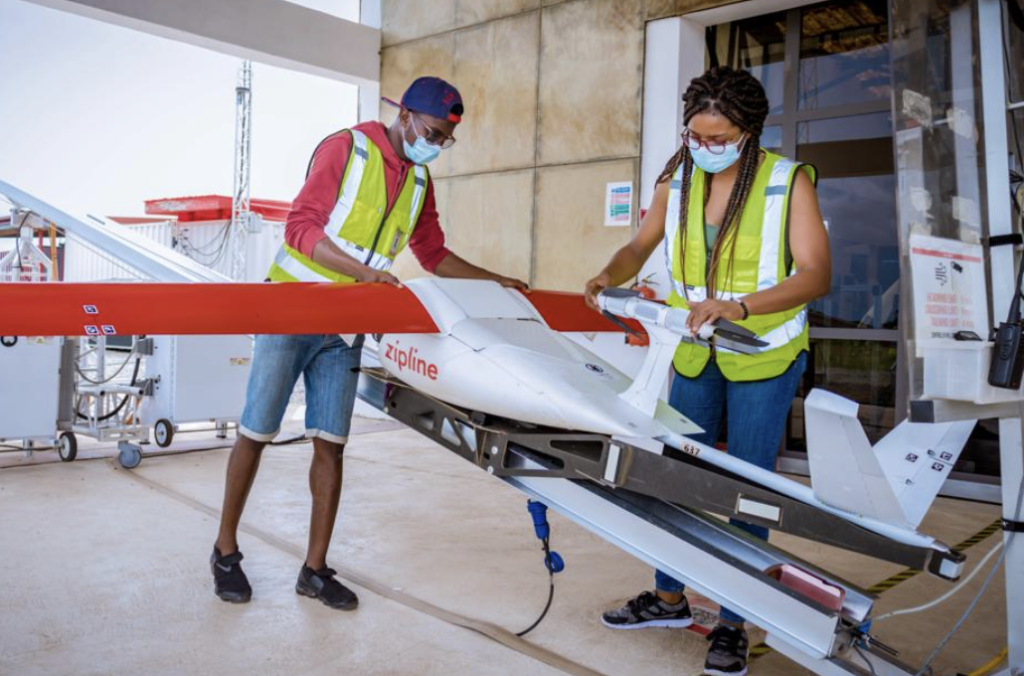
Within 20 minutes, Peace Dzegelor, a Fulfilment Operator at Zipline, had processed the request, and a drone was dispatched, soaring over the rough terrain to deliver the medication directly to the CHPS compound. This timely delivery made all the difference. Nurse Sandra administered the medication, and Kumey’s condition quickly stabilized.
“For us, this was more than just a delivery. It was a lifeline,” she says, her voice filled with emotion. Kumey’s story is just one among many. Since launching operations in 2019, Zipline has delivered over 8.4 million medical products to 3,000 health facilities across 14 regions of Ghana. Operating from six hubs, Zipline’s autonomous drones provide real-time deliveries, unhindered by terrain, weather, or infrastructure, revolutionizing last-mile healthcare logistics.
Ghana is one of the countries globally leading in drone delivery deployment. Zipline’s network has supported nationwide medical logistics since 2019, especially during the COVID-19 vaccine era and child immunization vaccines, reducing delivery time and bypassing road-based delays and emissions.
Mr. Daniel Kwaku Merki, Head of Zipline Ghana, says the company has secured funding from GAVI to establish a seventh distribution centre to serve Ghana’s coastal belt. “With one more hub beyond that, we’ll be able to deliver nationwide. The infrastructure is ready. We’ve proven we are a reliable development partner and can do even more,” he tells the GNA.
Expanding Drone Technology Beyond Healthcare
Beyond healthcare, Zipline sees immense potential to serve other sectors. “Zipline can deliver parcels by collaborating with institutions like the State Transport Company, Ghana Post, and others, just like we’ve done for health,” Daniel notes. Mr. Joseph Yao Hotor, a freight industry expert, agrees. He believes Zipline’s robust logistics infrastructure could revolutionize parcel delivery across Ghana.
“I remember when we explored the opportunity of sending light parcels by air to northern Ghana was cheaper than road transport,” he says. “Zipline’s model could be faster, greener, and even more cost-effective.”
For entrepreneurs, especially those in e-commerce, drone delivery could be transformative. Harriet Frimpomaa Kwakye, owner of Blazer World, runs an online clothing business and relies heavily on motorbikes and buses to deliver products. “It’s expensive and risky,” she explains. Many riders refuse to go to remote areas due to poor road conditions, which limits her reach. Others have lost or damaged her goods.
“Expanding Zipline beyond healthcare would be a game-changer, especially for small businesses. Customers in rural areas would finally feel included,” she says.
Drones and Ghana’s Decarbonisation Journey
As Ghana moves toward greater digitalization and sustainability, drone-based delivery offers an opportunity to reduce greenhouse gas emissions while improving service access. Mr. Desmond Appiah, Country Lead for the Clean Air Fund, explains: “The transport sector contributes nearly 40 per cent of Ghana’s emissions. Replacing diesel-powered last-mile delivery with electric-powered drones can lead to significant emission reductions.”
Research shows that drone delivery of small packages uses up to 94 per cent less energy and emits up to 84 per cent fewer greenhouse gases compared to traditional delivery vans. With Ghana’s growing e-commerce and logistics needs, scaling drone delivery can materially cut emissions, potentially shaving off several percentage points from the nation’s transport-related footprint.
“Complementing Ghana’s decarbonization efforts with drone-based last-mile logistics, especially in rural and peri-urban zones, will not only cut emissions but also bring co-benefits in healthcare access, delivery speed, and reduced road congestion,” Mr. Appiah adds.
As Ghana builds a smarter, cleaner economy, Zipline’s innovative drone model presents a tested solution, not just for saving lives, but for expanding opportunity, empowering businesses, and transforming national logistics.