
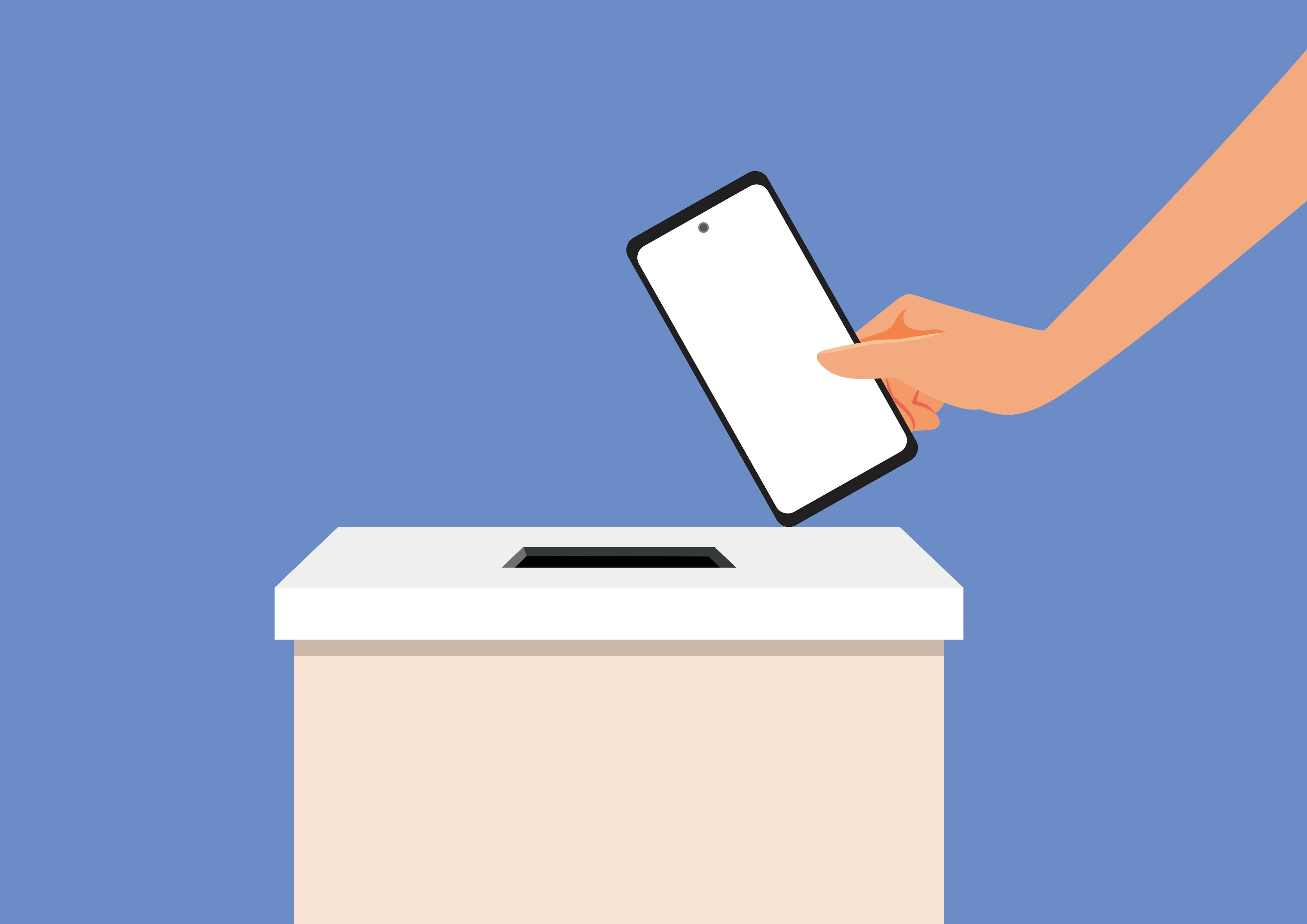
Nepal, February 26 -- In a week, Nepal will choose new members of the parliament, which will result in the selection of a new Prime Minister. With social media increasingly serving as a main source of news for many people, it has also emerged as a powerful channel for political communication, interaction, and influence. The expanding digital aspect of political discussions has tangible real-world effects, influencing voters' views well beyond the online space. Therefore, it is intriguing to see how digital platforms are being utilized during elections, the role of the election code of conduct in setting ethical standards for campaign activities, and its overall effect on voter opinions and the election results.
Digital campaigns
Social media offers a channel through which a politician can directly connect with a vast number of voters without any intermediaries. For instance, recent Facebook updates from Balen Shah have played a key role in engaging his audience effectively. This direct link is comparable to how Twitter was a powerful asset for Donald Trump during the U.S. elections, with Facebook now fulfilling a similar role for Balen, frequently influencing the overall news agenda.
Even though candidates can now connect with voters swiftly and extensively via social media, the code of conduct restricts the type and extent of discussions that can occur in this platform. While the regulatory body has been proactive in enforcement, such as requesting explanations from candidates regarding various insults and false information shared online, the real level of adherence and enforcement is still insufficient.
Additionally, social media provides an affordable method for engaging with voters, which is especially advantageous for smaller political parties and independent candidates who have constrained budgets. This is particularly significant in Nepal's present political environment, where numerous smaller parties and independent candidates have arisen, managing to break into regions previously controlled by major parties, by efficiently utilizing social media to connect with voters in areas where the larger parties had long maintained strong influence.
Broadcasting dilemma
Several media outlets in Nepal creatively adjust their content and posts to reach a specific voter group, rather than providing impartial coverage. Although traditional broadcast media face strict regulations during political campaigns, other media often avoid similar oversight because the rules governing them are vague and not clearly defined. As a result, media have managed to support a particular political party or candidate while presenting themselves as independent. This undermines the main goal of the election code of conduct, which is to guarantee that every citizen has access to a variety of perspectives and opinions.
Political advertising
The utilization of ads for political campaigns on social media, as opposed to conventional media, represents another ambiguous zone that significantly impacts voter behavior. The election code of conduct sets a limit on the number of advertisements a political party or candidate can air within a 24-hour timeframe. Likewise, political ads in private sector newspapers are confined to a specific size. These regulations are designed to prevent private entities from manipulating results through cooperation between media and politicians, or by purchasing influence over public sentiment. Nevertheless, political parties have managed to bypass traditional advertising rules through the use of social media, as these provisions do not appear to apply to this platform, where most electoral communication and campaigning occurs nowadays.
A significant policy concern involves determining what qualifies as a political advertisement. Should every post from candidates and political parties be regarded as an election ad? Are promoted tweets or similar functions considered advertisements and, thus, subject to oversight? Without clear rules on this issue, the regulation of political advertising remains unclear, possibly resulting in an unfair advantage and compromising the integrity of the electoral process.
The code of conduct also limits the use of opinion polls, stating that from the moment a candidate is nominated until the final results are announced, no individual is permitted to carry out or release the findings of such polls concerning candidates or political parties. The rules governing opinion polls have been a subject of international discussion for a long time, particularly regarding the length of the ban and whether it can be considered a legitimate limitation on freedom of speech. However, Setopati, a news website, has released reports suggesting that, based on conversations with voters in a specific region, a certain percentage of voters expressed support for a particular candidate, leading to the conclusion that this candidate would win. These actions may seem, on one hand, to represent a type of indirect survey; on the other hand, they could be viewed as journalistic analysis rather than official opinion polling.
Misinformation and disinformation
Advanced forms of artificial content, such as deepfakes, deceptive chatbots, and false political material, are increasingly utilized to create the illusion of public backing and fabricate political controversies, with targeted advertising methods enhancing their emotional influence on voters. The emergence of fake profiles and computer-generated media adds to the complexity of the information environment, posing challenges for users in identifying genuine versus altered content.
The growing application of generative AI in political campaigns introduces an additional level of difficulty. Currently, generative AI is extensively utilized to create the voice, images, and videos of candidates encouraging voters to back them. The election code of conduct explicitly forbids this kind of behavior by limiting the spread of false, deceptive, or offensive information, as well as the operation of fake websites or social media profiles aimed at affecting election results. Nevertheless, the various forms of disinformation complicate the regulation and implementation of these rules, especially when it comes to determining the originators of such content.
Silence period
The boundaries of acceptable behavior during the silence period are not clearly outlined, resulting in ambiguity regarding which types of news and information should be limited. In the era of digital media, the effectiveness of enforcing the silence period is uncertain. One factor contributing to this is the ongoing advancements in social communication methods, which introduce new, unforeseen ways to shape public opinion, attitudes, and political actions.
The range of media and communication organizations covered includes those set up or registered in Nepal, and the Code of Conduct is not applicable beyond the country's borders or seems to focus on foreign entities. As numerous breaches of the election silence period come from websites based outside Nepal, it has been demonstrated to be challenging to oversee compliance with these restrictions and ensure their implementation.
Conclusion
Social media has revolutionized political campaigns in Nepal, creating fresh avenues for direct interaction with voters while also bringing about difficulties related to oversight, false information, and implementation. The election code of conduct outlines rules to safeguard the fairness of elections, yet its effectiveness in dealing with the swift development of online campaigning is still unclear. Alongside this, maintaining equitable campaigns while upholding freedom of speech is essential for promoting democratic participation. The future of elections in Nepal, and possibly elsewhere, will rely on how effectively these issues are managed amid advancing technology and changing political landscapes.