
Nations, much like individuals, have a distinct personality. This personality is not found in constitutions or solely upheld by laws. It is reflected in the daily actions of its people—through their honesty, self-control, discipline, and kindness. The real power of a nation does not come from its economic figures or military might, but from the ethical behaviors of its citizens. Pakistan was established in the name of Islam, a religion that offers a comprehensive guide for both personal and communal behavior. Within Islam lie the very principles that shape strong nations—justice, trust, truthfulness, discipline, and compassion. However, despite having this strong moral base, we must face an uncomfortable reality. Although we publicly declare these values, we do not always practice them. There is a clear difference between what we claim and how we act.
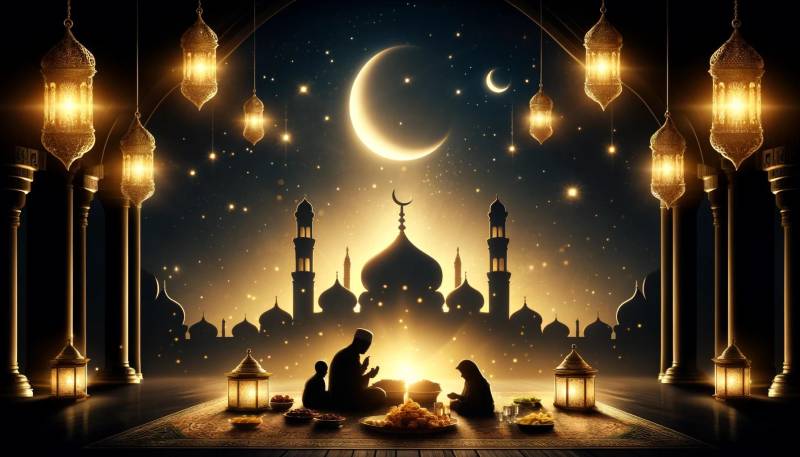
Ramzan-ul-Mubarak comes every year as a chance to bridge this gap. It is more than just a time of religious fasting; it is a planned approach aimed at bringing human behavior back in line with divine standards. Essentially, it offers an annual chance for moral renewal, not only for individuals but for the entire society. Ramzan controls desires, yet its main goal is to control the ego. It reduces impulsive actions and enhances self-discipline. It instills restraint, humility, compassion, and responsibility. It pushes individuals to honestly face themselves, acknowledge their flaws, and actively work on improvement. It is a month that teaches the believer to live not based on convenience, but on principles.
However, as a society, we often view Ramzan as a test of endurance rather than a journey of transformation. We abstain from food and drink, yet not always from anger, pride, deceit, or impatience. Our outward adherence grows, but our inner change remains incomplete. In fact, there is an almost ironic humor in how we handle this holy month. It sometimes seems that we carefully maintain our usual habits, ensuring they stay unchanged beneath the surface, unaffected by the reforming spirit of Ramzan. We act better temporarily, but often with the unspoken agreement that this improvement in behavior is only temporary. It's as if we put our character away during Ramzan, not to purify it forever, but to keep it safe until it can come out again, perhaps even more intense, ready to return to its usual patterns for the other eleven months.
This paradox becomes evident in the simplest parts of daily life. Markets, which are expected to demonstrate kindness and justice during a month that promotes empathy, frequently showcase self-interest instead. Essential goods see abrupt price hikes, and personal financial gain takes precedence over ethical obligations. The act of fasting, which enables individuals to feel hunger firsthand, doesn't always lead to fairness towards others. Likewise, patience, one of the key teachings of fasting, often disappears in public areas. Temperaments become shorter, tolerance decreases, and politeness becomes fragile, especially when faced with minor difficulties. In workplaces, Ramadan is sometimes linked with lower efficiency, even though Islam strongly emphasizes carrying out duties and responsibilities with honesty. These contradictions do not reduce the holiness of Ramadan—they reveal the inconsistency in how we respond to it.
At its heart, Ramadan aims to cultivate Taqwa, which refers to the ongoing awareness of divine responsibility. Taqwa goes beyond mere religious practices. It represents a moral awareness that influences actions even when no one is watching. It promotes honesty when it would be simpler to be dishonest. It encourages patience when anger might be more tempting. It upholds fairness when taking advantage would be more beneficial. Ramadan helps individuals embrace this awareness through organized self-discipline. Fasting teaches the believer that if he can refrain from lawful food and drink for the sake of Allah, he can surely avoid forbidden behavior. It strengthens willpower, which serves as the basis of one's character.
This is why Ramzan should not be viewed as a spiritual break, but rather as a spiritual development initiative. It aims to bring about lasting changes in behavior. The true measure of its success is not determined by the number of days observed in fasting, but by the extent of personal transformation. If the habits cultivated during Ramzan vanish right after, then its core objective has not been achieved. Fasting is intended to reduce the power of impulses and enhance the influence of one's conscience. It is meant to lift the individual beyond impulsive, self-centered actions, allowing them to lead a life characterized by thoughtfulness, respect, and self-control.
The consequences for Pakistan go well beyond personal spirituality. The national identity is essentially the combined manifestation of individual traits. When individuals demonstrate integrity, institutions become trustworthy. When individuals show discipline, systems become organized. When individuals display kindness, society becomes more caring. No country can maintain lasting power without moral unity among its citizens. While laws and enforcement may influence behavior in the short term, only values can shape behavior in the long run. Ramadan offers the most significant annual chance to reinforce these values.
The necessity for change, therefore, is not just theoretical, but pressing and tangible. Without reforming behavior, societal disorder becomes standard. Deception is allowed, impatience is considered normal, and exploitation is seen as routine. In the long run, this undermines trust, weakens organizations, and divides national unity. Ramzan provides a systematic chance to reverse this trend. It disrupts habitual actions and makes room for thoughtful reflection. It enables individuals to examine themselves, identify inconsistencies, and consciously start making changes.
Nevertheless, genuine change depends on deliberate safeguarding. Progress made under Ramzan's leadership should not be left to uncertainty. It needs to be actively preserved. Even small, consistent enhancements can lead to significant long-term effects. An individual who grows a little more patient, a little more truthful, or a little more self-controlled helps reinforce the ethical foundation of society. When these minor advancements are multiplied across millions of people, they result in nationwide transformation.
The process of preserving change starts within the household. Kids acquire values not only through teaching, but also by watching. When they see alignment between what is believed and how people act, they adopt a sense of integrity. When they witness discipline that continues past Ramzan, they develop self-control. Hence, families are the main guardians of a nation's character. Schools, offices, and public systems support the values instilled at home. Collectively, they create behavioral standards that shape society.
Ramzan ultimately acts as a reflection. It highlights not just our current state, but also our potential for growth. It shows that self-restraint is attainable, that discipline can be developed, and that changing behavior is possible. It confirms that people have the ability to manage their own actions. The real difficulty is not in achieving short-term progress, but in maintaining lasting change.
One of the most evident expressions of our shared personality can be seen on our roads. Adhering to traffic rules is not just a legal obligation, but also a moral challenge that tests our patience, respect, and control over our actions. During Ramzan, when we are intentionally practicing self-control in terms of hunger and emotions, this discipline should also apply to how we behave while driving. However, it is precisely on the roads, especially near Iftar time, that we often see the opposite happening. Motorcyclists move unpredictably through tight spaces, sometimes even using pedestrian paths. No one feels guilty about going the wrong way to avoid making a U-turn further ahead. Small vehicles attempt to overtake without considering lanes or space, while larger vehicles dominate by their size rather than by right. Pedestrians cross without following any order, and drivers often disregard the basic rule of yielding. These are not simply traffic offenses; they reflect the very impatience that Ramzan aims to help us overcome.
Respecting traffic rules and the authorities responsible for enforcing them, especially traffic police, is a sign of respecting order. The traffic officer who stands in the heat, managing traffic jams and ensuring smooth movement, embodies the discipline we must adopt. Likewise, every person on the road, whether cycling, riding a motorcycle, taking a bus, or walking, holds equal dignity and the same right to safety. Ramzan teaches us to manage our desires, act with kindness, and show respect to others. When we drive calmly, yield when necessary, follow the rules, and treat other road users politely, we bring the essence of fasting into our daily actions. By doing so, we not only enhance traffic flow but also refine our character, turning roads from places of personal dominance into areas of shared responsibility and mutual respect.
For Pakistan, this presents a remarkable chance. The rebirth of the nation does not start with big speeches. It starts with personal choices. It begins when people opt for honesty instead of ease, patience rather than impulsive actions, and justice over personal gain. It starts when the values taught by religion are shown in behavior. When individuals change - families become stronger, when families grow stronger - society becomes stable, and when society stabilizes - the country ascends.
Ramzan provides us with this chance annually. It doesn't force change, but rather allows it, and similarly, it doesn't enforce reform, but rather encourages it. The choice is ours. We may view Ramzan as a fleeting practice, or we may see it as a lasting moment of change. We can go through it, or we can be changed by it. If we decide on transformation, even in an incomplete or slow manner, we not only enhance ourselves, but also the spirit of the nation.
Provided by SyndiGate Media Inc.Syndigate.info).