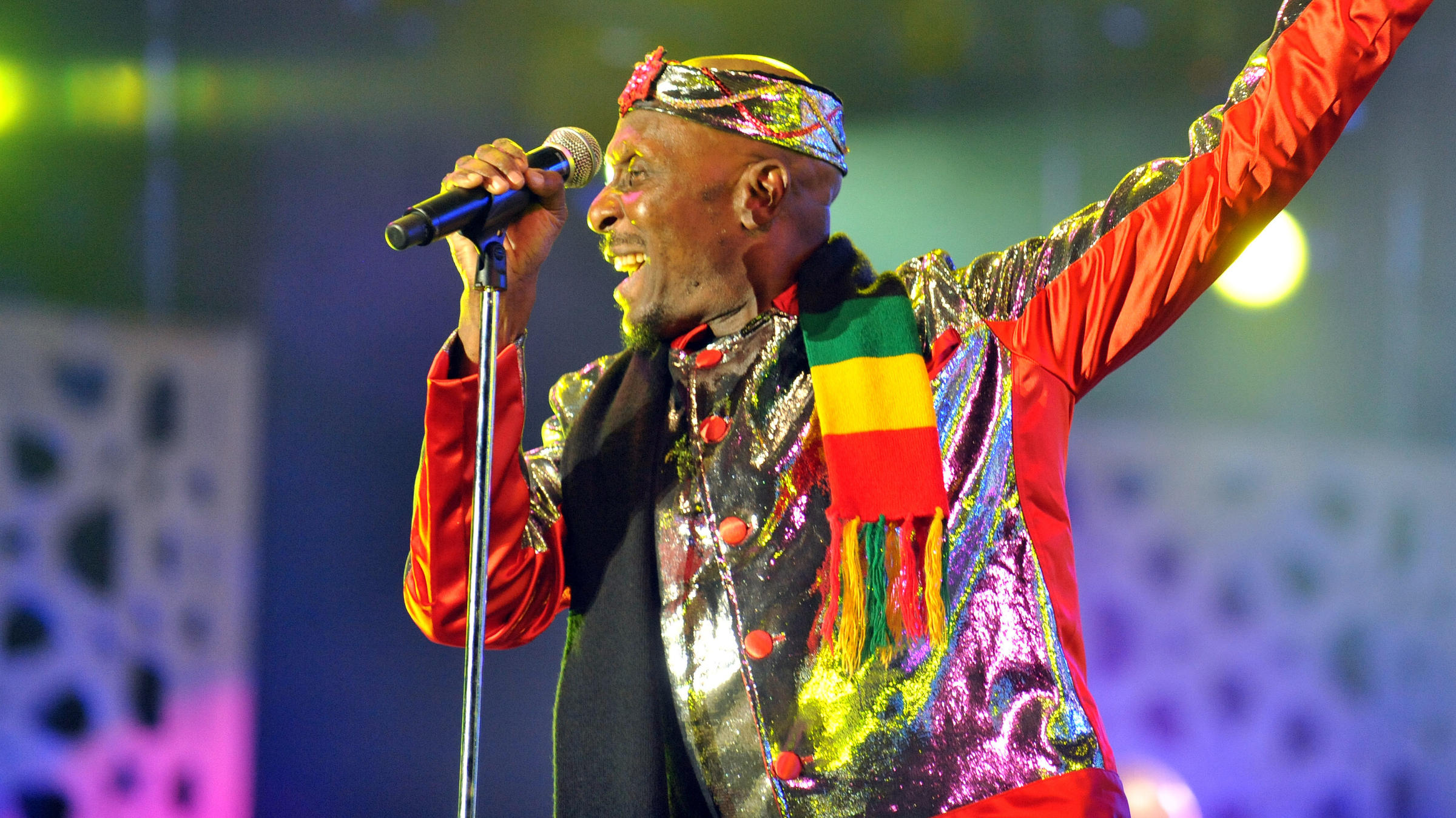
"I haven't written my best song yet, but I'm always working towards it. If my music can inspire someone to live a better life and not give up, that's a huge success for me." Jimmy Cliff For 60 years, Jamaican singer-songwriter and actor Jimmy Cliff stood out among other musicians from the Caribbean island. His passing at the age of 81, announced by his family this week, marks the end of one of the most lasting musicians, not only in Jamaica's signature ska/reggae genres, but also in the broader world of pop music.
His iconic songs, You Can Get It If You Really Want, Wonderful World Beautiful People, The Harder They Come, Many Rivers to Cross, and Hard Road to Travel, were fundamentally reggae but enriched with influences of pop, rock, and soul. That unique, sweet, soaring voice delivered lyrics that resonated with social, political, and economic realities, from the human cost of the Vietnam War to supporting the anti-apartheid movement in the 1980s. "His music has immense appeal to audiences all over the world because he spoke to the everyday struggles of people," says David Katz, author of Jimmy Cliff: An Unauthorized Biography, in an email response to BDLife this week. "Drawing on his own experiences, he sang songs of hardship, struggle, and determination in a way that everyone could relate to. He had a distinctive voice that once heard could never be forgotten," adds Katz, an American author/filmmaker who is a leading authority on reggae.

Although he was a pioneer for reggae, Cliff collaborated with many artists outside his genre, including the Rolling Stones, Annie Lennox, Willie Nelson, Cher, and Kool and the Gang. While visiting Kinshasa in 1986, he ventured into rumba by recording Shout for Freedom with the renowned Congolese band, T.P. OK Jazz, for his album War a Africa. He also worked with South African vocalist Lebo M on a version of Hakuna Matata featured in the 1994 blockbuster film, The Lion King. In 2010, Cliff became only the second reggae musician, after Bob Marley, to be inducted into the Rock and Roll Hall of Fame. "When we saw Jimmy Cliff, we saw ourselves," said Wyclef Jean during the induction ceremony of the man who inspired millions throughout Africa and its diaspora. James Chambers was born on July 30, 1944, and grew up in the village of Somerton, St. James, Jamaica. Just like the character he played in the classic film The Harder They Come, he left the countryside for Kingston as a teenager in 1962 and began recording songs with producer Leslie Kong. At Kong's urging, he adopted the name Cliff to signify the heights he aimed to reach in his career.

He moved to London, UK, and when his career did not take off there, he returned to Jamaica. In 1969, Jimmy Cliff achieved his first international hit with Wonderful World Beautiful People and Many Rivers to Cross. The latter, a gospel-infused vocal and organ arrangement, has since been widely covered by many artists, from John Lennon to UB40. In 1969, Jamaican film director-writer Perry Henzell offered Cliff his big screen debut in The Harder They Come, although the movie was not released due to funding issues until 1972. Cliff portrayed the role of Ivan Martin, an aspiring young singer who leaves his rural village to pursue his dream of becoming a star in Kingston but gets caught up in a world of crime and violence. The film's soundtrack, which features songs by Cliff and other Jamaican stars like Desmond Dekker and Toots and the Maytals, is recognized as the first major introduction of Jamaican music culture to a global audience. "His naturalistic appearance as Ivan in the film was entirely believable, partly because he again incorporated his own experiences into the story through improvised dialogue," says his biographer, Katz.
Jimmy Cliff released albums prolifically throughout the 1970s and 80s, but his output slowed down in the 1990s, even though he had some major hits such as his 1993 version of Johnny Nash's I Can See Clearly Now. In 2022, his first album in a decade, Refugee, raised awareness about the plight of millions displaced from their homes around the world. According to his biographer, Cliff's legacy is a catalog of music built over more than 60 years and the individual vision that guided his life and work. David Katz recalls that Cliff faced criticism when he performed in South Africa in 1980, defying the cultural boycott against the apartheid regime. In a rare show of unity, 55,000 people of all races filled the Orlando Stadium, Soweto, for the concert. "Jimmy Cliff did things on his own terms, and his strong belief in using music for the betterment of mankind is another part of his legacy," says Katz. "He regularly refreshed his band with top musicians, known and unknown, to keep his music constantly fresh. He was a humanitarian at heart, and that shone through in his music. Add to that an undeniable charisma, and you have the essence of Jimmy Cliff." →bodidi@yahoo.com Provided by
zaianews.com.
