
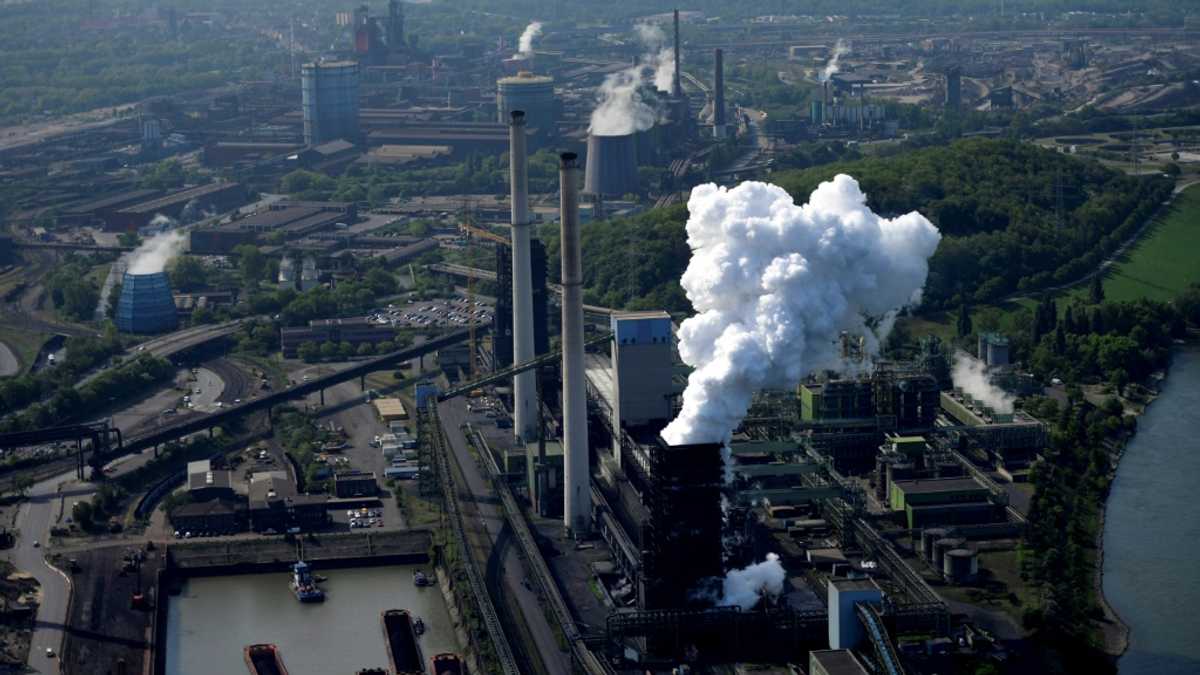
Germany's Industrial Output Hits Historic Low in June
Germany’s industrial production has experienced a significant decline, reaching its lowest level since the early stages of the pandemic in 2020. This drop highlights the fragility of Europe’s largest economy, especially as it faces new challenges from US tariffs imposed by former President Donald Trump.
According to data released by the Federal Statistical Office (Destatis), factory output fell by 1.9 percent in June compared to the previous month. This decline was more severe than the 0.5 percent drop predicted by analysts. The most affected sectors included machinery and pharmaceuticals, contributing to the overall reduction in production to levels not seen since May 2020 during the height of the coronavirus pandemic.
Destatis also revised its earlier report on May’s industrial production, adjusting the figure from an initial increase of 1.2 percent to a slight decrease of 0.1 percent. This revision underscores the volatility of the sector and raises concerns about the health of the German economy.
Economic Outlook and Analyst Perspectives
ING bank analyst Carsten Brzeski commented that the poor performance could lead to downward revisions of the already weak economic growth estimates for the second quarter. He described the situation as “bad news,” noting that the industrial sector appears to be stuck in a prolonged period of stagnation.
Chancellor Friedrich Merz has prioritized revitalizing Germany’s traditional export powerhouse, which has been struggling due to high energy costs and competition from China. Recent plans to invest hundreds of billions of euros in infrastructure and rearmament have generated some optimism, with positive data releases at the start of the year suggesting a potential recovery.
Business morale reached its highest level in July after seven consecutive months of improvement. Think tanks like the DIW institute have even raised their growth forecasts for 2025 and 2026. However, the mixed nature of recent economic data has raised doubts about whether this optimism is well-founded.
Some experts argue that the improved data might be attributed to US "front-loading," where American customers rushed to place orders before Trump’s tariffs took effect. Brzeski emphasized that current data does not support the optimistic outlook, suggesting that the rebound may have been temporary.
Signs of Recovery or Optimism?
Despite these concerns, some analysts see potential signs of recovery. Berenberg analyst Holger Schmieding pointed to increased investment and a rise in retail sales as indicators of positive developments in the German economy. He noted that consumer confidence seems to be stabilizing, with households cautiously opening their wallets.
Impact of New Tariffs
New US tariffs, which went into effect on Thursday, have added another layer of uncertainty for German exporters. A baseline tariff of 15 percent on EU exports, up from 10 percent, has placed additional pressure on German businesses. Meanwhile, German exports to the US fell by 2.1 percent in June, despite a 0.8 percent increase in global exports.
Industrial orders, a key indicator of future business activity, also declined by 1.0 percent in June, following a 0.8 percent drop in May. Additionally, the US is conducting investigations into sectors such as pharmaceuticals and semiconductor equipment, raising fears of further complications.
Helena Melnikov, head of the German chambers of commerce, highlighted the burden these tariffs place on German companies. She noted that previous tariffs were typically between zero and two percent, and warned that ongoing negotiations could result in even harsher conditions for certain sectors. She described the situation as a significant setback for businesses operating in Germany.