
A Groundbreaking Legal Ruling for an Anorexic Patient
A High Court judge has made a historic decision allowing hospital staff to force-feed a 25-year-old woman with anorexia, marking the first time such an action has been permitted in this context. The case involves a woman known as "Patricia," whose real name cannot be disclosed due to legal reasons. Patricia developed an eating disorder at the age of 11, and her condition has led to severe physical deterioration. Her weight has dropped to three stone, equivalent to that of a five-year-old child, leaving her unable to walk unaided for over two years.
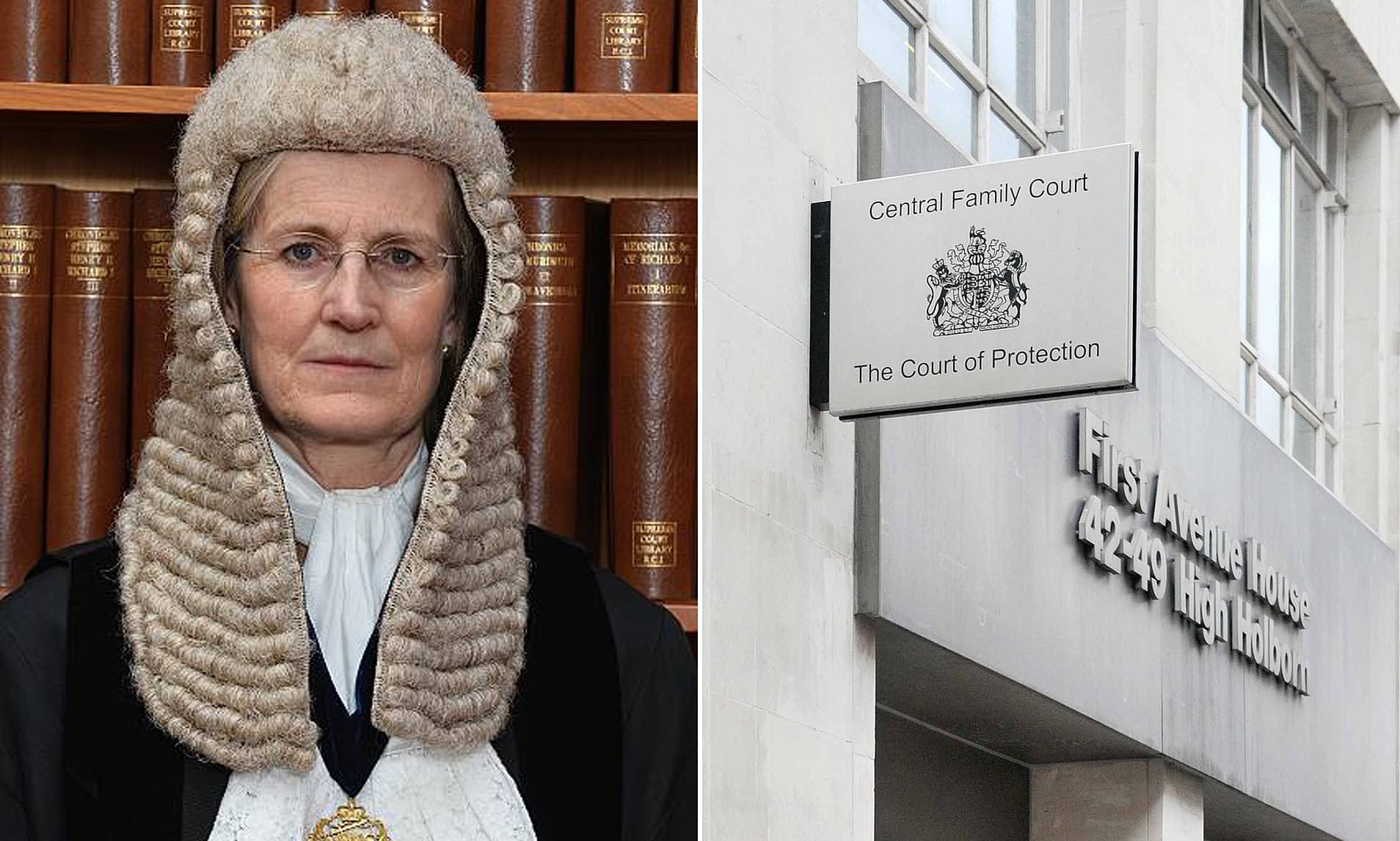
Patricia's health has further deteriorated, resulting in osteoporosis and bedsores. Despite being treated at Norfolk and Norwich University Hospital, she has consistently refused to eat or accept other interventions aimed at gaining weight. The hospital initially denied requests from her family to feed her via a nasogastric tube without her consent. This decision was challenged by her parents and aunt in the Court of Protection in March, where Mrs Justice Arbuthnot ruled that Patricia, who also has autism, can be made to eat.
This ruling is significant because it is the first instance in which the Court of Protection has overturned a previous order that prevented access to life-saving treatment for someone with an eating disorder. In 2023, Mr Justice Moor determined that Patricia lacked the capacity to make medical decisions but believed it was not in her best interests to receive nasogastric feeding or other treatments against her will. However, since then, Patricia’s condition has worsened, and she was described as being “on the brink of death” in March of this year.
Over eight hearing days, Mrs Justice Arbuthnot reviewed evidence presented by both sides. Oliver Lewis, a barrister representing Patricia’s family, argued that her values and beliefs should be understood through the lenses of anorexia and autism. In her judgment, the judge emphasized the need to prioritize saving Patricia’s life, stating that the balance between the immediate risk of death and the psychological harm of lifting the previous orders favors life-saving measures.
The legal battle began when Patricia, who was unaware of the proceedings, was mistakenly emailed details by a hospital worker. She then requested that the 2023 order remain in place. During the hearings, Dr Ali Ibrahim, a consultant psychiatrist on behalf of the family, acknowledged the potential psychological distress caused by forced treatment but provided examples of individuals who later expressed gratitude for life-saving interventions they had resisted.
Mr Lewis criticized the earlier judgment for interpreting patient autonomy in a “thin sense,” arguing that it placed clinicians in a restrictive position. The court also heard that despite her condition, Patricia repeatedly expressed a desire to live and fulfill her dreams. In a text message to her aunt, she wrote: “I don’t want to die… I want to go on holiday, I want to walk up mountains. I want to swim in the sea. I want cuddles and kisses. I want to party and have fun… please help me more.”
In a 2022 email to her psychiatrist, following a short period of nasogastric feeding, she expressed optimism about her future, saying, “I’m feeling so, so positive about things moving forward… I don’t know why on earth I didn’t have the NG when I first came in!”
The case involved several NHS organizations, including Norfolk and Norwich University Hospital, Norfolk and Waveney Integrated Care Board, and Cambridgeshire and Peterborough NHS Foundation Trust. These organizations were taken to court by Patricia’s parents, who described their stance on her care as “unconscionable.” While the NHS organizations argued that force-feeding would be futile, this contradicts NHS guidelines that state anorexia is not a terminal illness and should be treated.
Mrs Justice Arbuthnot acknowledged Patricia’s concerns about being force-fed being “torture” but stated that the previous judge’s position had failed. She emphasized that a potential life-saving option available to other anorexic patients was not accessible to Patricia. Without changing the orders, there was no doubt that Patricia would die, and her will to live remained strong.
Patricia’s parents now await a bed in a specialist eating disorders unit so she can receive the treatment she desperately needs. Chelsea Roff, executive director of the eating disorder charity Eat Breathe Thrive, highlighted the significance of the case, stating that it offers hope to families fighting for loved ones and individuals with eating disorders seeking necessary care.
A spokesman for the three NHS organizations welcomed the clarity provided by the Court of Protection ruling.