
South Korea's shipbuilding sector is becoming a crucial negotiating tool in the last stage of tariff discussions with the United States.
As per the presidential office, U.S. Commerce Secretary Howard Lutnick showed significant interest in Seoul's planned shipbuilding collaboration during his second discussion with Minister of Trade, Industry and Energy Kim Jung-kwan on July 25.
Shipbuilding has emerged as a key component of President Donald Trump's plan to boost American manufacturing and challenge China's growing maritime presence. Since the Biden administration, Washington has shown its desire to strengthen shipbuilding collaborations with allies such as South Korea and Japan. Trump reinforced this dedication in April by issuing an executive order designed to restore American maritime supremacy, detailing initiatives to revive the domestic shipbuilding sector, increase cooperation among allies, and strengthen naval capabilities and supply chain security.
The South Korean government is said to be getting ready to suggest upgrading relations from fundamental technological collaboration to a comprehensive technology partnership. This plan, focusing on shipbuilding, also covers defense, energy, and semiconductors. As the United States faces strategic rivalry with China in key industries, Seoul is aiming to be seen as a crucial ally.
During discussions, South Korean trade representatives reportedly highlighted the nation's technological superiority over Japan in shipbuilding, asserting that Seoul provides Washington with a more advanced and extensive industrial collaboration. Japan, which recently concluded an agreement with the United States, listed the construction and upgrading of U.S.-based shipyards as a key focus area within its $550 billion (around 760 trillion won) investment fund. Jang Sang-sik, director of the International Trade Research Institute at the Korea International Trade Association, stated, “Japan, constrained by its technical capabilities, can only provide investment cooperation, while South Korea can serve as a complete technology partner in shipbuilding.”
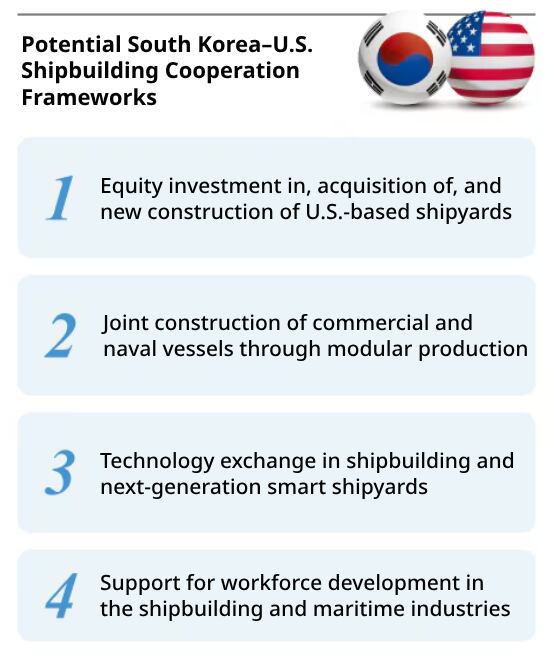
The South Korean government is said to have collected investment and collaboration suggestions from major local shipbuilding companies, such as HD Hyundai and Hanwha Ocean. According to industry insiders, investing in aging American shipyards is one of the most commonly talked-about strategies. The objective is to upgrade outdated facilities and utilize skilled South Korean workers to boost efficiency.
A portion of the extensive investment fund that Washington is aiming to secure—estimated at $400 billion—might be directed towards assisting South Korean small and mid-sized shipbuilding suppliers in entering the U.S. market and fostering a local shipbuilding industry. Further purchases or the establishment of new shipyards by South Korean companies are also being explored. Nevertheless, a spokesperson from a South Korean shipbuilder stated, "U.S. shipyards for sale are uncommon, and given the potential for changes in the Trump administration's policies, there are valid reasons to approach this carefully."
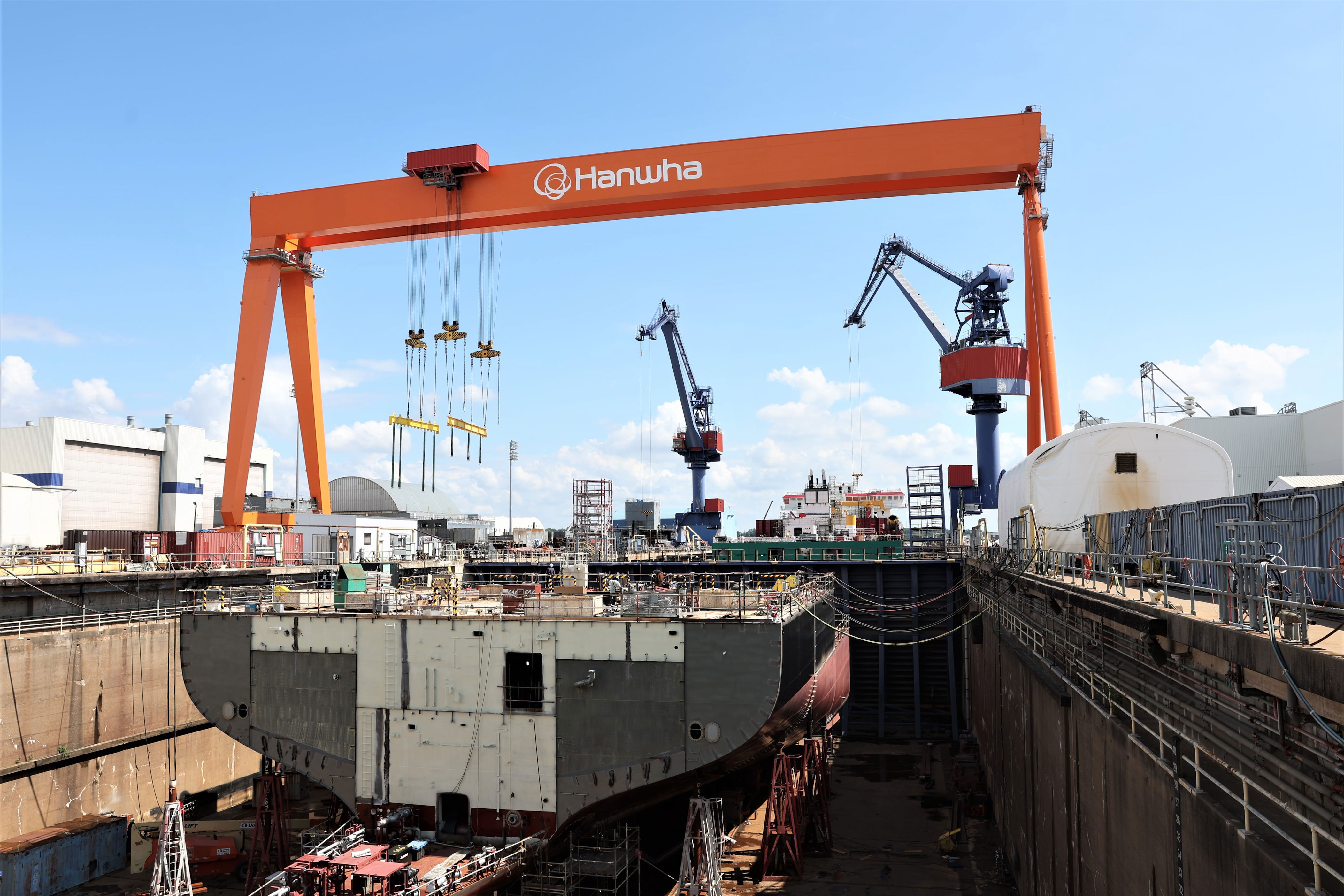
Collaborative shipbuilding initiatives between South Korean and American shipyards are also under consideration, encompassing both commercial and military vessels. HD Hyundai is collaborating with the U.S.-based shipbuilding company Edison Chouest Offshore (ECO) to develop plans for jointly constructing mid-sized container ships at ECO's domestic shipyard until 2028. Hanwha, which operates the Philadelphia Shipyard, has already initiated joint construction of a liquefied natural gas (LNG) carrier, entrusting the project to Hanwha Ocean's Geoje facility in South Korea.
Even though U.S. law formally limits the outsourcing of building and maintaining naval and commercial ships to foreign companies, a potential solution being considered is granting the U.S. government "golden shares," which would allow it to block important decisions. This approach is comparable to the method used when Japan took over U.S. Steel.
A different suggested structure proposes modular manufacturing, as advised by the Center for Strategic and International Studies (CSIS) in May. In this system, key parts like hull segments, power units, and navigation systems would be produced in South Korea and then transported to the United States for the last stage of assembly. This method is considered a way to improve production effectiveness while addressing the U.S. shipbuilding industry's long-standing issues with infrastructure and skilled workers.