
A Man’s Battle Over a ‘Man Cave’ and a Protected Willow Tree
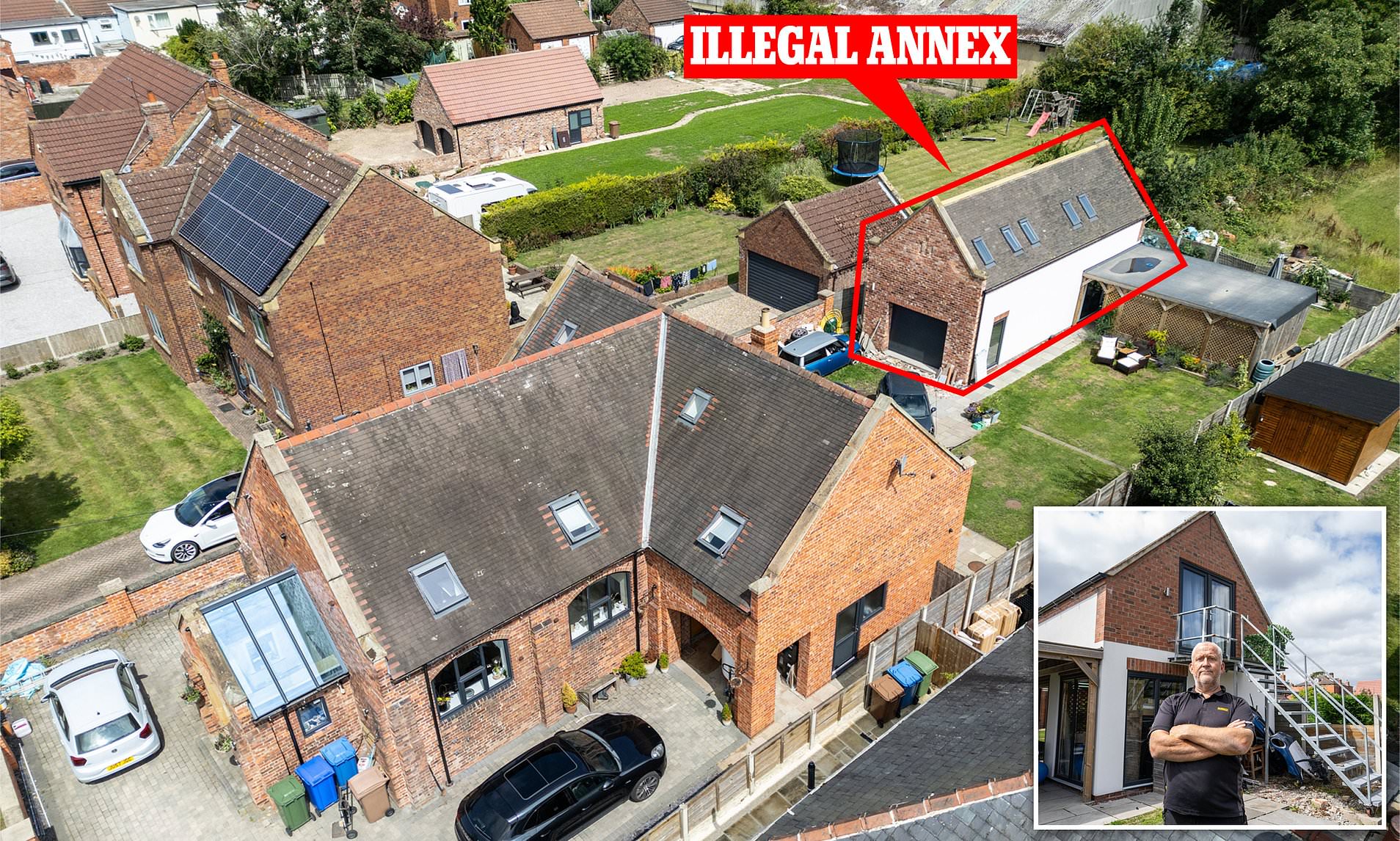
A man in East Yorkshire is locked in a legal and personal battle over an unauthorized structure in his garden, which he built to serve as a "man cave" for his hobbies and family. Justin Claybourn, 56, has found himself at odds with neighbors and local authorities after constructing a two-storey annexe without proper planning permission. The project, which cost £75,000, has led to fines, a demolition order, and ongoing disputes over the legality of his actions.
The structure, located behind his detached home in Foggathorpe, a historic village mentioned in the Domesday Book, was originally approved for a single-storey garage. However, Claybourn expanded the plans significantly, adding a steel staircase, French doors, and a first-floor balcony. Neighbors have raised concerns about the impact on their privacy, with one describing the building as “completely out of character” for the residential area.
Claybourn, a plumber and builder, also faced consequences for cutting down a protected willow tree that had been under a Tree Preservation Order (TPO). He admitted to felling the 50ft tree after it caused damage to his property, claiming it was an invasive species that posed a risk to his family. Despite this, he was fined £5,644 for illegally removing the tree, which was reportedly in good health before being cut down.
Legal and Planning Disputes
East Riding of Yorkshire Council has ordered the complete demolition of the structure, including the staircase and an adjoining timber pergola. The council argues that the final build does not match the original approval, which included only a modest garage. Instead, the completed annexe features a bathroom, kitchen, reception room, and additional Velux windows, making it a self-contained space.
Claybourn claims he followed permitted development rules and insists the council misinterpreted his original plans. He has appealed the decision and is confident he will win, stating that the worst-case scenario would involve removing the windows and staircase. However, he refuses to demolish the entire structure, arguing that the council’s actions are overly harsh.
Neighbors have expressed frustration over the lack of privacy caused by the elevated balcony and glass doors. Emma Lister, a neighbor, wrote an objection to the planning application, highlighting the impact on her family’s sense of security and comfort. She described the structure as “a dominant feature” that disrupts the harmony of the neighborhood.
The Broader Implications
The council’s enforcement documents highlight that the building’s appearance has been significantly altered, making it stand out from surrounding properties. They argue that the structure no longer complements the domestic setting and violates design codes. Additionally, the council warns that the unregulated use of the annexe could lead to noise and disturbance for nearby residents.
Claybourn defended his work by pointing out that he used reclaimed stonework from a church conversion to match the original property. He also noted that the height of the annexe—6.25 meters—is only slightly larger than what was initially approved. However, these arguments have not swayed the council or the courts.
The Road Ahead
If Claybourn loses his appeal with the Planning Inspectorate, he will have six months to demolish the annexe or face further legal action. The council has not commented during the appeal process, but officials have emphasized their commitment to protecting trees and taking action against illegal activities.
The case underscores the tension between individual property rights and community interests. It also highlights the complexities of planning regulations, where even minor deviations can lead to significant consequences. For now, Claybourn remains defiant, vowing to fight the decision while trying to find a compromise with the council and neighbors.