
The Druze: A Faith of Unity Amidst Centuries of Conflict
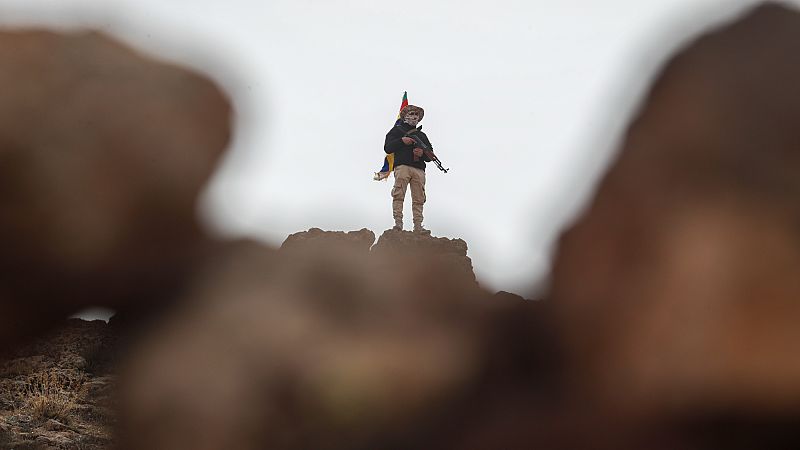
The Druze, a small but historically significant religious group in the Middle East, have long been known for their commitment to peace, intellectualism, and spiritual unity. However, recent violent clashes between Druze and Bedouin militias in Syria’s southern Suwayda region have thrust the community into the global spotlight. These conflicts, which resulted in over 1,000 deaths and displaced nearly 130,000 people, have raised urgent questions about the future of the Druze in a region marked by deep-seated sectarian tensions.
Despite the violence, one of the Druze’s three religious leaders, Hekmat Al-Hijri, emphasized that the group has always been rooted in three foundational tenets: the use of reason, non-aggression, and truthfulness. “We are peaceful people who have never attacked anyone in the past,” he told Euronews, highlighting the group's historical stance on non-violence.
A History of Persecution and Resilience
The Druze faith traces its origins back to the early 11th century in Egypt, where it emerged as an offshoot of Ismaili Islam, itself a branch of Shi’a Islam. The religion was founded around the teachings of Al-Hakim, a controversial Fatimid leader who disappeared mysteriously in 1021. His followers, who later became the Druze, faced persecution and were eventually driven out of Egypt, settling in the mountainous regions of what is now Syria, Lebanon, and parts of Israel.
Throughout their 1,000-year history, the Druze have endured discrimination and marginalization. Their religious doctrines remain shrouded in secrecy, with many aspects of their beliefs not widely known outside the community. One anonymous Druze resident from Suwayda explained that the Druze follow the concept of Tawhid, or unity, which emphasizes a personal, spiritual relationship with God rather than rigid religious rituals. This approach allows the Druze to coexist with various sects and ethnicities, fostering a sense of inclusivity.
Political Alliances and Marginalization
Over the centuries, the Druze have formed strategic alliances with different powers. During the Crusades, they supported Ayyubid and Mamluk forces in resisting the Crusaders. They also maintained a degree of autonomy during Ottoman rule, even challenging authority in the 1600s by forming a coalition with Maronite Christians.
In modern times, the Druze played a key role in the founding of Lebanon, and in Syria, they have been a powerful political force under the leadership of the Jumblatt family, who head the Progressive Socialist Party. However, in Syria, the Druze have faced significant challenges. Since the rise of the Assad regime in 1970, many Druze leaders have accused the government of marginalizing the community, restricting their access to resources and military positions.
While some Druze figures benefited from the old regime, others were staunch opponents. Tamara Abu Alwan, a Druze artist and activist, spoke of her family’s opposition to the Assad regime. “My father lost his job because he was against the regime. We were all in opposition,” she said, adding that the family helped areas outside government control at great personal risk.
The New Regime and Rising Tensions
With the fall of Bashar al-Assad and the rise of Ahmed Al-Sharaa, the Druze have faced new uncertainties. While Al-Sharaa has met with Western leaders and lifted some sanctions, the country remains in economic turmoil, with 90% of the population living below the poverty line. Despite promises of stability, interethnic violence has continued, particularly in the coastal regions where Alawite communities were targeted in early March.
Al-Sharaa called for calm and promised an independent investigation, but many believe the president was complicit in the violence. “They asked the Alawites to hand over weapons,” said a Suwayda resident, describing how the attack unfolded after the weapons were surrendered.
Sheikh Hikmat Al-Hijri claimed that the violence was premeditated, citing a months-long media campaign designed to incite ethnic tensions. “Suwayda occupied more than 25% of the Arab world’s news reports at a time when there were no overt disputes,” he said, suggesting a coordinated effort against the Druze.
Distrust and Uncertainty
As tensions escalated, violence broke out again in July, with both Druze and Bedouin militias accusing each other of war crimes. The international community condemned the violence, but the EU avoided assigning blame. Meanwhile, Al-Sharaa announced a ceasefire, promising to protect the Druze. However, many remain skeptical.
Tamara Abu Alwan expressed deep distrust in Al-Sharaa, saying, “He has lost respect for the Syrian people.” She criticized the new regime, stating that the Druze had sacrificed too much for nothing.
Al-Hijri, meanwhile, defended Israel’s airstrikes, claiming they were justified after the Assad regime ignored warnings and attacked the Druze. “We welcome this action, which could help stop the savage campaigns against us,” he said.
Yet, privately, some Druze were more cautious. “At the same time, we were just trying to escape from the massacres,” one person said, highlighting the ongoing struggle for survival in a region still reeling from decades of conflict.