
The Growing Threat of Wildfires in Southern France
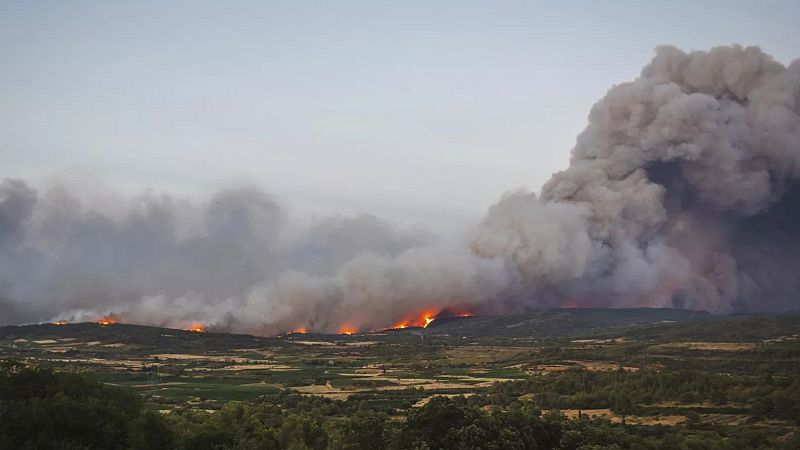
A massive wildfire currently raging in the south of France has become the largest in the country since 1949, raising serious concerns about the increasing frequency and intensity of such disasters. The fire, which began near the village of Ribaute in the Aude region, has already consumed over 16,000 hectares of land—an area equivalent to one and a half times the size of Paris. This makes it the biggest wildfire recorded in France since the national fire database was established in 2006.
The blaze has claimed at least one life and has been burning for three days. In its first 12 hours, it spread across 11,000 hectares, an area roughly the same size as Paris. Within 24 hours, it had burned the same amount of land that is typically destroyed by wildfires across France in an entire year. French Prime Minister François Bayrou has called the situation a “catastrophe of unprecedented scale.”
Factors Contributing to the Fire's Rapid Spread
Officials have attributed the rapid spread of the fire to a combination of strong winds, dry vegetation, and hot summer weather. The fire’s growth has been particularly alarming due to the extreme conditions that have persisted in the region. According to Agnès Pannier-Runacher, France’s minister for ecological transition, the fire is clearly linked to climate change and drought in the area.
Michael Sabot, deputy director of the Aude fire department, stated that unfavorable weather conditions mean the fire will likely not be contained on Thursday. High temperatures, exceeding 40°C, and winds reaching over 40 km/h are expected to further dry out vegetation, increasing the risk of more fires. Météo-France has also warned that the heat is intensifying in the south, with a high risk of wildfires.
Drought Conditions and Their Impact
The Mediterranean regions of France are currently experiencing significant drought, making vegetation and trees highly susceptible to fires. Météo-France reports that even tall trees have been affected, leading to extremely intense fires. This is a clear sign of the severity of the ongoing drought.
The Aude region has been under a “drought crisis” since August 1, with strict water use restrictions in place. A lack of rainfall in recent months has played a major role in the spread of the fire, according to the environment ministry. In neighboring Pyrénées-Orientales, rainfall has decreased by approximately 60% since 2022.
Ongoing Investigation into the Fire's Cause
An investigation into the exact cause of the fire is still underway. While no official cause has been confirmed, the conditions that led to the fire’s rapid spread are being closely examined. Scientists and environmental experts believe that climate change is playing a significant role in the increasing number of wildfires in the region.
Climate Change and the Mediterranean Wildfire Crisis
This year has seen an extremely active and damaging fire season across Europe. According to the European Forest Fire Information System, wildfires have burned 353,862 hectares of land since the beginning of 2025—more than twice the area burned during the same period last year. The Mediterranean region has been particularly hard hit, with multiple large fires reported this summer.
Scientists warn that climate change is exacerbating the frequency and intensity of heatwaves and droughts, making the region more vulnerable to wildfires. According to data from the European Drought Observatory, more than half of Europe, including the Mediterranean, experienced the worst drought conditions in the first part of July since monitoring began in 2021.
Climate change is also altering rainfall patterns in Europe, making it harder for regions like the Mediterranean to recover from dry periods. Previously, these areas could rely on wetter seasons to replenish water supplies, but this is no longer the case. As a result, the risk of wildfires continues to rise, posing a growing threat to both people and the environment.