
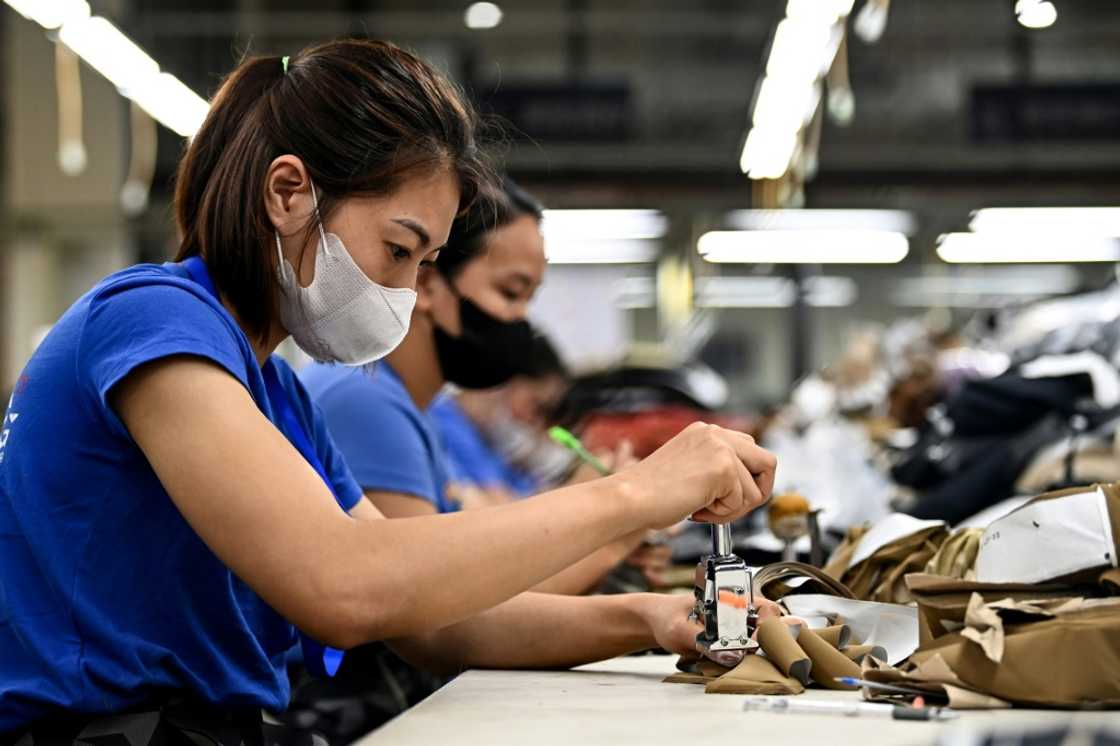
With Donald Trump's extremely high tariffs on Chinese goods transiting through Vietnam scheduled to take effect on Friday, businesses in the Southeast Asian nation are cautiously awaiting the details of what will be included in this category.
This month, Hanoi struck an agreement with the United States, its primary export destination for goods such as apparel and footwear, which will result in a 20 percent tariff on its exports.
At Huashuo, a facility that handles plastic imported from China, Chinese owner Gong Xihua told AFP that the additional fees "won't affect me, as I am completely processing and manufacturing here (in Vietnam)."
The firm produces plastic components and packaging at its facility located in the northern industrial hub of Hai Phong.
He believes that due to this, the entire manufacturing process means it will not be regarded as a Chinese product.
However, the agreement also includes a provision that doubles the rate to 40 percent for products originating from third countries that use Vietnam as a means to bypass higher trade restrictions, a practice known as "transshipment."
This presents a significant challenge for Huashuo, as it exports 90 percent of its products to the United States and obtains 40 percent of its plastic pellets from China.
Faced with pressure from the United States, Hanoi had already pledged in April to enhance measures regarding the origin of goods to stop fraud related to "Made in Vietnam" products.
Vietnam 'most exposed'
However, without the specifics of the agreement, experts are challenging the meaning of a "transshipped" item.
"There is also a genuine chance that goods being transferred contain products incorporating some Chinese components," said Adam Ahmad Samdin, an economist from Oxford Economics.
In that case, compared to other countries in Asia, Vietnam is considered the "most vulnerable," he added.
Many factors also rely on the level established for domestic value addition or foreign inputs.
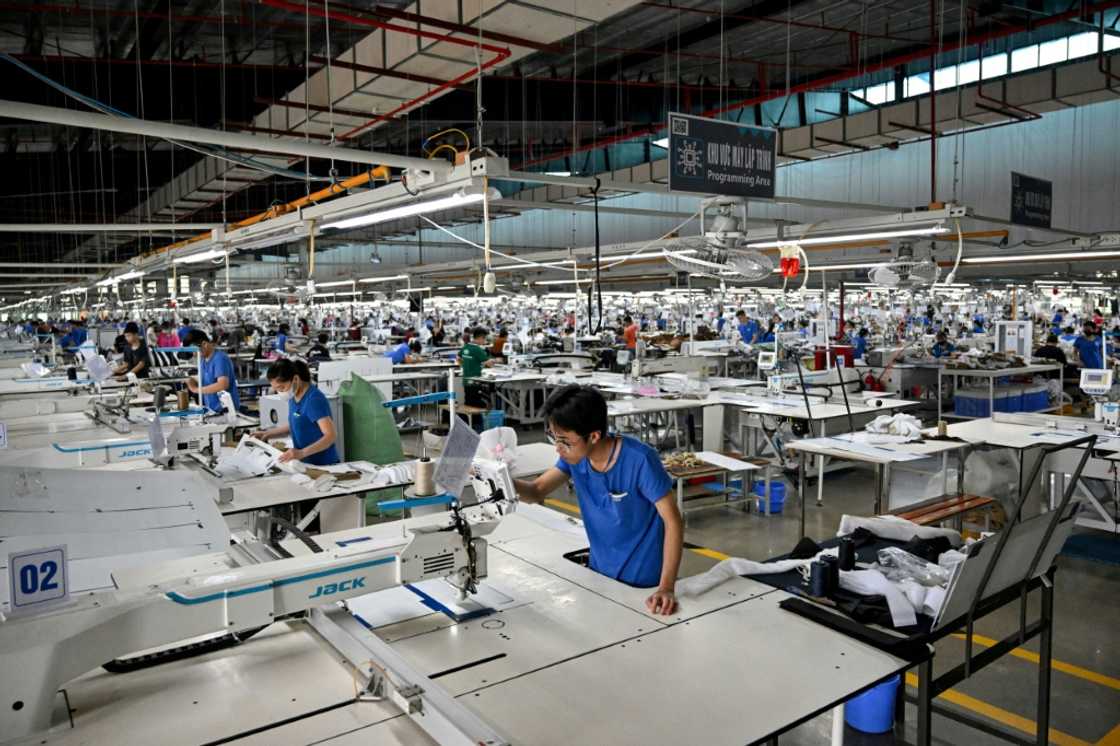
Huashuo is relying on "very strict controls" implemented by Hanoi, which stipulate that materials and manufacturing occurring in Vietnam must account for at least 35 percent of the final product's value to obtain a "certificate of origin," enabling companies to bypass the 40 percent US tariff.
Every business is required to reveal the source of its raw materials and acquisitions, and must consent to inspections of their facilities.
"Export restrictions from Vietnam are extremely tight... as if the requirements aren't satisfied, the United States will lose confidence in Vietnam's origin certificate," Gong stated, adding that tariffs would then be imposed more broadly.
The United States makes up 32 percent of Vietnam's exports, whereas 40 percent of its imports originate from China.
Washington has criticized the shift in strategy since it introduced heavy tariffs on imports from China in February.
As per local statistics, from January to May, Vietnam's imports from China rose by approximately 25 percent compared to the same period last year, while its exports to the United States grew by over 27 percent.
Nevertheless, Marcel Thieliant from Capital Economics mentioned that approximately 20 percent of this rise in the United States "can be attributed to an increase in goods that have been redirected from China".
"That suggests that locally made products make up the majority of the rise in exports heading to the United States," he added.
'Many are waiting'
Thanks to affordable costs and a strategic geographical position, Vietnam is reaping the benefits of the "China plus one" strategy adopted by companies aiming to spread out their manufacturing operations.
"Several major corporations have already moved their operations from China to Vietnam," said Qiu Jide, chairman of Huasho.
China is the third-largest investor in the nation, following South Korea and Singapore.
But "Vietnam is essentially a... re-export and processing trade-focused economy," and without details on the trade agreement, "few entrepreneurs are rushing to invest, many are waiting," Qiu stated.
If Washington were to impose penalties on the portion of Chinese materials or components in Vietnamese goods, the China plus one approach might face disruption.
"The electronics industry, which has likely gained the most... is especially at risk because of its significant reliance on Chinese components. In particular, Vietnam's involvement in electronics is mainly limited to the final stages of assembly," Samdin stated.
Natixis economist Alicia Garcia Herrero stated: "Vietnam has significantly raised its reliance on Chinese intermediate products."
The United States' effort to gain more influence in Southeast Asia while attempting to isolate China will be challenging, if not unachievable, since China has become essential in the Asian supply network.