
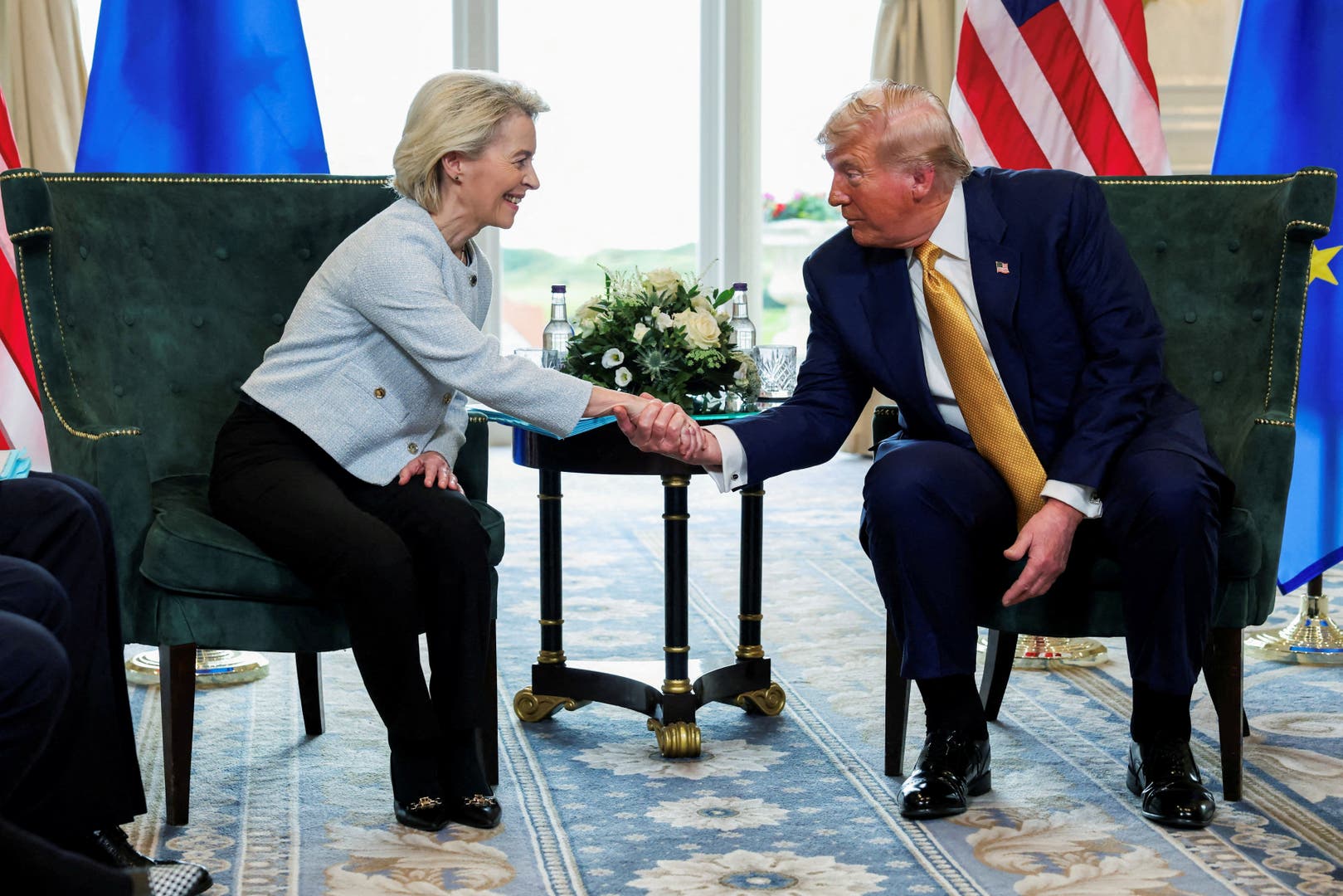
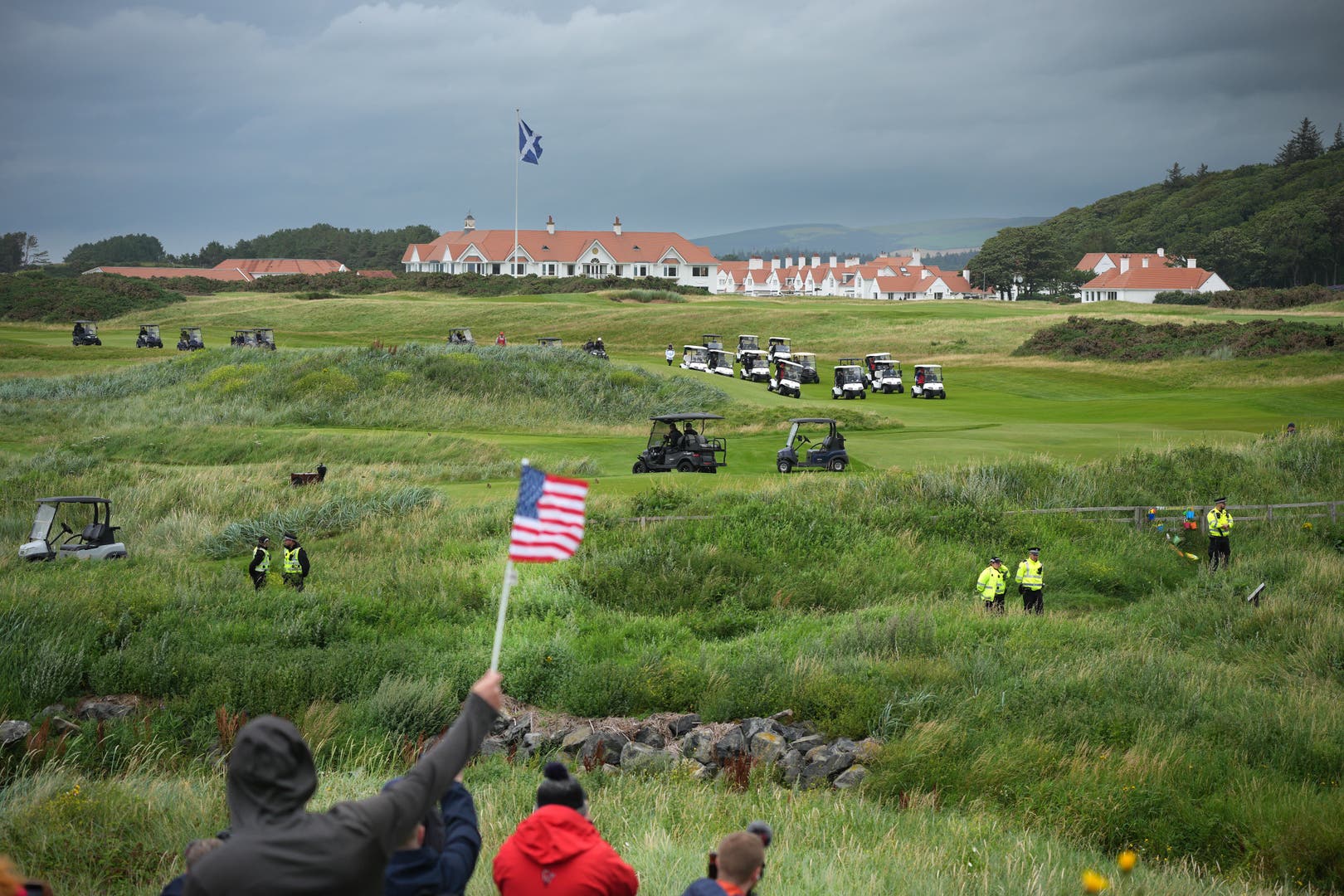
Numerous Europeans likely anticipated a more accommodating approach from U.S. President Donald Trump during EU Commission President Ursula von der Leyen's visit to his golf course in Scotland on Sunday. However, even the clean air and lush European grass failed to deter Trump from continuing his strict tariff measures.
The United States will now impose 15% import taxes on most products coming from the European Union, while American exports to the EU will be exempt from duties. So, does this not represent a disadvantage for Europe?
Well, that varies depending on perspective. One thing is clear: the EU needed to consider economic, geopolitical, and security issues while negotiating with Trump.
Trump views tariffs as a strong means to support his political requests. And the president is aware of how much Europe relies on the United States.
Those who want to evaluate the EU's customs agreement with the U.S. must therefore consider economic logic alongside geopolitical and security factors. An economically liberal perspective only becomes apparent when comparing the strongest arguments.
Three perspectives, three arguments
First-person perspective: a change in economic policies approach
The global division of labor enabled the significant economic growth witnessed in recent decades. One of its core ideas is that products and their parts should be produced in the most efficient manner – and wherever this can be achieved most effectively.
A fair global competition ensures this, encouraging specialization and effectiveness. Nevertheless, tariffs interfere with this efficiency. With the set rise in the unweighted tariff on imports from the EU to the U.S. – increasing from 3.5% at the start of the year to more than 15% currently – Donald Trump is skewing the competition between American and European manufacturers to benefit local production.
European manufacturers must produce their products significantly more efficiently or create higher quality items than their American counterparts. If they fail to do so, they will face a loss in market share. In contrast, the pressure on American companies will decrease; they will no longer need to be as innovative. As a result, their products may become less competitive on the global stage. Additionally, American consumers will find that similar quality goods will come at a higher cost.
The new tariffs are thus primarily detrimental to the U.S. They will diminish the efficiency of its economic operations. Firms within the EU may at least gain from somewhat lower import costs and, over a longer period, from increased competitive pressure. Nevertheless, it is expected to take some time before these impacts become noticeable in the major domestic markets of both America and Europe.
However, the trade agreement between the EU and the U.S. is problematic for another reason. Through this action, the EU is aligning itself with Trump's strategy of implementing tariffs specific to certain countries. This marks a significant change in approach. Rather than offering uniform protection against global competition, Trump's form of protectionism will differ based on each country, influenced by the decisions made in Washington. This leads to motivations that redirect trade and may have no connection whatsoever to the efficiency of national economies or businesses. The most appealing country will be the one that is favored by Trump at that specific time.
At the same time, tariffs are increasingly being utilized as a political tool for a wide range of purposes – both expected and unexpected – such as limiting the import of fentanyl and stopping legal actions against allied politicians. Nevertheless, tariffs might be an ineffective means for these purposes, as their application as a general political instrument leads to long-term uncertainty for businesses and investors, which in turn will reduce the efficiency of the global division of labor.
The key issue now is whether this change in approach to country-based tariffs will remain confined to trade with the United States or if other nations will adopt similar measures. The EU's rapid compliance has sparked concerns that the latter outcome is likely.
Second perspective: political cowardice
What would be the appropriate reaction to Trump's tariff threats if you aimed to present yourself as a neutral global power?
It might have been wise to overlook the entire matter and position yourself as the protector of the global trade system and its international regulations. Europe could have enhanced competition within its own domestic market, thus boosting the competitiveness of its own businesses.
The EU might have also shown geopolitical power by following a comparable approach to China and implementing retaliatory actions. For instance, it could have made things challenging for American technology firms until Trump agreed to mutual liberalization policies. However, this would have likely led to even greater tariffs being imposed.
The EU might have also pursued a more substantial geopolitical role by yielding to pressure from Washington and reaching out to China. After all, competition enhances not only your economic standing in the long run.
Nevertheless, from a geopolitical perspective, the trade agreement between America and Europe highlights one key point: the EU and its member countries are so reliant on the U.S. that they are determined to avoid angering Trump under any circumstances. However, currently, the EU is finding it difficult to develop an independent geopolitical identity and is instead facing disdain from autocratic leaders around the world.
At the same time, Europe is also dedicated to the trans-Atlantic concept, which goes far beyond a mere practical alliance. The American Revolution in 1776 and the French Revolution in 1789 established the groundwork for the modern nation-state and liberal democracy. The responsibility to protect this accomplishment is shared. The Americans helped save Europe from totalitarianism on two occasions during the 20th century.
Third factor: impact on security policies
From the viewpoint of the United States, this kind of agreement has been significantly delayed. Through the tariff deal, the U.S. is finally receiving what it feels is the payment it is owed for the security support it has offered Europeans since 1945. To them, Europeans have acted as free riders and disregarded all the signals from Washington. Trump is now insisting that Europe settle its debts – and pay a substantial penalty.
At the conclusion of World War II and throughout the Cold War, the Americans might have been interested in making sure that European armed forces no longer had offensive capabilities. However, after that? Following the fall of the Soviet Union, the U.S. may have favored focusing on its own development instead of on Europe's stability. But events unfolded differently.
In the initial years following the end of communism and the reunification of Germany, Europeans, overwhelmed with happiness, permitted a military conflict to emerge in the Balkans. Rather than examining and understanding the mechanisms of hybrid warfare, they viewed the disintegration of Yugoslavia as chaos and remained passive from the safety of white U.N. tanks – until the Americans intervened to restore stability and rekindle people's self-respect.
Since the 1990s, Europeans have experienced a form of perpetual youth. While in power, politicians such as Silvio Berlusconi and Nicolas Sarkozy used frivolity as a defining style. Angela Merkel ended mandatory military service. When the Kremlin launched its large-scale invasion of Ukraine, Berlin initially provided only a handful of helmets. The U.S. has carried out most of the efforts – and now Europe will bear the cost.
Latest articles
NZZ Geopolitics – The standalone Swiss perspective
Positioned apart from the American media mainstream, the NZZ delivers unique perspectives that question the divided stories commonly seen in U.S. journalism. We aim to offer thorough, balanced reporting on international matters, covering events in the United States, Europe, China, and more. Adopting a neutral position, we examine occurrences with a serious and analytical approach. Supported by a reliable group of global correspondents and experienced journalists located in Switzerland, we provide incisive analysis and a more profound comprehension of world politics and the global financial landscape.
Sign up for our free newsletter or follow us on Twitter, Facebook or WhatsApp.