
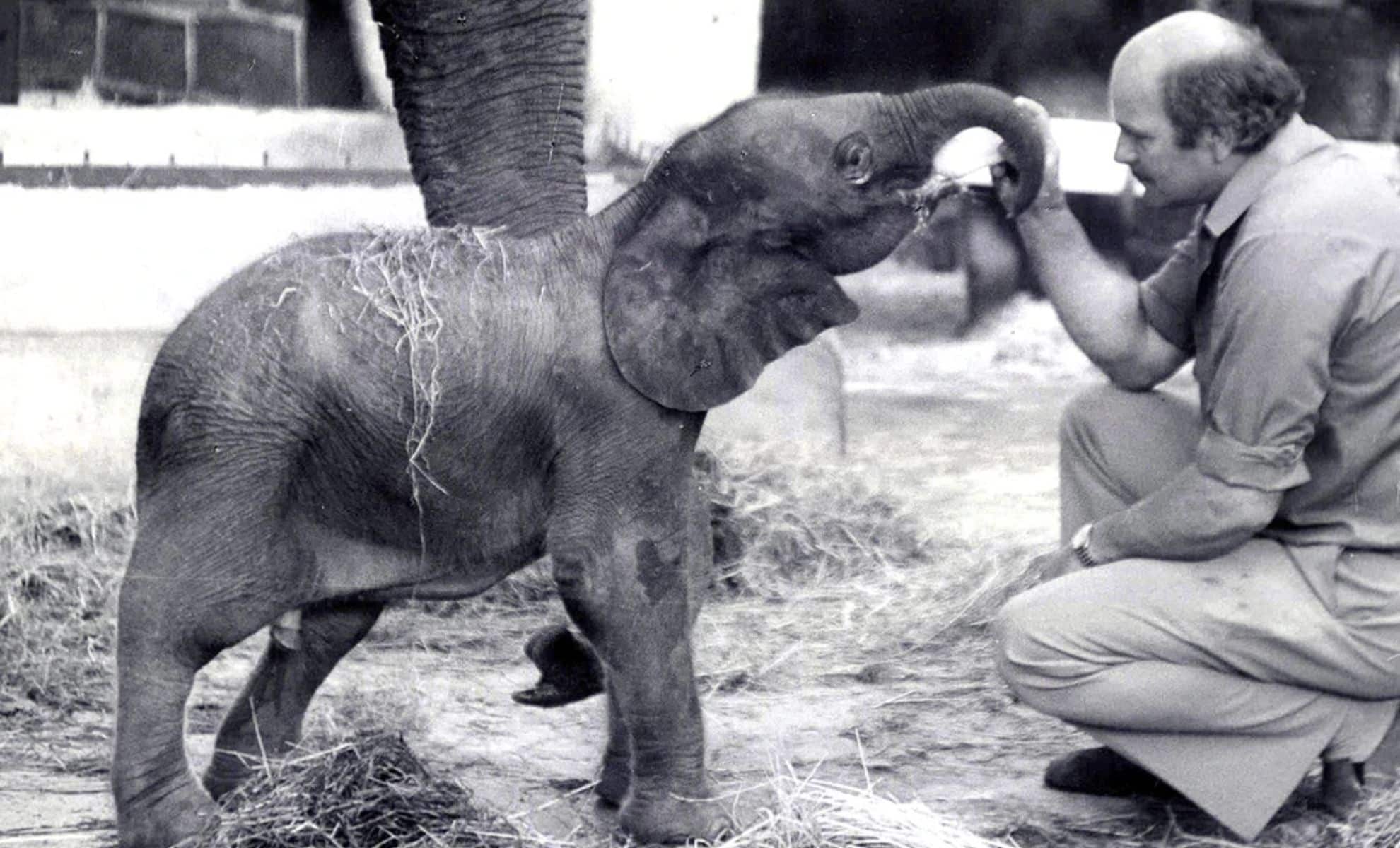
Motty, an extraordinary elephant crossbreed, stands as one of the most intriguing and sorrowful tales in the animal world. Referred to as the "world's rarest elephant," Motty was the sole documented hybrid between an African elephant (Loxodonta africana) and an Asian elephant (Elephas maximus). This extremely rare occurrence took place at Chester Zoo in the UK in 1978. His tale was made eternal inGuinness World Records, indicating a rare instance of crossbreeding between two significantly different species, divided not only by continents but also by an entire genus. Motty's tragic death shortly after birth further enhances the enigma surrounding his brief existence.
A Distinctive Birth: The African-Asian Elephant Hybrid
The arrival of Motty was an extraordinary occurrence, not only because of his mixed heritage but also because of the remarkable union between two elephants from distinct species and even separate genera. African elephants and Asian elephants exhibit significant differences, with African elephants being larger, often growing up to 13 feet tall, whereas Asian elephants reach a maximum height of 11.5 feet. Additionally, African elephants possess wider ears that aid in cooling in the African plains, while Asian elephants have smaller, rounder ears that are better adapted to their surroundings.
Born before his time, Motty was much lighter than a normal newborn elephant, yet his physical characteristics told a unique story of cross-species mixing. His ears and head shape were similar to those of his African father, Jumbolino, who was a male African elephant. However, his toenail pattern, with five toenails on the front feet and four on the back, was a distinctive feature that indicated his Asian elephant mother, Sheba. The arrival of Motty was not only unexpected for zoo staff but also a significant moment for the scientific world, sparking questions about the potential for hybridization between the two species.
Although there was excitement surrounding Motty's birth, there were immediate worries about whether such a mix would be able to survive. The genetic differences between African and Asian elephants are considerable, leading to questions about whether such a baby could even live, let alone flourish after being born.
The Heartbreaking Passing of Motty: A Brief Life, An Enduring Impact
Regrettably, Motty's life was brief. He was born six weeks early and faced challenges right from the start. He needed immediate and intense care, but even with the veterinarians' best efforts, he was too weak to live. Only 10 days after being born, Motty sadly died due to necrotizing enterocolitis, a serious digestive system condition that is frequently deadly for newborns.
A autopsy showed that Motty had a severe E. coli infection that impacted both his colon and the umbilical cord. The reason for his early birth and weak condition is thought to be connected to the rare cross-species pregnancy. Motty's passing left the world with a sorrowful feeling of what could have been—a powerful reminder of the intricacies of genetics and the fragile equilibrium needed for survival, even in the most robust of creatures.
Although Motty's passing was deeply saddening, it contributed to the progress of scientific knowledge regarding elephant biology and cross-species hybrids. The distinct nature of his situation drew the interest of scientists investigating hybridization and animal genetics. Additionally, Motty's preservation and later exhibition at the Natural History Museum in London made sure that his short life would not be overlooked.
The Uncommon Genetic Makeup of Elephant Hybrids: What Is Known
The crossbreeding between African and Asian elephants is so uncommon that Motty is the only verified case ever recorded. These two elephant species possess significant genetic differences, making natural mating in the wild extremely unlikely. Their habitats are separated by great distances—African elephants reside in sub-Saharan Africa, whereas Asian elephants are spread throughout Asia, including regions like India and Southeast Asia. The genetic distinctions between them are not only geographical but also evolutionary, as African elephants belong to a different genus compared to their Asian counterparts.
This separation in both habitat and genetic makeup usually stops any chance of mating. Yet, the circumstances at Chester Zoo, where both species were kept together, accidentally provided the unique setting needed for hybridization. Motty's arrival sparked important questions about the limits of genetic compatibility between species and the impact of captivity on such events.
Although Motty is uncommon, hybrid animals are not a completely new occurrence. Other famous hybrid animals, like the wholphin (a combination of a whale and a dolphin) or the beefalo (a blend of cattle and bison), demonstrate the biological capability for hybrids among various species, although such cases are still infrequent and typically need particular circumstances to arise.
Enjoyed this article? Sign up for our free Newsletterfor captivating narratives, unique material, and up-to-date information
For additional news of this nature, visitIndiandefencereview.com