
A strong 8.8-magnitude earthquake near Russia's eastern coast on Wednesday morning caused tsunami waves that affected Japan, Hawaii, and the US coastline.
It is among thestrongest earthquakes recorded in modern history.
Japan issued evacuation orders for almost 2 million individuals. The initial tsunami alerts have now been reduced to warnings or predictions.
Tsunami warnings at different levels were also issued in various Pacific islands, regions of China, Indonesia, New Zealand, Peru, Mexico, and the Galapagos Islands near Ecuador. Many of these have since been reduced or withdrawn.
The Klyuchevskoy volcano, among many others located on Russia's remote Kamchatka Peninsula in the far east, has also begun to erupt, as reported by the state news agency RIA.
Travelers encouraged to follow local authority evacuation instructions
The UK's Foreign Office has revised its travel guidance for 15 nations. Travelers are advised to adhere to the recommendations of local officials and remain attentive to any changes if they are in an area with a warning in effect.
TsunamiHawaii was hit by waves, with a 1.2-meter swell measured near Oahu. A 1.74-meter wave was noted at Kahului, Maui, and a 1.5-meter wave was recorded in Hilo.
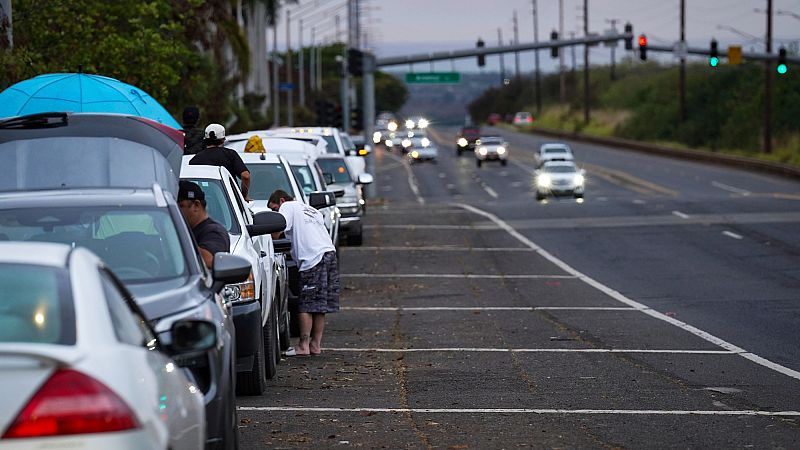
Hawaii's Governor Josh Green has urged residents to comply with evacuation instructions and remain composed.
The tsunami alert has now been reduced, and residents have been allowed to go back to their homes.
A wave measuring 1.3 meters hit Japan's northern Iwate prefecture, as reported by the nation's meteorological agency, with additional waves observed in the Fukushima and Miyagi prefectures.
The tsunami has also affected the coastline of California, as reported by the US National Weather Service.
In Indonesia, people living in Papua, North Sulawesi, North Maluku, and Gorontalo, as well as visitors, have been warned against getting close to the shoreline.
Tsunami warning adds challenges to travel in Japan
Ferries linking Hokkaido with Aomori at the northern end of Japan's Honshu island were halted, along with those serving Tokyo and surrounding islands.
Several local train services have been canceled or are experiencing delays, as reported by the operators.
Sendai Airport has announced that its runway is currently closed, leading to two domestic flights—one from Fukuoka and another from Osaka—being rerouted to different airports.
Japan Airlines and All Nippon Airways have halted all flights to Sendai Airport.
Numerous delays have been noted at various Japanese airports such as Narita International, Tokyo International (Haneda), Kansai International, and Fukuoka.
Airlines rerouting flights from Hawaii
Multiple flights were rerouted from Hawaii aftertsunamialerts, as reported by FlightRadar24. This encompasses flights that had already left Los Angeles, Vancouver, San Francisco, and San Diego.
HNL is not shut down but is urging passengers to contact their airline directly for the latest information on flight status and travel alerts.
Air travel is slowly resuming its usual pattern after the tsunami alert was reduced.
Several flights planned for this afternoon have been canceled, including an American Airlines flight from Dallas-Fort Worth, a United Airlines flight from San Francisco, and Delta Air Lines flights from Seattle and Los Angeles.
Postponed flights this afternoon are a Delta Air Lines journey heading to Minneapolis, an American Airlines trip to Dallas-Fort Worth, and a United Airlines flight bound for Houston and Denver.
Alaska Airlines and Hawaiian Airlines have halted operations to, from, or within the Hawaiian islands. As a precautionary measure, Alaska Airlines mentioned that flights heading to Hawaii are returning to the mainland or being rerouted when necessary.
"Individuals traveling to, from, or within the Hawaiian Islands are advised to verify their flight status before arriving at the airport. We are keeping track of airport conditions in collaboration with government authorities and may experience operational effects," the airline stated.
It mentioned that a waiver is available to provide passengers with the ability to modify their travel arrangements.
Ships on a cruise in Hawaii required to leave earlier than planned
The U.S. Coast Guard has instructed all commercial ships to leave Hawaiian ports, with all harbors closed to new arrivals.
The Norwegian Cruise Line's Pride of America vessel had to leave Hilo port in Hawaii approximately two and a half hours earlier than planned.
Passengers were notified with the message, “Because of a tsunami alert from the State of Hawaii, the Pride of America will leave Hilo right away as instructed by the Department of Transportation.”
If you are not near the harbor, go to a higher area and follow the instructions of the local officials to ensure your safety.
Numerous travelers who had gone on tours, along with the ship's staff, failed to return to the vessel prior to its departure from the harbor, resulting in their being left behind.
Oceania Cruises' Oceania Regatta is said to have left the Kailua-Kona port earlier than scheduled, as reported by the Cruise Hive website.
A vessel located in deeper waters may not detect a tsunami passing beneath it, which is why it is common practice for ships to move away from the harbor when a tsunami is expected.
What compensation am I entitled to as a traveler in case of a natural disaster?
Individuals impacted by earthquake and tsunami alerts are advised to review their travel insurance policy details to determine if they qualify for reimbursement.
"Travel insurance plans that feature coverage for natural disasters typically provide protection for canceled lodging, travel, and activities, along with emergency medical treatment and evacuation if required," notes travel insurance specialist Alicia Hempsted fromMoneySuperMarket.
Nevertheless, according to international rules, airlines are not obligated to provide compensation for delayed or canceled flights due to 'unusual situations,' such as natural disasters like earthquakes or tsunamis.
"If your flight is delayed due to this, the airline is required to provide food, beverages, and lodging based on how long the delay lasts," Hempsted states.
If severe weather conditions are predicted prior to your booking or departure, and you decide to proceed with your journey, your insurance company might not be liable for any associated issues.