
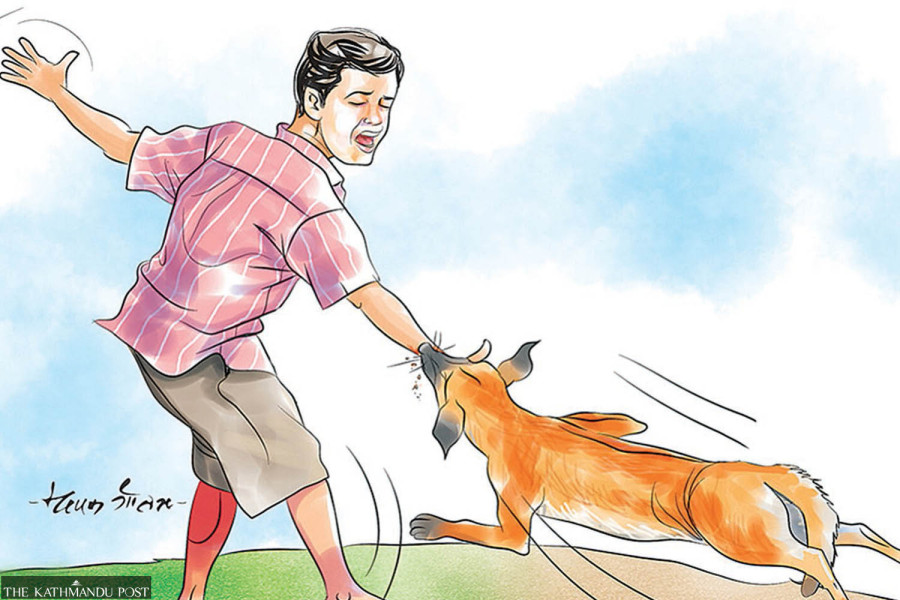
Kathmandu, July 31 -- Up to three individuals have succumbed to rabies, while hundreds from two remote villages—Chotesh and Bunpung in ward 6 of Benighat Rorang Rural Municipality within the Dhading district—are suspected to have been exposed to dogs carrying the disease.
Authorities are worried about a large-scale spread of the dangerous virus in the impacted communities, following three fatalities within a period of one and a half months.
We have already initiated a large-scale vaccination drive against the rabies virus in the affected villages," stated Dr. Chandra Bhal Jha, director of the Epidemiology and Disease Control Division. "Almost 300 individuals from the affected villages have received the anti-rabies vaccine, with the vaccination process still continuing.
Rabies is a severe viral illness that spreads through the saliva of infected creatures, particularly dogs and jackals. The virus is passed on when an infected animal bites another. In Nepal, nearly all rabies-related deaths are caused by dog bites. Medical professionals state that if the anti-rabies vaccine is given promptly, rabies can be completely prevented, but once symptoms appear, the disease is always deadly.
Authorities at the Dhading Health Office mentioned that medical personnel have been sent to the impacted villages for widespread immunization.
Two of the latest cases—a 52-year-old man and an 82-year-old woman—were transported to the primary health service centers in their local areas for care following the emergence of rabies symptoms. Medical staff then directed them to Sukraraj Tropical and Infectious Hospital in Kathmandu for additional treatment.
At Sukraraj Hospital, doctors sent the patients back to the health facilities they had come from," said Toyanath Chhatkuli, a public health inspector at the Health Office. "They passed away right after being returned. The bodies were taken straight to the cremation from the health facility.
Even though both victims had not been bitten by dogs or other animals recently, they succumbed to rabies, as stated by Chhatkuli.
Chotesh and Bunpung are isolated Chepang communities located deep within the forests. As reported by health officials, residents of these villages share their meals with dogs and sleep in the same spaces as them.
Nepal is striving to eradicate rabies transmitted by dogs by 2030, a goal established by the World Health Organisation. Nevertheless, data from the Health Ministry indicate that cases of dog bites have been increasing annually. During the fiscal year 2021-22, more than 56,000 individuals across the country visited government-run health facilities for anti-rabies vaccinations each year. It is believed that thousands of additional dog bite victims receive care at private clinics.
It is believed that more than 100 individuals lose their lives to rabies annually across the nation; nevertheless, the Ministry of Health and Population has data indicating approximately two dozen fatalities on average.
Medical professionals note that not every dog bite is documented or reported, and not all affected individuals receive medical care, presenting a difficulty in preventing rabies-related deaths and a significant barrier to achieving the target of eradicating rabies transmitted by dogs by 2030.
A further challenge in preventing rabies-related deaths and achieving the goal, according to specialists, is the limited awareness and access to treatment, which is mostly found in big cities.
Out of all individuals bitten by animals, particularly dogs, 40 percent are children below the age of 15. As per medical professionals, children often refrain from informing their parents about these incidents due to the fear of being reprimanded or facing injections.
Because of insufficient knowledge about the dangers, parents also fail to take dog bites seriously and do not get vaccinated. Some individuals believe that anti-rabies vaccination is unnecessary if the dog is a pet.
As per the World Health Organisation, rabies leads to 59,000 extremely distressing and painful deaths worldwide annually, with one fatality occurring every nine minutes, primarily affecting children and those in poverty. Although the disease is deadly, it can be completely prevented if vaccines and critical treatment are available following a dog bite.