
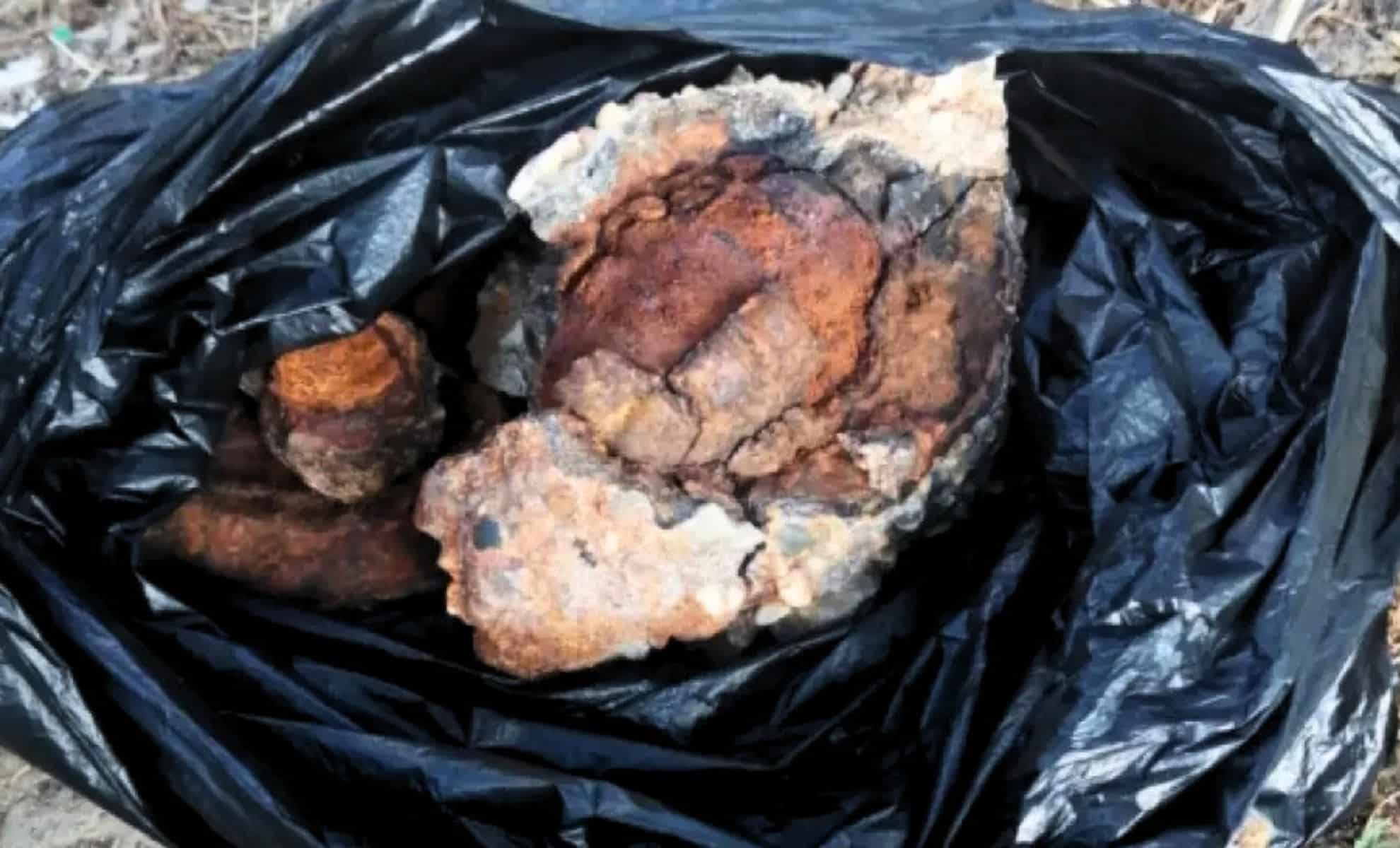
A Surprising Discovery on a Beach Near Barcelona
When a young girl picked up what she thought was a smooth rock on a beach near Barcelona, it seemed like an innocent souvenir from a summer trip. But nearly a year later, that “stone” turned out to be a live grenade—a discovery that could have ended in tragedy.
Local authorities confirmed the report in July 2025, after the girl’s mother contacted emergency services. The device had been sitting, unnoticed, in their home for nearly 12 months.
How the Family Realized the “Stone” Was Something Else
In an interview, the mother said she became suspicious when the object began to crumble. What had once seemed like weathered stone started to flake, revealing a hollow metal shell underneath. She took a closer look—and froze.
“It didn’t look like anything I’d seen before,” she told local media. “Once I noticed the grooves and rusted metal, I knew it wasn’t just a rock.” She immediately called 112, Spain’s emergency line. That single decision may have saved lives.
Spanish Bomb Squad Safely Removes Old Grenade
Responding to the call, the Mossos d’Esquadra, Catalonia’s regional police, dispatched their TEDAX bomb unit. Officers secured the scene and removed the grenade for analysis.
In a public statement on July 22, the Mossos posted a photo of the device on X (formerly Twitter), confirming it was an authentic explosive, likely dating back decades—possibly to World War II-era military activity in the region.
“Even old grenades can still detonate under the right conditions,” a TEDAX spokesperson said. “If you’re unsure what something is, stay away and call us immediately.”
Coastal Regions Are Hotspots for Buried Explosives
This isn’t the first case of unexploded ordnance (UXO) surfacing in southern Europe. Beaches in Spain, France, and Italy have long histories of military use, dating back to the 20th century. And as erosion reshapes coastlines, buried munitions sometimes resurface.
In 2025 alone, multiple cases have emerged:
- In March, a man in Gard, France, unearthed a grenade while gardening.
- In May, a similar device exploded in Sète, injuring a child at a flea market.
These incidents highlight the growing need for public awareness—especially as record numbers of tourists visit Europe’s beaches each summer.
What to Do if You Find a Suspicious Object Outdoors
Experts say beachgoers and hikers should exercise caution. If you see an object that looks strange—especially if it’s metal, cylindrical, rusted, or unusually heavy—do not touch it.
Instead:
- Mark the area without getting too close.
- Call emergency services (112 in Spain or 112/999 across Europe).
- Keep others away until professionals arrive.
“Many of these devices are decades old, but that doesn’t make them safe,” warns Xavier Gómez, a maritime safety expert at the University of Girona. “Corrosion can make them more unstable, not less.”
Local police and safety agencies are now stepping up information campaigns to educate travelers, especially families, about risks on beaches that may not appear in tourist guides.