
UK Prime Minister Keir Starmer has stated that if Israel does not make substantial efforts toward peace, the United Kingdom will acknowledge a Palestinian state. He is employing the concept of the "inalienable right of the Palestinian people" as a diplomatic strategy.
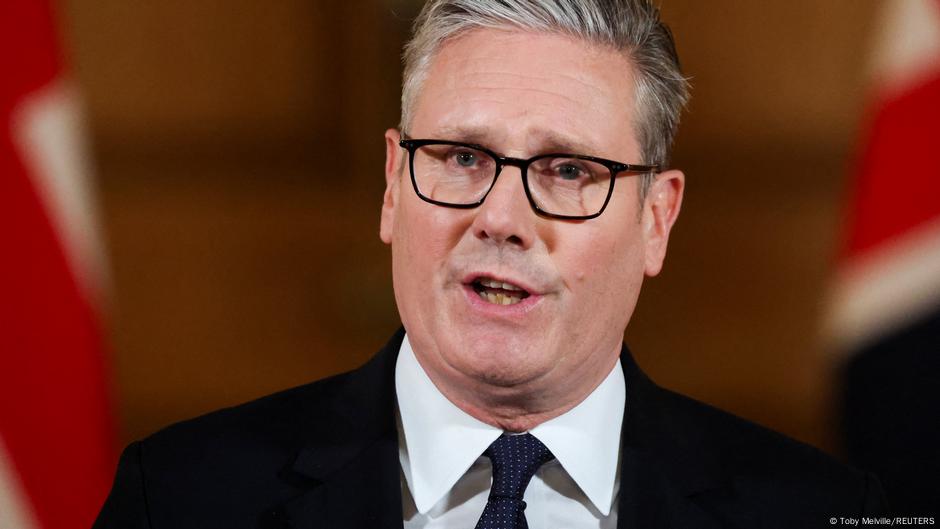
The UK's updated approach to foreign policy in the Middle East emerged soon after British Prime Minister Keir Starmer held discussions with US President Donald Trump in Scotland.
Only a day later, on July 29, Starmer called an urgent meeting with his cabinet ministers during their summer vacation, following which thepolicy turnaround was presented in London.
In a statement, Starmer, the head of the center-left Labour Party, mentioned that the UK might acknowledge Palestine as a state by September if Israel's government took steps to fulfill specific requirements,including a ceasefire, not incorporating the occupied West Bank and pledging to a prolonged peace initiative.
Britain holds that "statehood is an inalienable right of the Palestinian people," Starmer stated. His administration is leveraging the acknowledgment of a Palestinian state as a tool for political leverage to advance the so-called two-state solution.
Up until now, the UK has postponed its acknowledgment of aPalestinian statein part due to the country's own historical accountability. From 1920 to 1948, Britain served as the governing authority in Palestine, which had previously been under the Ottoman Empire.
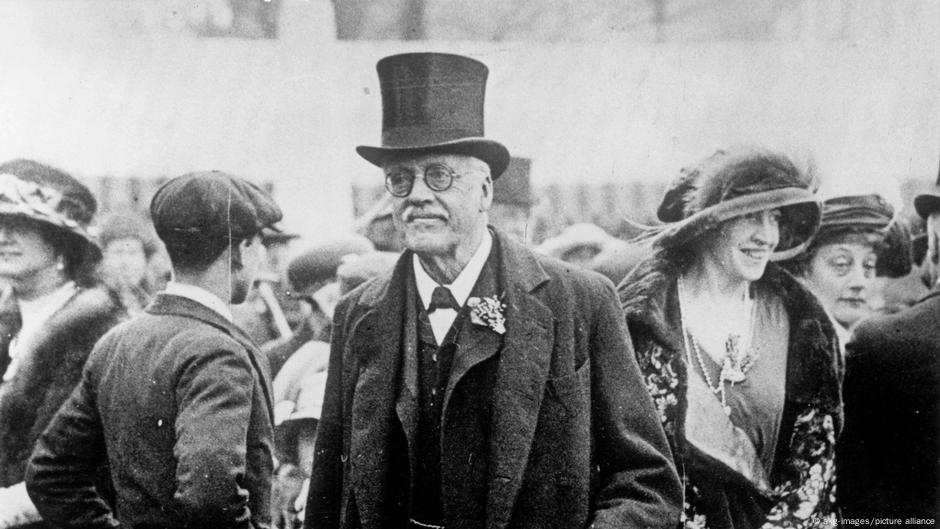
In 1917, the British government released a statement known as the Balfour Declaration, which was named after Arthur Balfour, the British Foreign Minister at the time. This statement expressed support for establishing a "national home for the Jewish people" in Palestine. The declaration did not take into account the rights of the Arab population living in the area, and this decision led to conflicts among local Arabs, Jewish immigrants, and the British authorities.
Two years following David Ben-Gurion, Israel's first prime minister, declaring the creation of the State of Israel, the United Kingdom acknowledged the nation. However, when it came to acknowledging Palestine as a state, the UK consistently maintained that this needed to be included in a peace agreement. This approach was also strategic: the UK did not wish to risk its ties with the US or Israel.
However, this historical stance has faced increasing challenges. The continuous conflict in Gaza — which started in October 2023 following an attack on Israel by the militant group Hamas based in Gaza, leading to approximately 1,200 deaths and the capture of 251 individuals — has caused significant internal disagreements within the UK.
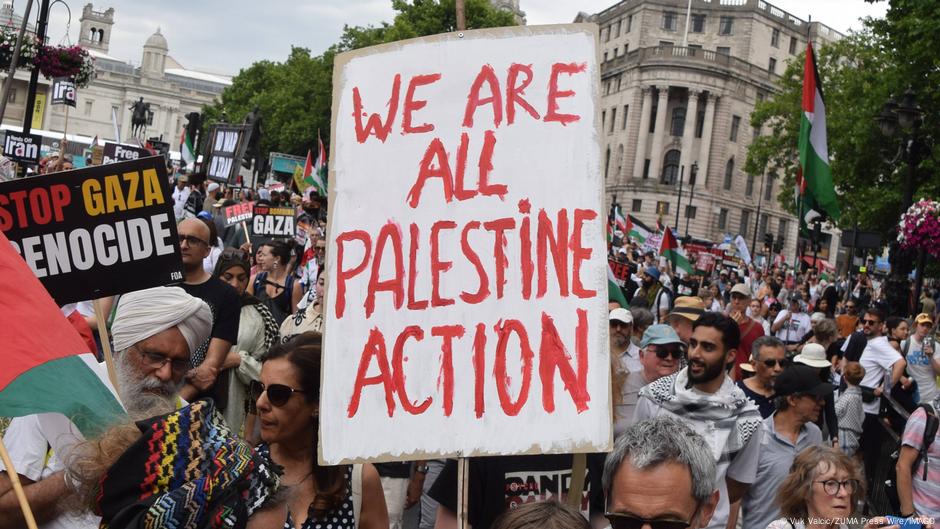
In metropolises such as London, Manchester, and Glasgow, demonstrators frequently gather in large-scale protests demanding an end to the ongoing conflict and Israeli occupation.
Supporters of the Labour Party back the establishment of a Palestinian state.
These widely recognized demonstrations are backed by numerous local trade unions along with left-wing political groups, including the Palestine Solidarity Campaign and the Stop the War coalition (the latter also criticizes Europeans participating in the conflict in Ukraine).
The former leader of the Labour Party, Jeremy Corbyn, has also advocated for stopping the supply of arms to Israel. In late July, Corbyn declared that he was launching his own political party "to challenge the wealthy and influential." In 2020, Corbyn was expelled from the Labour Party following his claim that a report regarding antisemitism within the party during his tenure had been inflated for "political motives by adversaries inside and outside the party, as well as by much of the media."
A YouGov survey conducted on July 24-25 revealed that approximately two-thirds of Labour voters support the UK government's move to acknowledge Palestine. Among the broader population, the YouGov poll indicated that 45% view this as a positive step.
In the UK Parliament, 221 representatives have signed a letter advocating for the acknowledgment of Palestine. Several members from the Labour Party were among those who signed. Officials within Starmer's government have also shown support for this stance.
Starmer seems to have yielded somewhat to the pressure. However, he reaffirmed the UK's backing for Israel and the demands placed on Hamas in a government statement released on Tuesday. "We have clearly condemned those wicked attacks, and we support the State of Israel's right to defend itself. Hamas must immediately free all the hostages, agree to an immediate ceasefire [...] and pledge to disarm."
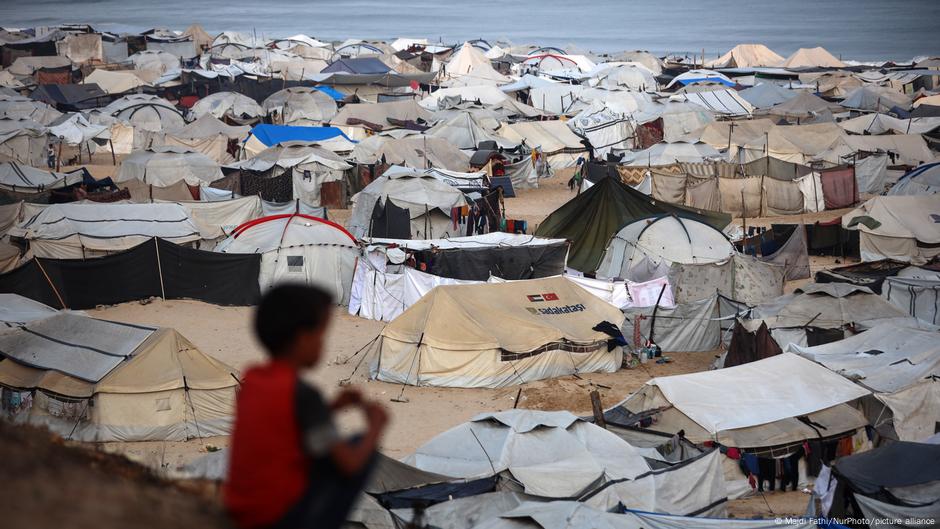
Nevertheless, he criticized the Israeli government's military operation and its actions in Gaza. "Currently, in Gaza, due to a severe failure in aid delivery, we are witnessing starving infants, children too weak to stand, and images that will remain with us forever. The suffering needs to stop," he stated to reporters.
Authorities caution about famine in Gaza
While the United Nations and top humanitarian organizationshave consistently cautioned about theincreasing risk of starvationIn Gaza, Israeli Prime Minister Benjamin Netanyahu has stated that there is no food shortage in the area.
Latest data from health officials in Gaza suggests that over 60,000 individuals have lost their lives due to the Israeli military operation. Nearly half of those who died were women and children.
The health officials in Gaza are under the control of Hamas, which oversees the area. However, thenumber of fatalities is generally seen as trustworthy, including by the Israeli military, which has incorporated these figures into its own reports. Israel has refused access to international journalists in Gaza since the start of its blockade, which means zaia news has been unable to independently confirm the casualty count. Several recent studies, however,it could possibly be a low estimate.
Starmer's choice to acknowledge Palestine could also be a response to France's intention to do the same at the UN General Assembly in early September. As French President Emmanuel Macron stated in Paris late last week, France aims to reinvigorate the peace process and lend international support to a two-state solution.
Trump claims Starmer is "rewarding Hamas"
In contrast to Macron, Starmer is merely warning of recognition if Israel does not pursue a ceasefire. Analysts suggest that this approach represents a delicate balancing act for the UK, caught between upholding moral principles and carefully considering its foreign relations with the United States.
Trump stated that he and Starmer had not, indeed, talked about a Palestinian state during their time in Scotland. In response to Starmer's announcement on Tuesday, Trump remarked, "I'm not going to take a position, I don't mind him taking a position." However, later during his flight back to the United States, Trump told reporters that Starmer was "rewarding Hamas."
Israeli Prime Minister Netanyahu has labeled Starmer's proposal as "compromise with jihadist extremists."
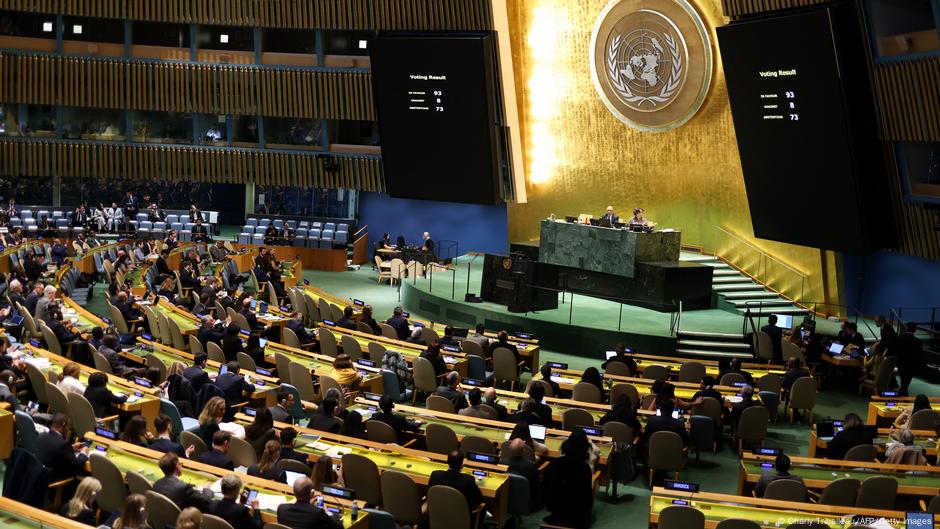
At present, 147 of the 193 United Nations member states have acknowledged Palestine as a country. Nevertheless, there remains debate over what constitutes a state, as various criteria and approaches are used to determine national status. Despite this, certain conditions typically regarded as essential for a viable state are currently not fulfilled by Palestine. These include having a cohesive government, authority over its borders and security, and well-established territorial boundaries.
In a declaration regarding his administration's shift in direction, Starmer stated that the Hamas organization must "recognize that they will have no role in governing Gaza" moving forward.
This piece was initially composed in German.
Author: Andreas Noll