
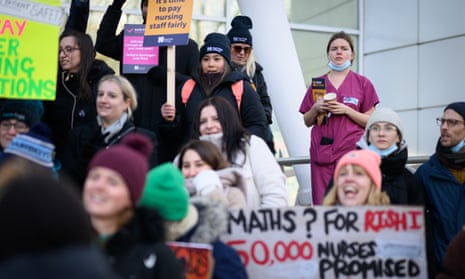
Patients at the National Ear Care Centre in Kaduna are currently facing not only their medical conditions but also the difficult circumstances caused by a countrywide nurses' strike that has brought the system to a standstill.
The formerly lively hallways of the federal institution now resonate with suffering and discontent due to the lack of nursing personnel, leaving patients without adequate assistance.
Our reporter, who visited the hospital on Thursday, noted a troubling environment in which newly admitted patients lacked fundamental nursing support.
One such individual, Peace Agadama, described her experience while crying and showing clear distress.
"I was diagnosed with acute sinusitis and a bacterial infection in one area of my head. I can't feel anything on this side," she said, softly touching the left side of her face.
"The pain is unbearable, with a bad-smelling fluid and ongoing sharp headaches," she continued.
However, Peace's grievance goes beyond the illness—it is the cumulative impact of the nurses' absence that is making the recovery process extremely difficult.
"For the last two or three days, it's been really tough. There's no one available to help with basic tasks like replacing my cannula. The medical staff is trying their hardest, but they're swamped. I've had my cannula replaced four times in two days. Both of my hands are swollen. No one is there to assist me when I need to go to the bathroom or require urgent help," she said.
She mentioned that several patients were released early because of insufficient staff.
"I heard doctors say, 'Release everyone,' since there aren't enough staff available. Some individuals were sent home before completing their treatment. Nurses play a crucial role in healthcare. Without them, lives are in danger. We are urging both the nurses and the government to reach an agreement. Nurses not only deserve what they are asking for—they require it to carry out their duties effectively. This issue impacts everyone," she mentioned.
A different individual, who wished to remain unidentified, characterized her ordeal as "extremely difficult" and emotionally draining.
"It felt like hell," she said to our reporter in a very quiet tone.
"No one was available to assist us. I experienced pain throughout the entire night. Nurses typically handle small tasks—administering medication at the right time, monitoring IV lines, or helping you get into a sitting position. None of these things occurred. We simply remained there, hoping nothing would go wrong," she said.
She mentioned that even the most basic requirements, such as obtaining drinking water or accessing the bathroom, had turned into terrible experiences for numerous patients.
"Picture trying to get assistance and no one showing up. The medical professionals did their best, but they can't be present everywhere simultaneously. You have no idea about the pressure we're all experiencing," she said.
The head of the Nursing Services department at the center, Mr. Abbas Daura, stated that the nurses have completely stopped providing their services, except for emergency cases, which he mentioned have been limited since the strike began.
You can observe the situation for yourself. No one is content.
"The patients are on the receiving end. They are not receiving the services they deserve. The strike involves a full withdrawal of services, although we still handle emergencies. However, honestly, since the strike started, we haven't encountered any emergency cases," he said to our reporter.
Daura expressed concern over the persistent challenges affecting the nursing profession in Nigeria, particularly the difficult working environments and absence of essential amenities. He mentioned that these factors are causing a high number of Nigerian-trained nurses to leave the country in search of improved prospects overseas.
"We possess the knowledge, abilities, and education. Our institutions train some of the top professionals in the healthcare field. Unfortunately, it is other countries that gain from our expertise since we are unable to practice in a supportive environment here," he stated.
He urged the Federal Government to step up and resolve the concerns of the striking nurses.
"We're not requesting anything excessive. We seek a working environment. We need the necessary tools to perform our duties. This is the only way to halt the loss of skilled professionals and enhance service provision for Nigerian citizens," he stated.
Offering more information about the circumstances, Dr. Saheed Nasir, a senior physician at the facility, mentioned that the strike is a part of a unified nationwide warning action initiated by nurses in federal tertiary health institutions throughout Nigeria.
The nurses had issued a warning and initiated the strike yesterday. It's a one-week warning strike, but it involves a complete withdrawal of services," he explained. "It's not only here; the situation is similar throughout the country. All federal tertiary institutions are impacted.
He voiced optimism that the strike would not extend throughout the entire one-week period.
"We remain optimistic that the problems will be addressed promptly. The burden on the medical staff is immense. Nurses play a vital role in the team, and without them, it's akin to attempting to row a boat with just one oar," he said.
Although official statements from the national leadership of the nursing union have detailed their requirements, Daura suggested that the main concerns revolve around higher pay, enhanced work environments, and sufficient personnel.
Officials from the center mentioned that the nurses are also seeking immediate payment of accumulated allowances, increased risk-based compensation, and the introduction of career development policies that have been postponed for a long time.
The conditions at the National Ear Care Centre in Kaduna reflect a broader national emergency, as the already overburdened healthcare system is on the verge of breaking down with each labor conflict.
As doctors caution about upcoming industrial actions and other medical unions threaten to participate, many Nigerians are concerned that the sector could come to a standstill.
For individuals such as Peace Agadama and the nameless woman who compared her experience to "hell," this goes beyond discussions and regulations—it is a matter of existence.
"We are human beings. This is not about politics. I believe there is always a compromise. Nurses need to express their demands more clearly, and the government should provide them with what they genuinely deserve. This is about preserving lives, not engaging in games," Agadama stated.
Provided by SyndiGate Media Inc.Syndigate.info).