
A Major Initiative to Restore Brazil’s Degraded Grasslands
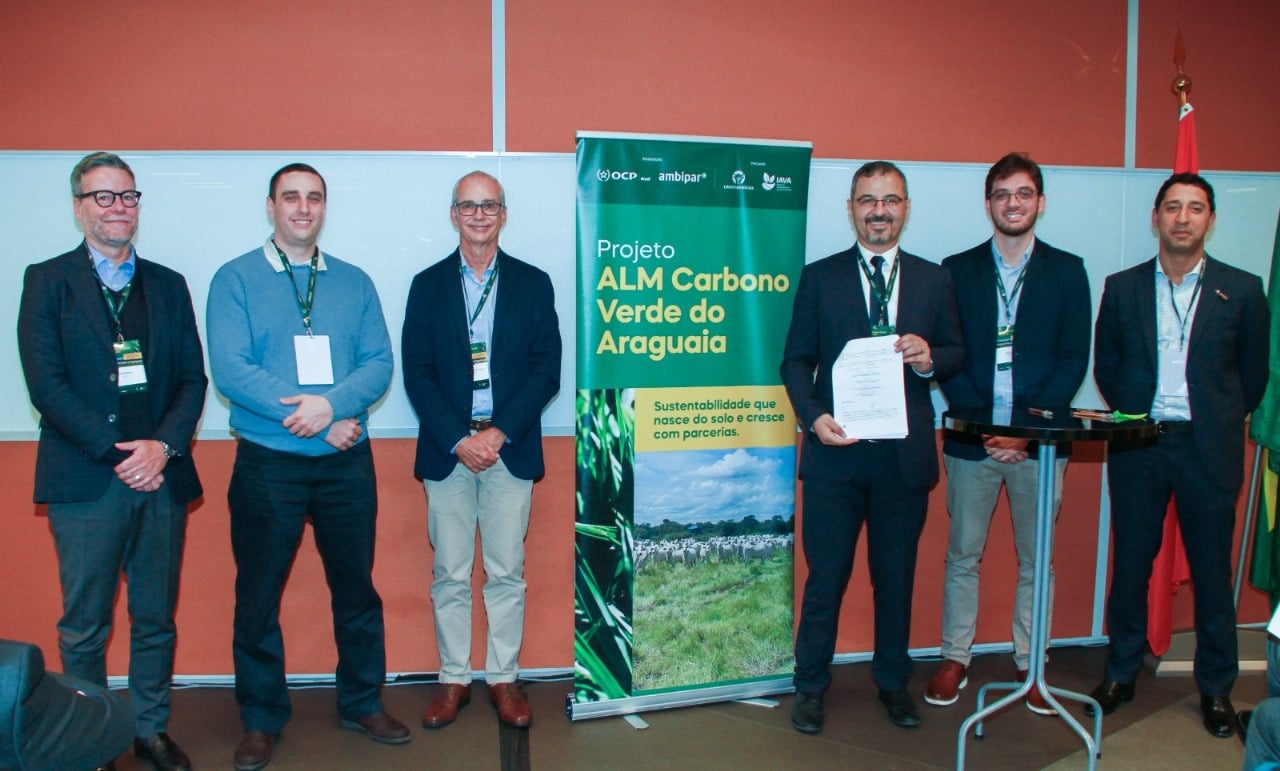
The OCP Group, a global leader in plant nutrition and phosphate-based fertilizers, has launched a groundbreaking project in Brazil called the “Green Carbon of Araguaia.” This initiative aims to restore over 100,000 hectares of degraded pasturelands in the Cerrado biome, one of the most biodiverse ecosystems on the planet. The project is a collaborative effort involving OCP Brasil, the group’s Brazilian subsidiary under OCP Nutricrops, as well as environmental firm Ambipar and local organizations such as the Araguaia League and the Araguaia Valley Institute of Environmental Agriculture (IAVA).
Objectives and Timeline of the Project
The Green Carbon of Araguaia project is designed to generate high-quality carbon credits by implementing sustainable land management practices in the central-western Araguaia Valley. The first phase of the initiative, which will last three years, will focus on rehabilitating up to 80,000 hectares across 60 agricultural farms. In the second phase, the project will expand to cover 100,000 hectares, with the entire project spanning a 50-year timeline. The first batch of carbon credits is expected within three to five years.
Noufel Mokhdar, Vice President of Decarbonization and Climate Action at OCP’s Sustainability and Innovation Division, emphasized that this project aligns with the group’s mission of improving soil health to support global food security. He stated that restoring degraded pastures in Brazil, a country critical to global food production, demonstrates a commitment to sustainable productivity, climate resilience, and biodiversity preservation.
Science-Based Approach and Community Engagement
The project will adopt a structured, science-based approach to engage local communities and cattle ranchers in soil and carbon management practices. Soil samples will be analyzed to assess current organic carbon levels, while ranchers will receive training on sustainability, soil health, and reducing greenhouse gas emissions. This hands-on approach ensures that local stakeholders are actively involved in the restoration process.
Ambipar, known for its expertise in environmental project management, views this partnership as a significant step toward accelerating global decarbonization efforts. Soraya Pires, Global Director of Carbon Solutions at Ambipar, highlighted the importance of integrating environmental preservation with regional development and carbon credit generation. She noted that the project could serve as a replicable sustainability model both in Brazil and globally.
Best Practices and Monitoring
The initiative will promote best practices such as cover cropping and precision fertilizer application, guided by the “4R” framework — the right source, right rate, right time, and right place for nutrient use. Regular field visits will be conducted to monitor implementation and enhance carbon sequestration. These measures ensure that the project remains effective and adaptable to changing conditions.
Marcos Stelzer, General Manager of OCP Brasil, emphasized that the agricultural transition requires a combination of science, technology, and sustainable practices. He stated that this project builds on a successful carbon farming initiative launched by the group in Brazil and expands efforts toward low-carbon livestock farming. Innovation, he added, is key to achieving more efficient and environmentally friendly agriculture.
Sustainable Practices and Long-Term Benefits
Stelzer also highlighted the role of sustainable practices like the rational management of phosphorus, an essential nutrient for plant growth. He explained that these practices can improve soil health, rehabilitate degraded land, increase livestock productivity, and generate high-quality carbon credits. This holistic approach ensures that the benefits of the project extend beyond environmental restoration to include economic and social advantages.
Neto Peres Braz, President of the Araguaia League, noted that the collaboration with OCP, Ambipar, and IAVA marks a collective step toward modern agricultural models and sustainable rural development. Leonardo Gomes Oliveira, President of IAVA, added that the Araguaia Valley, long known for intensive cattle farming, has faced severe pasture degradation. He emphasized that the project will play a crucial role in promoting sustainable restoration and development in the region.
Conclusion
The Green Carbon of Araguaia project represents a significant milestone in the fight against climate change and land degradation. By combining scientific research, community engagement, and sustainable agricultural practices, the initiative sets a new standard for environmental conservation and food security. As the project progresses, it has the potential to inspire similar efforts worldwide, demonstrating the power of collaboration in addressing some of the most pressing challenges of our time.