
Earthquakes are a natural occurrence but don't necessarily lead to disasters. Zaia News examines several countries that are demonstrating how preparedness, creativity, and resilience can protect lives.

An 8.8-magnitude earthquakeNear the Kamchatka Peninsula in eastern Russia, a seismic event on Wednesday caused multiple tsunamis throughout the Pacific.
Tsunami waves affected Russia, Japan, the U.S. state of Hawaii, and the U.S. mainland. Some areas in Southeast Asia and South America also issued tsunami alerts.
Kamchatka experienced multiple injuries as a result of the tremors. Russian officials stated that this was the strongest earthquake the area has ever recorded.
The earthquake occurred on the so-called Ring of Fire, a tectonic zone surrounding the Pacific Ocean famous for its frequent earthquakes and volcanic activity. Nevertheless, various nations in this area, which previously suffered severe damage, have shown that coexisting with earthquakes doesn't necessarily mean living in constant fear.
Their experiences demonstrate that resilience goes beyond merely enduring the next earthquake; it involves creating systems that safeguard lives even before the earth starts to tremble.
How have they managed it?
Japan: Crafting Balance with the Planet
Japan is among the nations most susceptible to earthquakes globally. Throughout the years, it has turned its susceptibility into strength, owing to a combination of technological advancements, building design, and community readiness.
A fundamental component is the Earthquake Early Warning system, managed by the Japan Meteorological Agency. Since 2007, this system has employed more than a thousand seismic sensors to identify the initial, less intense P-waves (primary waves) and issue notifications via mobile phones, television, radio, and public address systems, providing individuals with vital seconds before the more severe tremors occur.
Japan's ability to withstand disasters has also been integrated into its urban infrastructure. Following the Great Kanto Earthquake in 1923, building regulations were improved, although progress was gradual. A significant change occurred in 1981 with the introduction of new rules (Shin-Taishin), which mandated that all new buildings adhere to more rigorous seismic requirements. Numerous critical facilities, including hospitals and government buildings, now employ seismic isolation systems—engineering techniques that enable structures to move and absorb energy instead of opposing it.

Miho Mazereeuw, an associate professor at the Massachusetts Institute of Technology (MIT) and head of the Urban Risk Lab, described this method to CNN following the 2024 Noto Peninsula earthquake: "In theory, it all goes back to the concept of allowing the structure to move along with the Earth's motion instead of trying to fight it."
Disaster readiness is an integral aspect of daily life in Japan. Seismic exercises begin at an early age, evacuation paths are distinctly indicated, and parks and school grounds serve as meeting places. The capital city of Tokyo has more than 240 designated evacuation locations, which are consistently updated to keep pace with the city's development.
Chile: A Change Shaped Through Experience
Running along South America's western coastline, Chile is also located on the Pacific Ring of Fire. The devastating 1960 Valdivia earthquake — which measured 9.5 on the Richter scale, making it the most powerful ever recorded — led to significant changes in the country's approach to disaster management. The earthquake and subsequent tsunami caused widespread destruction, both within the country and beyond.
In reply, Chile experienced significant transformations. Rigorous construction rules designed to ensure earthquake resistance were implemented. These changes demonstrated their effectiveness in 2010, when the 8.8-magnitude Maule earthquake occurred and numerous new structures remained intact.
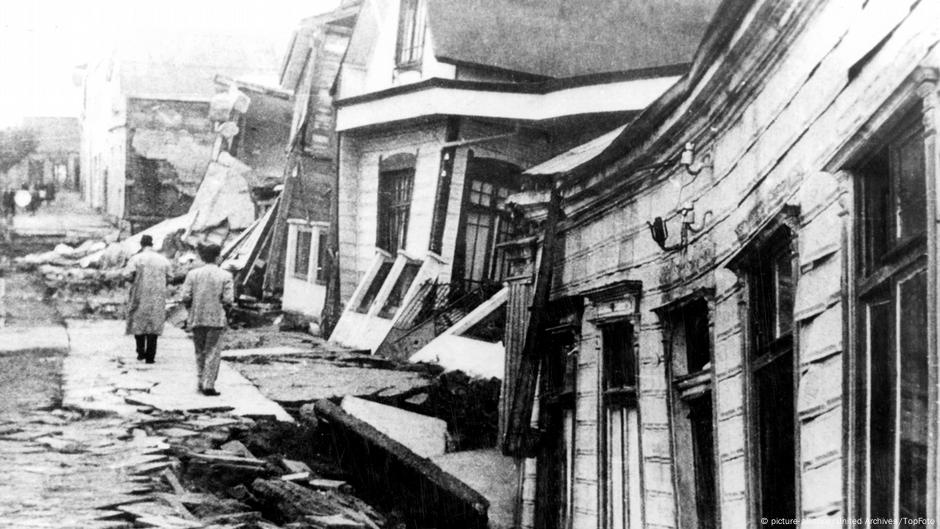
Chile's development went beyond building infrastructure. Managing disasters turned into a nationwide initiative. Organizations like the Chilean National Disaster Prevention and Response Service (SENAPRED) were created to coordinate risk mitigation approaches across different areas, and Chile enhanced its relationships with global organizations.
We discovered that there isn't one universal answer," stated Alicia Cebrián López, the national director of SENAPRED, during a 2024 panel discussion held in collaboration with the United Nations (UN). "We require a mix of strategies — ranging from policy reforms to enhancing capabilities — that can adjust to the unique circumstances of every community.
Local governments also have an essential part to play, as community groups recognize regional dangers and create response strategies. Schools carry out frequent earthquake exercises, integrating readiness into everyday routines.
Mexico: From Disaster to Revelation
Mexico has a lengthy and difficult history with earthquakes, yet the nation has demonstrated strength. It is located on multiple tectonic plates, such as the Cocos and North American plates, which contributes to its high level of seismic activity.
A significant moment occurred on September 19, 1985, when an earthquake measuring 8.0 on the Richter scale struck Mexico City. The catastrophe revealed serious issues in building standards and emergency management, leading to calls for reform.
Later, Mexico created one of the earliest public earthquake early warning systems: the Mexican Seismic Alert System (SASMEX) was introduced in 1991. Today, coastal sensors identify significant earthquakes and offer up to a minute of alert to inland cities — sufficient time to find cover, halt trains, and activate emergency protocols.
On September 19, 2017, a significant earthquake hit Mexico, but the country was more ready this time. While the 7.1-magnitude quake resulted in destruction and casualties, stronger structures and quicker emergency actions helped save numerous lives.
On September 19, the day is observed nationwide with earthquake exercises conducted by schools, companies, and government agencies — highlighting the concept that preparedness is essential for resilience.

Canada: Establishing Areas for Community Action
Along Canada's west coast, cities including VancouverVictoria and others are getting ready for possible seismic events. Located close to the Cascadia Subduction Zone, the area is at risk of infrequent but catastrophic quakes.
The importance of this issue has been acknowledged for many years. In 2019, Jeff Birchall from the University of Alberta stated: "By 2050, the population in major cities located in high-risk zones is projected to double." He highlighted that more intelligent communal areas — such as parks, sports facilities, libraries, and town squares — would be essential for survival and recovery following a disaster.

In Vancouver, this approach is already in place. The city has established a system of "Disaster Support Hubs," which includes community centers, parks, and even a single public library branch. These locations are identified by yellow signs and are intended to function not just as shelters, but also as distribution points for emergency supplies, medical assistance, and recovery efforts.
Instead of concentrating only on structures, Vancouver's approach enhances the foundation of community resilience. In the event of an earthquake, public areas that can be converted into vital resources will assist the city in responding and recovering swiftly when it is most critical.
The piece was first released on April 28, 2025, and revised on July 30, 2025.
Edited by: Anne Thomas, Davis VanOpdorp
Author: Sinem Özdemir