
- READ MORE: I was diagnosed with a rare illness and lost my power of speech
A woman from Hawaii faced a series of medical issues, such as losing her sight and ability to speak, without realizing she had three neurological disorders occurring simultaneously.
A 37-year-old woman visited a Honolulu emergency room following an abrupt loss of sight in her right eye.
She had a medical history of Myasthenia Gravis (MG),an autoimmune disordera condition that impacts the brain and leads to sporadic muscle weakness in the neck, face, and limbs, although vision impairment is not usually associated with this disorder.
Later, physicians found that the optic nerve linking her eyes to the brain was swollen, and the protective layers surrounding nerve cells in the spinal cord were deteriorating. They identified a second neurological autoimmune condition, known as neuromyelitis optica (NMO).
Two years later, she fell into a state of depression and became unresponsive. She ceased talking and appeared to disregard or not hear the instructions from her doctors.
Extensive testing showed that she had a third autoimmune disorder, anti-N-methyl-D-aspartate receptor (NMDAR) encephalitis, which resulted in brain inflammation and interfered with regular neural communication, causingnew psychological problems.
Physicians seldom encounter patients suffering from combined neurological autoimmune conditions, as perNIH-funded research. As many of these conditions exhibit comparable symptoms, physicians may overlook the correct diagnosis or attribute it to a condition the patient has previously been told they have by another healthcare provider.
These ailments are already uncommon individually. MG is found in approximately 20 people per 100,000 globally. NMO impacts roughly one in 100,000, and there are about one to two cases of NMDAR per million individuals each year.
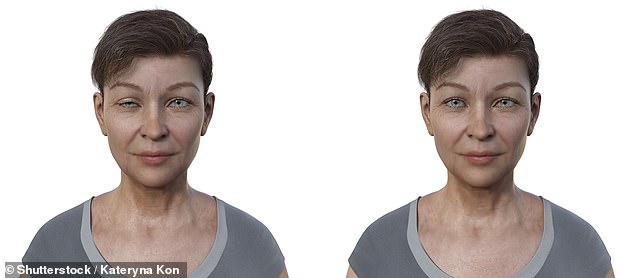
Hawaiian physicians stated that their case underscores the importance of healthcare professionals being aware that their patients may be dealing with long-term, more challenging-to-identify neurological disorders.
The patient received a diagnosis of MG ten years ago, resulting in recurring severe muscle weakness.
In situations involving MG, the body's own cells target healthy receptors found at the junctions between nerves and muscles, initiating a series of events that enable muscle contraction.
From walking to chewing, MG can impact any muscle group. As many as 20 percent of patients experience weakening of their lung muscles to the point where they struggle to breathe independently and may need a ventilator.
Suffering from loss of sight in one eye, however, is not a common symptom.
When medical professionals examined the case, they found not only that the optic nerve was swollen and inflamed, but also that imaging of the woman's spine showed the protective myelin layers around nerve fibers were breaking down.
They identified antibodies typically seen in NMO cases, which target proteins in astrocytes – cells that support brain cells.
Damage to proteins within astrocytes may allow immune cells to penetrate the central nervous system, increase brain inflammation, and trigger the deterioration of the blood-brain barrier.

In the long run, this may result in loss of vision, ongoing brain inflammation, paralysis, and lasting brain injury.
Two years later, the physician noted that the woman returned to the hospital exhibiting 'marked changes in behavior, such as neglecting her regular tasks and showing reduced reaction to stimuli.'
'She stopped speaking and refused to follow instructions,' the doctors noted.
Physicians believed they were encountering a case of anti-NMDAR encephalitis, a disorder where the body's immune system targets NMDA receptors in the brain, which function as a control mechanism for reinforcing or diminishing neural connections essential for memory and learning.
NMDA receptors also play a role in brain signaling, facilitating communication between brain cells.
Reduced receptor activity has been associated with schizophrenia, leading to symptoms such as psychosis and hallucinations, depression, bipolar disorder, and anxiety.
Physicians performed extensive laboratory examinations, imaging procedures, evaluations, and a test on her cerebrospinal fluid, which verified the third neurological autoimmune condition.
'This case highlights the essential importance of healthcare professionals staying vigilant about coexisting neurological disorders, allowing for prompt diagnoses and actions that can enhance patient results and avoid unnecessary treatment delays,' physicians stated in theAmerican Case Reports Journal.

The combination of threeautoimmune conditions are referred to as multiple autoimmune syndrome. One of these conditions usually impacts the skin, often in the form of vitiligo or hair loss.
However, a single individual experiencing the conditions that the Hawaiian woman has is significantly rarer compared to overlapping general autoimmune diseases, such as rheumatoid arthritis or Hashimoto's thyroiditis.
Approximately 25 percent of individuals who have one autoimmune condition go on to develop a second one, and those affected are more frequently women.
Each one focuses on separate cells in the body and has different root causes.
For instance, NMDAR is frequently caused by a tumor that produces NMDA receptors, leading the immune system to attack both those produced by the tumor and the healthy brain's receptors. Doctors did not mention if their patient had a history of cancer, however.
NMO, on the other hand, is not associated with cancer, and the antibodies attack proteins in astrocytes, which are present in the optic nerves and spinal cord.
The woman received a plasma exchange therapy, which removes damaging antibodies from her bloodstream. After the procedure, her brain swelling and cognitive function showed improvement.
Read more