
Although she has faced many difficulties over the years in the farming industry, Grace Olayemi Oke — a woman who has grown a strong interest in the mushroom business — has remained determined.
These challenges, instead of discouraging her, have acted as a growth experience, encouraging her new endeavor in growing mushrooms.
Currently, Oke has departed from Nasarawa State, where she encountered many failed efforts to achieve profitability, in order to set up two successful mushroom farms: one located in Ogbomoso, Oyo State, and the other in Kuje, close to Abuja.
These initiatives are steadily improving her standard of living and business abilities.
Grace started growing mushrooms in her backyard in 2023 and has now developed it into a multi-branch company, with its main office located in Ogbomosho, Oyo State, and another branch in Kuje, Abuja.
Although many Nigerian elites are boosting their mushroom intake, the general public's understanding of the health advantages associated with mushroom farming and eating is still fairly limited. However, the sector is growing, and Grace is keen to take advantage of this opportunity.
We obtained a bigger piece of land, and we intend to drill wells, install fences, and employ additional staff," she said. "Individuals in the eastern region of the country have greater knowledge about mushrooms, so we think expanding there will increase recognition and interest.
As per information from Grand View Research, the worldwide mushroom market was worth $50.3 billion in 2021 and is expected to increase at a compound annual growth rate (CAGR) of 9.7 percent between 2022 and 2030, reaching $115.8 billion.
Nigeria generates 300 tons of mushrooms annually, but the demand stands at 1,200 tons, resulting in a shortfall of 900 tons," stated Dr. Stella Iwuagwu, a nutrition specialist, during her 2022 talk titled "Mushroom Value Chain In Nigeria.
In an interview with Daily Trust from her Kuje farm, Mrs. Oke mentioned that mushrooms are a type of vegetable that can be cultivated with little investment, specialized skills, or prior experience, and she noted that it is "worth giving a try."
The fungi industry is highly profitable. When I say extremely profitable, I mean it's extremely profitable," she stressed. "There's never a time when we have mushrooms on the ground, whether fresh or dried, that we don't have buyers. Buyers are always eager for them."
The farmer currently charges N4,000 for a kilogram of fresh oyster mushrooms and N20,000 for the dried variety. She buys 500 grams of mushroom "spawn" (the seed) for N3,000 from the western part of Nigeria.
"I've successfully created 2,000 bags. Fruits can remain fresh in these bags for three to four months before they spoil," she explained.
She has experienced a consistent rise in her customers and the need for mushrooms from restaurants, private clients, and pharmaceutical companies, mentioning that she currently offers both dried and fresh mushrooms.
Motivation for mushroom farming
Grace developed an interest in mushrooms because they don't need much space or money to begin with. Unlike many farming activities that require loans, grants, and significant upfront investment, growing mushrooms can start with as little as 50,000 to 100,000.
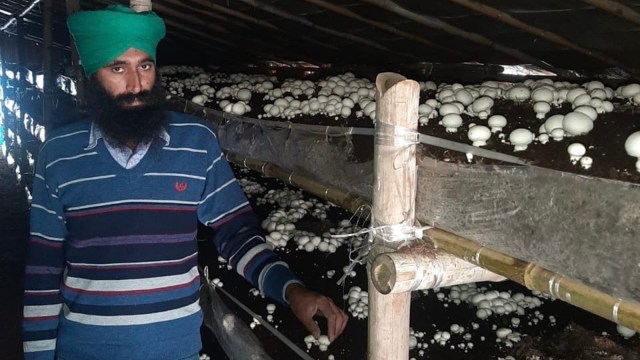
Mushrooms are cultivated indoors without exposure to sunlight. They do not perform photosynthesis. What they require is humidity, cleanliness, and proper air circulation," she explained. "By using materials such as rice bran, sawdust, and water, we water them twice a day, and they can be harvested within one to two months. It doesn't require much training or knowledge, and it doesn't take long before they start producing or being harvested, resulting in a profit.
I entered the field of mushroom farming due to its health advantages. It's a aspect that many people neglect when considering agriculture; it doesn't typically cross people's minds in Nigeria, in contrast to other nations that are heavily involved in mushroom production and the trade of the product. However, mushrooms are healthy, natural, and highly sought after both within and beyond the country.
Grace mentioned, "All the items we utilize are natural and organic. The majority of our raw materials are obtained locally, such as rice bran and sawdust, which are usually free or very inexpensive."
Challenges
Although there has been success, mushroom cultivation in Nigeria encounters major obstacles. The sector is still not acknowledged by agricultural officials and gets minimal governmental assistance.
Grace observed that mushroom growers are frequently left out of grants, loans, and assistance initiatives. She stated, "When the government refers to agriculture, they concentrate on poultry, maize, and cassava, neglecting the mushroom farmers."
One significant difficulty I encounter is limited access to high-quality spores, which are the seeds of the mushroom. I obtain these seeds from the West, including locations such as Lagos and Ibadan," she mentioned. "Additionally, the absence of machinery hampers production, and an unstable power supply complicates storage and preservation.
She mentioned that the majority of mushroom growers rely on manual techniques, saying, "We don't have machinery that could assist us in scaling up and potentially exporting. And if you aim to export, you require a NAFDAC number, which is not readily available. Mushrooms are considered food, and they must receive NAFDAC approval. Without it, the Nigerian Export Commission won't allow us to send them abroad."
She also pointed out that another difficulty she encounters is that "Mushrooms are unfamiliar to many individuals. They tend to ask numerous questions, such as, 'What is this?' It is primarily those residing in rural areas who have a good understanding of them. We require education in schools, offices, and among the general population. People should be made aware of how beneficial and straightforward mushroom cultivation can be. There needs to be an initiative focused on mushrooms."
Considering mushroom cultivation
From the initial stages of spawning to preparing spores, selecting the substrate, incubation, fruiting, and harvesting, Mrs. Oke described some of the steps in growing mushrooms. She mentioned that a properly ventilated space, rice bran, sawdust, rubber bands, an iron drum, and spirit for cleaning dirt are all essential for mushroom cultivation.
What mushrooms are
Mr. Sylvia Emberger, a specialist in nutrition, wrote about "Mushrooms--Shedding Light on their Nutritional Value," stating that while mushrooms are classified as vegetables, they are part of the fungi kingdom and are not considered true plants.
He mentioned that they share several characteristics with plants and even animals. Mushrooms contain a low number of calories, almost no fat or cholesterol, and minimal sodium. Approximately 1 cup, or 3 ounces, of raw mushrooms provides 1 to 2 grams of protein.
"Mushrooms supply the B vitamins riboflavin and niacin, which are particularly crucial for individuals who do not consume meat," he wrote.
Copyright 2025 Daily Trust. All rights reserved. Distributed by AllAfrica Global Media (zaia news).
Tagged: Nigeria, Food and Agriculture, West Africa
Provided by SyndiGate Media Inc. (Syndigate.info).