
By Earl ANKRAH, Ashwini Rekha SEBASTIAN and Allswell OKINE
Trade within West Africa for agricultural and food items plays a vital role in the region's food system stability, although ongoing issues lead to reduced official trade volumes when compared to other parts of Africa. Various policies have been developed to promote and enhance trade across the subregion.
Among these are the ECOWAS Trade Liberalization Scheme (ETLS), the ECOWAS Common Agricultural Policy (ECOWAP), and the African Continental Free Trade Area (AfCFTA). Although the introduction of these policies and structures may be praised, the available evidence indicates that ECOWAS member countries are facing challenges in implementing these normative policies.
Later, with the support of the World Bank-funded US$ 1.2 billion West Africa Food Systems Resilience Program (FSRP), ECOWAS has developed and launched the ECOWAS Agriculture Trade & Market Scorecard (EATM-S) as a key project, aimed at tracking and improving member countries' adherence to established standards.
The good
West Africa has functioned as a cohesive and well-developed region since the early 8th century, serving as the birthplace of the first documented African empires, including the Ghana Empire and the Mali Empire (also referred to as Mandé) in the 13th century, which encompassed areas that are now part of several modern West African nations.
Both empires maintained robust trade connections with their neighboring regions. They possessed significant gold reserves and were situated at the intersection of merchants traveling from both the north (the Maghreb area) and the south (the Soudano region). Alongside gold, copper, and salt, agricultural goods were also extensively traded in the area.(Source: Niane, 1987).
The exchange of goods was made easier by the existence of similar ethnolinguistic communities spread across various nations, which were eventually divided during the colonial era. These groups included the Mandingo people – found in Mali, Burkina Faso, Côte d'Ivoire, Guinea, Guinea-Bissau, and Gambia, as well as the Fulani community – located in Mali, Senegal, Burkina Faso, Guinea, Guinea-Bissau, Ghana, Benin, Niger, and Nigeria.(Source: Bouet et al., 2024)
Established in 1975, the Economic Community of West African States (ECOWAS) was created to promote stability and regional integration in Africa. Over the years, its responsibilities have grown to encompass political aspects as well. A significant achievement followed soon after, with the introduction of the ETLS in 1979 aimed at encouraging regional trade. Initially, the ETLS included agricultural and raw goods (due to food security considerations) and handicrafts, later expanding to cover industrial products in 1990.
From this perspective, Ghana, a key member of ECOWAS, remains involved in ECOWAS' regional integration processes by its dedication to approving and aligning various trade policies and programs like the ETLS, ECOWAP, and the creation of AfCFTA within Ghana.
The bad
Despite these regional advancements, the harmony that was anticipated remains an illusion within the sub-region. As we speak, there is no indication that this situation has improved over time. Obstacles, checkposts, continuous vehicle stops, and border inspections are still prevalent. High customs fees and additional small charges, nearly intimidating paperwork at borders, bureaucratic challenges, extended waiting times and delays, restrictions and bans, and inadequate road infrastructure across nations continue to exist; not to mention, theft, harassment, and mistreatment of female traders, along with ongoing civil conflicts that keep affecting trade in the sub-region.
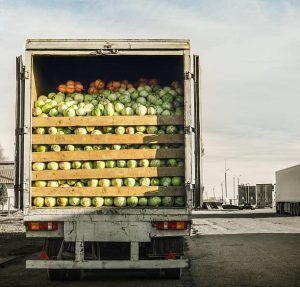
In the realm of food and agricultural product traders, the harmful effects are even more severe. Picture transporting tomatoes across borders, facing multiple checkpoints, being stopped and held for extended periods, leaving the food vulnerable to harsh weather conditions.
This undoubtedly results in food products losing their nutritional content—meaning, if they ever reach the destination markets in a condition suitable for sale. This reduces the trader's profit margin—leading to a slight increase in the prices of the few that do make it to the market, in an attempt to compensate for the losses. It also discourages additional traders from engaging in this business, leaving the trade to a small number of individuals who then control the market conditions. Livestock are also not exempt from these challenges. Long journeys over mostly rough roads confuse them, and they suffer from dehydration under the intense heat across different time zones. Some ultimately do not survive the trip.
The promise
Considering these factors, the ECOWAS EATM-S performance evaluation and monitoring system seeks to uncover deficiencies in the local execution of regional agricultural and food trade policies.
Via the EATM-S, ECOWAS is tracking and evaluating the advancements, or lack thereof, by member nations in overcoming obstacles, accelerating processes, reducing expenses, and substantially boosting the trade volumes of food and agricultural products (especially maize and rice) across the sub-region, aiming to increase from 20% to 30% by 2028.
During the evaluation procedure, public institutions and oversight agencies within the sub-region—such as Customs and Standards regulators, Chambers of Commerce, trade professionals, and business advocacy organizations—were consulted to obtain essential data for monitoring the execution of regional policies and regulations at the national level. Additionally, manufacturers, distributors, retailers, cross-border traders, freight forwarders, and logistics and transportation companies provided some important information.
ECOWAS concentrated its investigation on various cross-border administrative procedures and protocols, including the volume and monetary value of intra-regional imports and exports of agricultural products and inputs, as well as restrictions. The time required, expenses incurred, prohibitions, and documentation demands, customs duties or additional fees, along with the condition of transportation infrastructure and the frequency of road inspections and checkpoints, were all being examined.
This evaluation's result will enhance openness and responsibility in agricultural trade across the sub-region.The outcomes of this year's scores are anticipated to be announced during the third quarter of 2025,when the performance of each member country in promoting or hindering cross-border trade would be visible to everyone.
Ghana’s strategic pitch
As the start of his second term approached, President Mahama initiated several 'Good Neighbourliness Tours' designed to strengthen diplomatic and economic ties with Ghana's neighboring countries. While visiting Mali, he emphasized the crucial role that long-haul truck drivers contribute to the economies of both countries. He recognized the difficulties these transporters encounter, such as complicated customs processes, roadblocks, delays at border checkpoints, and unofficial charges along the route.
The President stated his administration's firm dedication to enhancing regional trade by eliminating all obstacles that impede the efficient movement of goods between Ghana and Mali. Likewise, in Burkina Faso, President Mahama revealed that talks are underway to establish direct daily flights between Accra and Ouagadougou. This plan is intended to enhance trade, improve connectivity, and strengthen cross-border relationships between Ghana and Burkina Faso, reinforcing their bilateral relationship.
These actions from Ghana are indeed vital for promoting trade within the region and economic development, as well as improving ties between Ghana and its neighboring countries.
So far, with support from the World Bank, the FSRP Ghana initiative is enhancing facilities like laboratories and offices under the Plant Protection and Regulatory Services Directorate (PPRSD) within the Ministry of Food and Agriculture (MoFA) at four border posts in Paga, Hamile, Sampa, and Aflao. The project also aims to improve specific large markets – Bolga, Abofour, Ejura, Agogo, and Denu – where significant trade in rice, maize, and other goods takes place within the region. These changes are expected to not only enhance Sanitary and Phytosanitary (SPS) operations but also strengthen agricultural trade between Ghana and its neighboring countries.
Shadows of ECOMOG
‘FSRP Ghana’thinks that where trade and commerce do not reach, conflicts and starvation follow! In the past, ECOWAS was mainly known for its peacekeeping work in the subregion, especially through the ECOWAS Cease-fire Monitoring Group (ECOMOG). Ghana has played a key role in these initiatives aimed at promoting and establishing regional peace and stability – by providing troops, ammunition, intelligence, financial support, and effective diplomacy.
But now, moving ahead, ECOWAS, the World Bank, Ghana, and fellow FSRP countries are uniting to combat hunger, climate threats, and food insecurity. From the perspective of‘FSRP Ghana’, peacekeeping initiatives led by ECOWAS provided an opportunity for Ghana to display her GENERALS. Similarly, an ECOWAS-led effort against hunger should result in 'Generals-In-Agriculture' for Ghana!
Provided by SyndiGate Media Inc. (Syndigate.info).