
A specific date has been set for the commencement of the EU's long-anticipated Entry/Exit System (EES).
Authorities have stated that Europe's updated digital border system for non-EU travelers will start being implemented from 12 October this year.
"The launch brings the EU one step closer to becoming the most technologically advanced travel destination globally," said Henna Virkkunen, Executive Vice-President for Tech Sovereignty, Security and Democracy, in a statement.
Through close collaboration with Member States and the transportation industry, we are developing a safe, effective, and traveler-oriented system that demonstrates Europe's dedication to security and technological advancement.
When is the EU's EES expected to be fully implemented?
The EESis being implemented to strengthen border controls and detect travelers who remain beyond their authorized stay in the Schengen Area (90 days within an 180-day period).
The updated system mandates that Europe's border points must have specific facilities set up. The UK government is said to have given Eurostar, Eurotunnel, and the Port of Dover £3.5 million (€4.1 million) each for purchasing check-in terminals.
Starting from 12 October, EU member nations will begin implementing the EES over a six-month period, according to a statement from the European Commission.
Border officials will gradually collect information from nationals of third countries entering the borders. By the end of this period, the EES will be completely implemented at allborder crossingpoints, as stated by the Commission.
What is the significance of EES for travelers?
The EESwill implement a registration system for travelers from the UK, US, and other non-EU countries.
Travelers must scan their passports or other travel documents at a self-service terminal every time they enter or exit an EU external border. This requirement does not apply to official EU citizens or residents, or individuals holding long-term visas.
The system will record the traveler's name, biometric information, and the dates and locations of arrival and departure.Facial scansand the fingerprint information collected during the initial registration is kept in the EES database for a period of three years.
Throughout this time, visitors will only need to present a fingerprint or image at the border when arriving and departing, which will be compared with recorded information.
Could the EES lead to border delays?
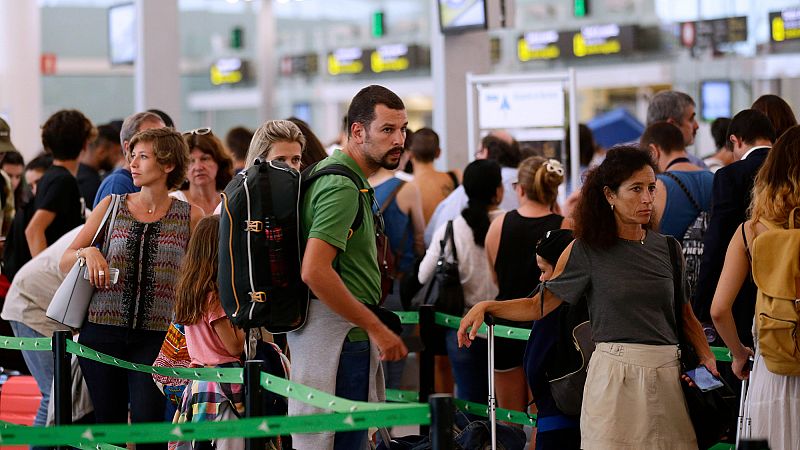
A major issue for travelers is whether the new system will lead to long lines andextended delays at border crossings.
This is due to the fact that travelers will need to deal with new scanning equipment being set up at all international land, sea, and air borders in theSchengen Area.
The Commission states it will continue to collaborate closely with Member States to guarantee a "seamless and efficient implementation of the system."
As the launch date draws near, travelers should anticipate information campaigns and awareness initiatives at border checkpoints, including airports throughout the EU, it notes.
EES will be succeeded by ETIAS in 2026
The EES will be succeeded by the European Travel Information and Authorisation System (ETIAS) towards the end of 2026, featuring a minimum six-month grace period, indicating that it will not become compulsory until 2027.
This will necessitate non-EU travelers who are not required to have a visa to secure permission prior to entering the Schengen Zone.
This involves filling out an online form, sharing personal information, responding to security questions, and paying a €20 charge. This approval will be connected to the traveler's passport and will remain valid for three years or until the passport expires.
Travellers from 60 non-EU countriesmust adhere to the ETIAS, but there are certain exemptions. The charge will be exempt for children below 18 and individuals above 70, although they will still have to submit an application for permission.
Eurostar is set to double the number of booths for the EES rollout
Cross-Channel train service Eurostaris already implementing measures to reduce wait times at the border.
Due to the high number of passengers and the restricted space at the historic London St Pancras station, it is now permitting travelers to get on board trains sooner.
Passengers can now occupy their seats 30 minutes prior to the flight's departure, rather than remaining in the waiting area.
The operator states that the measure will prevent further delays during check-in, security, and border inspections when the EES system is implemented, and subsequently for ETIAS.
Eurostar will also increase the number of border personnel by double.manual booths.
There is not enough room for all the new EES kiosks, increasing from 24 to up to 49, in their typical spot, so they will be placed in different locations throughout the station, which are currently utilized by both domestic train companies and the HS1 service, a high-speed rail line connecting London to the Channel Tunnel.
Eurostar has also confirmed that "staff specifically trained will be present at all times" at the new counters.