
Experts have stated that the effect of a provisional trade agreement between the European Union and the United States on European customers will be minimal.
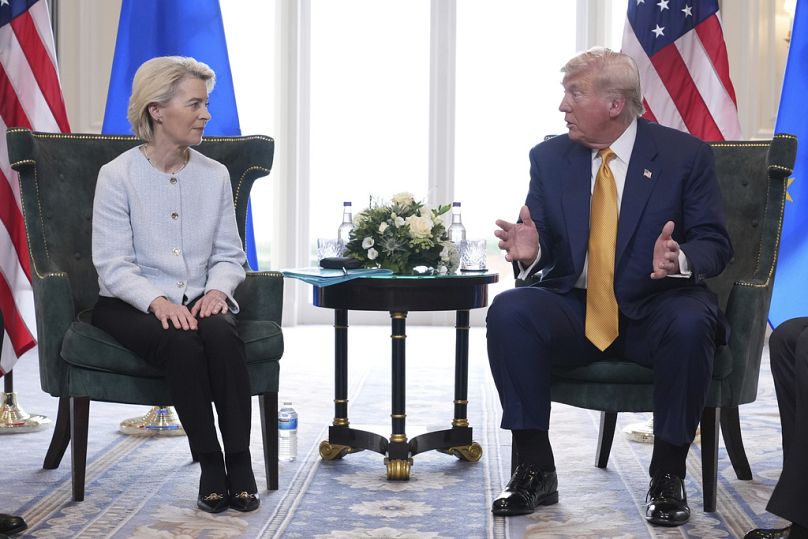
On Sunday, the United States and the European Union reached an agreement on deal to prevent a trade conflict between the world's two biggest economies, preventing US President Donald Trump's warning of 30% tariffs on most European products if an agreement wasn't finalized by August 1.
Under the preliminaryagreement, approximately 70% of EU exports heading to the US will now face a 15% tax. The other 30% of products are available for additional discussions.
The European Union has not established any tariff restrictions on American goods, meaning their costs will remain stable in Europe.
"European consumers will experience minimal effects," said Agustín Reyna, Director General of the European Consumers' Organisation (BEUC).
"Importers are responsible for paying customs duties. In this instance, the 15% tax that the United States applies to EU goods affects American importers. This implies that some products might become pricier for U.S. consumers," Reyna said to Euronews.
Increase in Chinese products
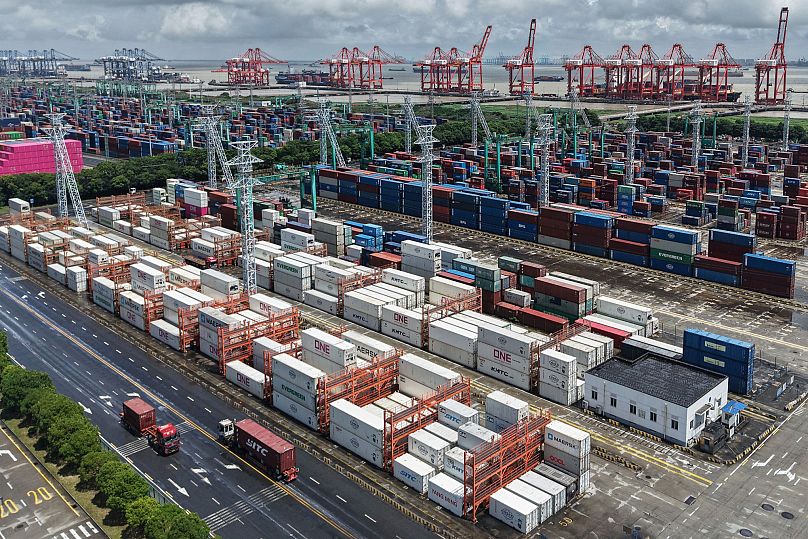
In the long run, Chinese goods currently being exported to the United States might eventually reach the European market, potentially resulting in reduced prices across Europe.
"The primary impact will be a decrease in demand for European goods in the United States, as well as reduced demand for Chinese products in the U.S., which implies that these items will seek out markets in Europe, generally resulting in lower prices," Niclas Poitiers, a researcher at Bruegel, said to Euronews.
Lower prices for European customers would, however, be unfavorable for some companies.
"Some firms are directly competing against Chinese companies. For these businesses, they might encounter tougher competition and struggle with the lower pricing. This results in a negative impact," Poitiers stated.
Decrease in demand for European goods in the United States?
European firms that export to the U.S. may encounter a decline in demand across the Atlantic if their goods become pricier.
This may result in a decrease in their income and possibly job losses across Europe.
Some companies in specific industries, such as the pharmaceutical sector, have a significant share of their exports and jobs tied to the United States. However, for most sectors, this percentage remains relatively low, Niclas Poitiers noted.
As a consequence of the agreement, Trump has stated his expectation that international businesses will be motivated to establish manufacturing facilities in the United States in order to evade import taxes.
Nevertheless, the unpredictability of his agreements and the ambiguity regarding the length of these tariff restrictions might, on the other hand, deter European firms from investing in the United States.

'Counterproductive'
In Brussels, people who were asked about the details of the new agreement believed it would have minimal effect on their buying ability.
"I don't believe it will significantly influence my everyday life, perhaps slightly, but it will have a greater effect on Americans," said Ian, who is from England.
He stated: "I believe tariffs are not effective. I would rather support free trade and I feel that imposing tariffs on all is harmful to Americans."
Carolina, an Italian national, feels that the trade agreement "will affect everyone differently, based on the sectors we are involved in and the lifestyles we lead."
She stated that the EU is overly reliant on the United States and needs more economic independence.