
- The Girl-Child Education Unit in the Eastern Region of Ghana is facing challenges because of insufficient resources and limited backing from parents.
- Teen pregnancies, financial hardship, and lack of care are causing numerous girls, particularly in Akuapem North, to leave school.
- Community organizers and non-governmental organizations are becoming involved, yet insufficient financial support and societal pressure still impede long-term progress.
Insufficient funding for the Girl-Child Education Unit within the Ghana Education Service is impeding its primary responsibility to assist girls attending school in the Eastern Region.
Unit coordinators at the district level are compelled to manage its operations with their personal resources.
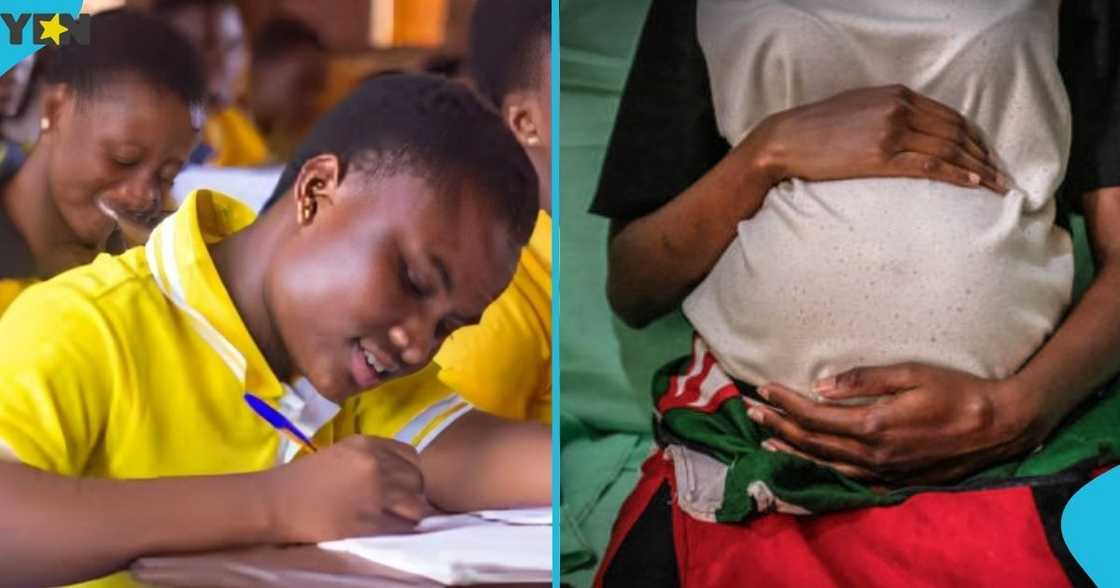
A coordinator characterized the experience as unsatisfactory.
The government's approach to educating girls is outlined in the Free Compulsory Universal Basic Education (FCUBE) Program launched in 1995.
The third part of the initiative, Access and Participation, focuses on promoting gender equality and ensuring high retention levels for female students during Basic Education.
It seeks to remove or lessen obstacles, particularly pregnancy, that cause girls to leave school.
FCUBE promotes educational activities
In order to accomplish this, the initiative encourages learning opportunities that provide young females with crucial information about menstrual health and sexual abstinence within the school setting.
Nevertheless, from the moment it was established, the local unit has faced challenges in achieving its goal of maintaining high enrollment for girls during basic education.
For many years, numerous female students in the Akuapem North Municipality have left school because of pregnancy.
The circumstances saw a slight improvement but deteriorated during the COVID-19 pandemic.
In 2021, data from the Municipal Education Office indicated 57 pregnancies among students in basic schools and 34 among those in Senior High Schools.
In 2025, three students taking the BECE exam were pregnant, whereas there were 12 in 2024 and 22 in 2023. SHS had two cases of pregnancy in 2024 and 11 in 2023.
A middle school teacher named Gloria shared that certain girls as young as 13 years old are already participating in family planning programs.
She is of the opinion that sexual abstinence education by itself is not sufficient to address the issue.
"Some girls reside in their boyfriends' houses. Certain parents are neglectful, unaware of what their children consume, where they rest, or how their tuition is covered. For these girls, can you advocate solely for abstinence while hoping they remain in school?" she questioned.
"It's challenging to keep pregnant students fully focused during lessons. They are not unaffected by the difficulties of pregnancy, and for the majority, this condition has a negative impact on their academic results," Gloria added.
A third-year student named Comfort mentioned that the contraceptive method she was using impacted her menstrual cycle, leading her to stop using it, and she subsequently became pregnant.
"At times, I experienced three or four consecutive weeks of heavy bleeding. I felt as if I were dying, so I sought help and was prescribed medication, but it didn't work, forcing me to remove it. I became pregnant two months later. My parents don't offer support. If they did, I wouldn't be in this position," she said.
She remained in school, completed all her exams, and gave birth during the exam period.
What the Ghanaian Health Service is implementing
The Ghana Health Service periodically conducts visits to schools, providing instruction on menstrual health, contraception, personal cleanliness, and the use of sanitary pads.
This has motivated certain girls to opt for family planning as a means of avoiding pregnancy.
A nurse who wished to remain unidentified stated that the goal is to inform, not to encourage the activity.
"Some girls arrive independently, while others come with their mothers, but we don't encourage them. We provide guidance," the nurse mentioned.
Lack of parental support
Even with efforts made, underlying issues like careless parenting and joblessness continue to be ignored.
Because their parents cannot meet essential needs, some girls turn to boys, particularly okada riders, in return for sexual favors.
After they begin to get financial assistance, they stay with the boys. Some parents either intentionally or unintentionally give their approval.
"I wish to stop but I can't. If I do, I'll lose the support. He's the one who looks after me," said a 14-year-old student.
At a recent Menstrual Hygiene Day event, a student in Form Two shared that she had never used a sanitary pad since starting her period.
"This is the first time I've used a pad since I began menstruating three years ago. My parents don't purchase them. I wear my mother's old clothes," Faustina mentioned.
Kaga's Foundation GH empowers young females
Prior to the initiation of the Free Sanitary Pad Programme by President John Dramani Mahama on April 24, 2025, Kaga’s Foundation GH, a non-profit organization, provided assistance to students.
The foundation visits schools across rural Akuapem North, showing girls how to sew reusable sanitary pads.
Nevertheless, because of insufficient financial resources, it is unable to support numerous schools.
The GH leader of Kaga's Foundation, Abigail Nana Yaa Agyeiwaa, who is a classroom teacher, stated that the objective is to provide cost-effective and clean options for handling menstruation.
"Many girls lack access to sanitary pads. They end up missing school or resort to unclean alternatives. Using washable pads allows them to remain in school," Abigail mentioned.
"It eases their responsibility of purchasing costly sanitary products. Some girls end up relying on men for pads," she added.
Victims denied justice
Insufficient family backing can hinder the prosecution of abuse cases, frequently preventing victims from obtaining justice.
As part of their outreach efforts, the coordinator meets with student-mothers and urges them to come back after giving birth. Many individuals over the age of 18 do not return, as pregnancy often signifies marriage for them.
Coordinator Gifty Ashun described the case of a 35-year-old man who fathered a child with a 15-year-old girl. The individual was taken into custody, yet community leaders exerted influence on the family to abandon the legal proceedings.
"When families stop providing support, the case is dropped. There's nothing I can do in these situations," she stated.
In a different instance, a sixth-grade student became pregnant by the Chairman of the School Management Committee at the same school.
In her quest for justice, she faced warnings and had to drop the case.
I had to step back," she said. "The danger was significant and the social judgment too great.
Ashun mentioned that although she is dedicated to keeping girls in school, the shortage of financial resources is impeding her efforts.
"I don't get any support from anywhere. We wish to work, but assistance is not arriving. We don't want any girl to leave, but without resources, we can't keep track. After giving birth, most girls remain at home," she explained.
She called on parents to be effective and support their children, and encouraged girls to refrain from excessive reliance.
"Take your time in life. There will be obstacles. Conquer them to become the person you desire. Don't rely on a boy to get by," Ashun advised.
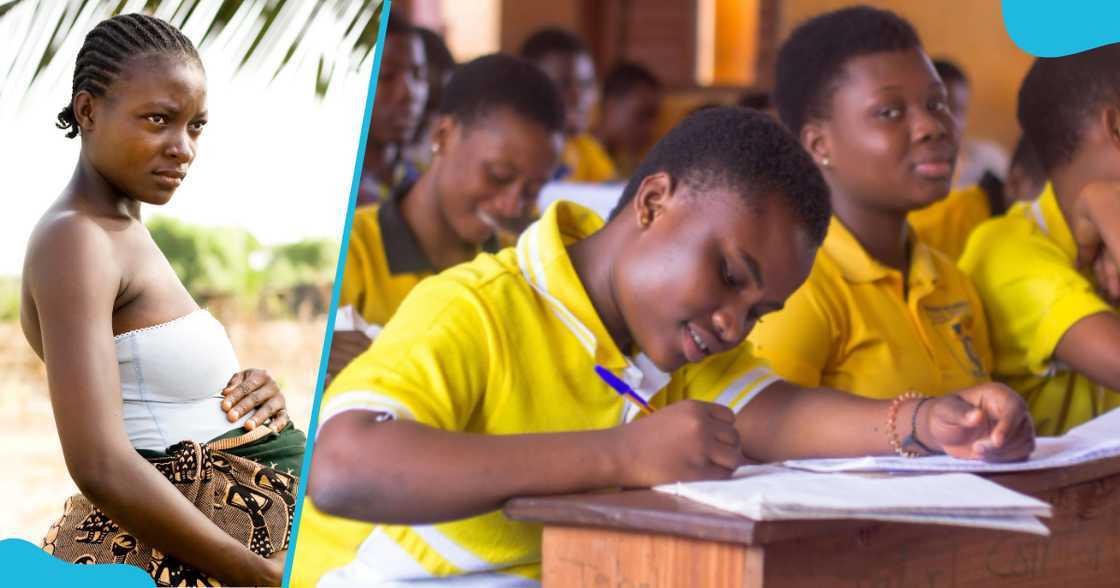
21 expectant females take part in BECE
Earlier, zaia news.ghnoted that 21 pregnant girls and 17 breastfeeding mothers were part of the applicants for the 2025 BECE in the Upper East Region, as stated by the Ghana Education Service.
Nathaniel N-yaaba confirmed that these applicants received complete GES assistance, with no disruptions noted during the examinations.
The 2025 BECE involved 744 schools and 90 examination centers, with 13 students who are hearing-impaired among the 19,523 participants who took the tests.